


Diptera.info :: Identification queries :: Diptera (adults)
 Please help me - Diptera attacked my dog
|
|
| scottie |
Posted on 02-01-2011 10:45
|
|
Member Location: Posts: 8 Joined: 31.12.10 |
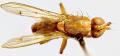
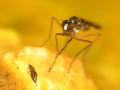
Hi I have a dog and live four kilometers away from Zurich Airport, Switzerland. A few days ago (end of december) I was surprised to see a Diptera inside the house, attacking the dog. I assume that the dog was bitten stongly because it irritated him a lot and he licked his paw. The fly was not very vivant (slow) and it was easy for me to catch it. After catching it, I saw red blood at my hand. I'm worried because some of these insects can transport diseases (especially if they are exotic). Please, does anybody know the specie of this Diptera? Is that animal native and normal to be in a house in the middle of the winter? Is it dangerous? Pictures: see attach Size: 4-5 mm red eyes, yellow thorax as you can see in the images. An Insectfan in german forum said it could be an Anthomyiidae or Fanniidae, I should ask you as experts. I thought I could be an Stomoxys calcitrans (but the Insectfan said, that they have different wings) and I think they do not have yellow thorax. But maybe it was though an Stomoxys, because it took blood? or maybe Thricops semicinereus, Phaonia subventa? The vein in the wing look like Thricops semincinereus, but this one lives from pollen. http://www.commanster.eu/commanster/Insects/Flies/SpFlies/Thricops.semicinereus.html Please help me! I'm not sure if I should give the fly in a laboratory to check it. Thanks a lot!! Bettina scottie attached the following image: 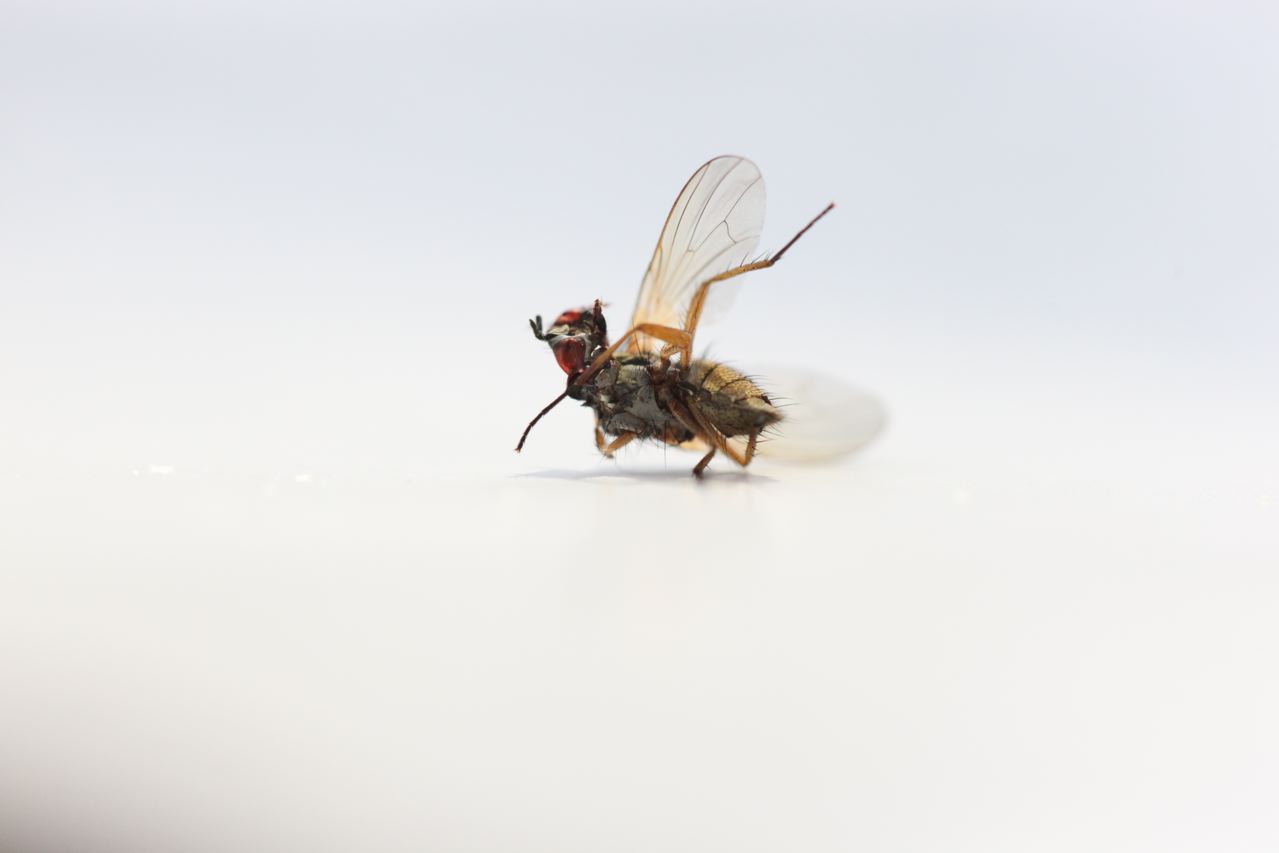 [41.83Kb] |
|
|
|
| scottie |
Posted on 02-01-2011 10:47
|
|
Member Location: Posts: 8 Joined: 31.12.10 |
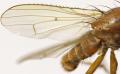
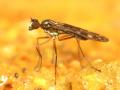
picture 2
scottie attached the following image: 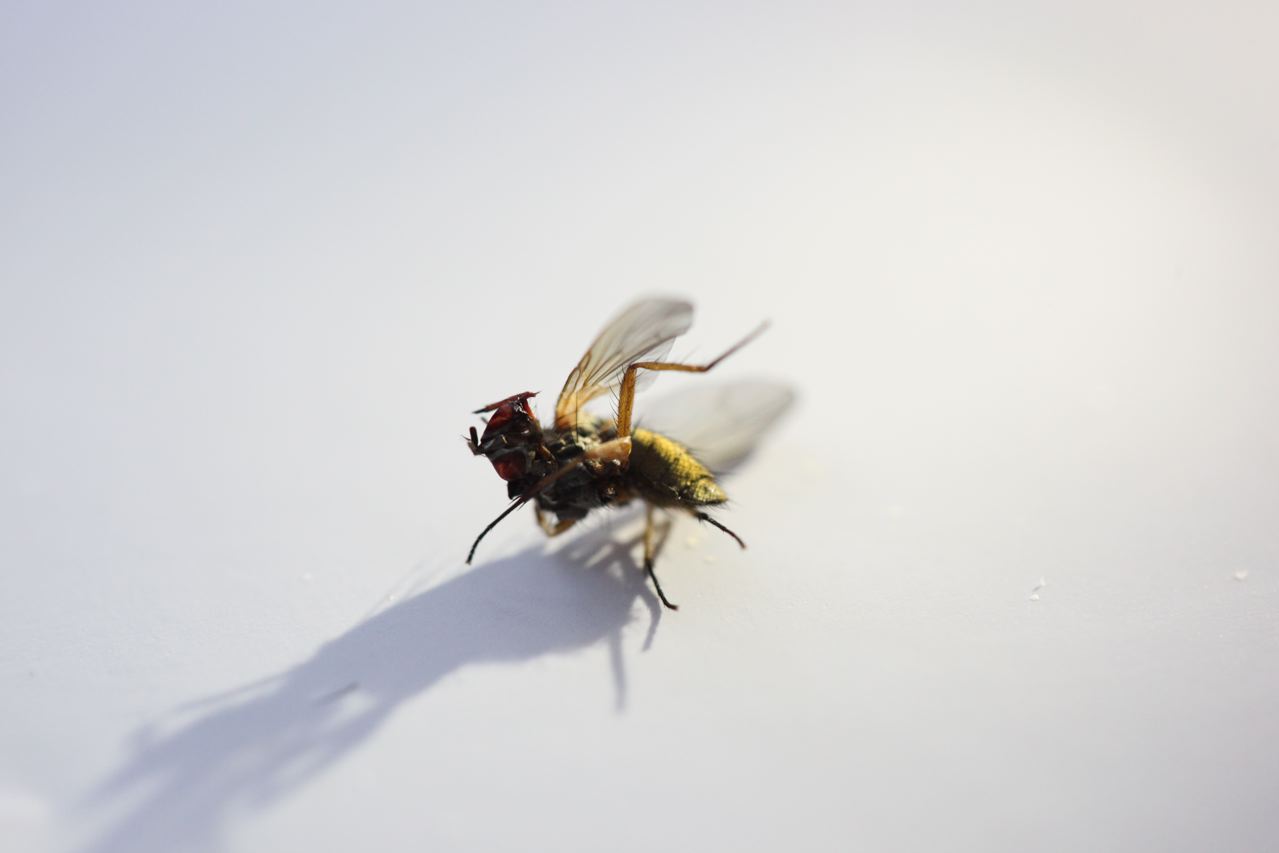 [45.52Kb] |
|
|
|
| scottie |
Posted on 02-01-2011 10:47
|
|
Member Location: Posts: 8 Joined: 31.12.10 |
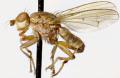
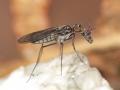
picture 3
scottie attached the following image: 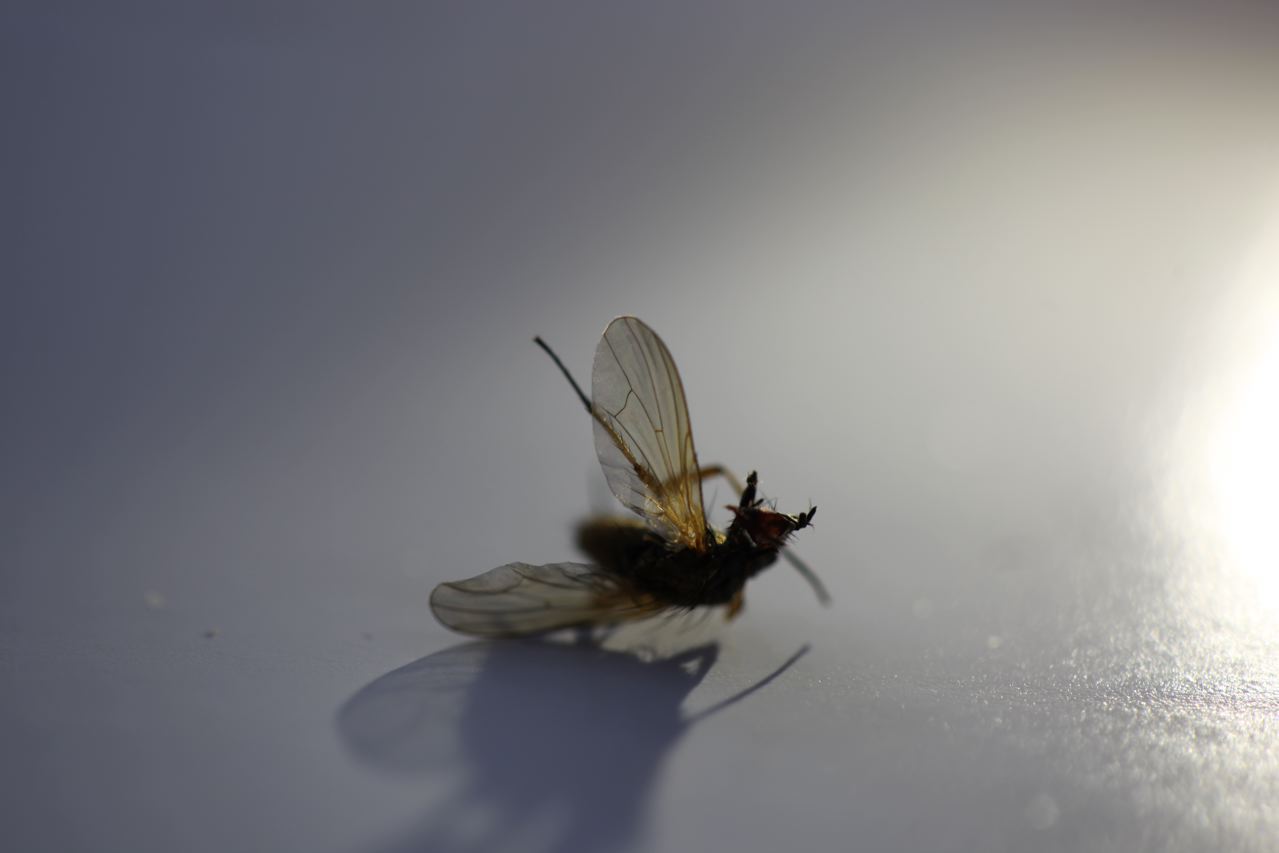 [52.76Kb] |
|
|
|
| scottie |
Posted on 02-01-2011 10:48
|
|
Member Location: Posts: 8 Joined: 31.12.10 |
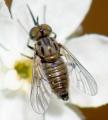
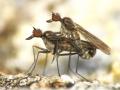
last picture
scottie attached the following image: 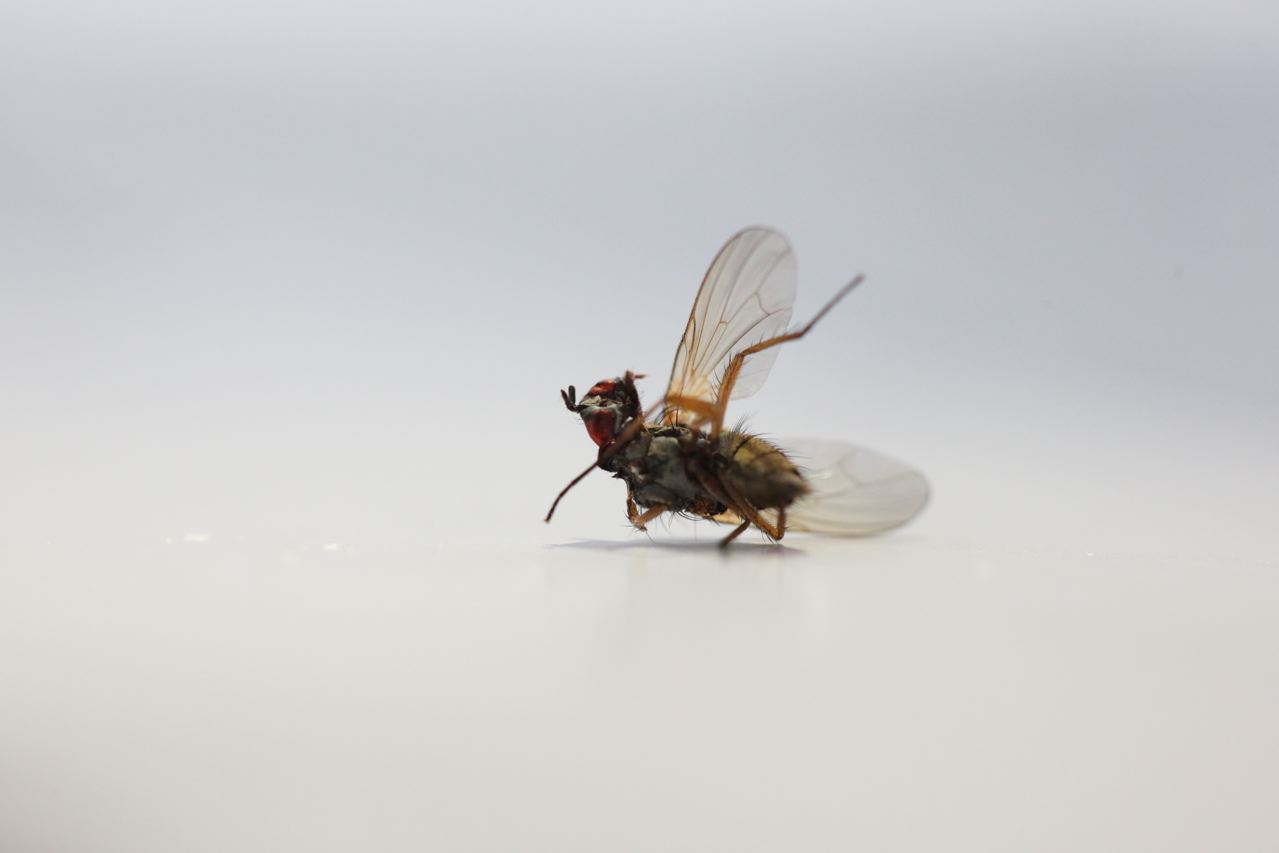 [43.39Kb] |
|
|
|
| Stephen R |
Posted on 02-01-2011 11:55
|
 Member Location: Clitheroe Lancashire UK Posts: 2396 Joined: 12.06.09 |
Hi Scottie, Since the experts are not around, I'll have a go. I think this is Muscidae, but not one of the biting ones. Is it possible that your dog cut his paw in some other way? I think the yellow colour of the abdomen in the pictures is due to the lighting. The fly could be grey like, for example, Helina impuncta in the Gallery http://www.dipter...to_id=4065 (not an identification!) I hope the dog is recovering well  Stephen. Edited by Stephen R on 02-01-2011 11:58 |
|
|
|
| ChrisR |
Posted on 02-01-2011 12:25
|
 Super Administrator Location: Reading, England Posts: 7706 Joined: 12.07.04 |
I agree - this fly doesn't have biting mouthparts, from what I can see of the remains. If it had been something like Stomoxys calcitrans then I might have been a bit more convinced. Makes me wonder whether this was really the culprit ... maybe a Deer Ked fly could have done the biting but remained hidden in the hair, while this fly buzzed around close by and looked the guilty party? Or perhaps the dog had a bite wound on the foot and this fly was trying to drink the blood or explore the wound - that would be more in keeping with muscids. Manager of the UK Species Inventory in the Angela Marmont Centre for UK Biodiversity at the Natural History Museum, London. |
 |
|
| scottie |
Posted on 02-01-2011 12:57
|
|
Member Location: Posts: 8 Joined: 31.12.10 |
Hi Thank you for your replies. But I'm really sure, that the fly has bitten the dog! Why else should I have red blood in my hand after catching the fly? Because he was sleeping in his bed and suddenly jumped off. we never had flea in this house, for sure! And if he would have had a wound before, he would have licked it before. I will make better pictures of the mouthregion of the fly when I'm back home (I'm now in the holidays and Fly is in my fridge at home) Hitchcock, the dog is ok. But yesterday he thought that there was a fly. He jumped off and ran away. I hope he will forget until spring and not be afraid of any Insect. Here you can see Hitchcock, if you like: http://www.youtub...re=related Edited by ChrisR on 02-01-2011 13:32 |
|
|
|
| scottie |
Posted on 02-01-2011 13:06
|
|
Member Location: Posts: 8 Joined: 31.12.10 |
here the picture enlarged, better quality http://picasaweb....3/Diptera# Edited by scottie on 02-01-2011 19:02 |
|
|
|
| Jan Willem |
Posted on 02-01-2011 23:14
|
 Member Location: Waalwijk, The Netherlands Posts: 2169 Joined: 24.07.04 |
In the last picture the anal vein seems to reach the wing margin, which would indicate it being an anthomyiid.
Jan Willem van Zuijlen |
|
|
|
| Stephen R |
Posted on 03-01-2011 16:22
|
|
Member Location: Clitheroe Lancashire UK Posts: 2396 Joined: 12.06.09 |
Yes, and in one of the full-res images the arista seems to be plumose, so probably Hylemya or Hydrophoria. |
|
|
|
| scottie |
Posted on 03-01-2011 22:23
|
|
Member Location: Posts: 8 Joined: 31.12.10 |
Thank you very much for your appraisals Does any species of this three bite? The Hylemia seems to have biting mouthparts? I think the Hylemya is very similar. http://www.naturf...-fotos.php Edited by scottie on 03-01-2011 22:24 |
|
|
|
| scottie |
Posted on 03-01-2011 22:36
|
|
Member Location: Posts: 8 Joined: 31.12.10 |
seems that Hylemia eats seeds? http://www.jstor....ss/4220031 |
|
|
|
| Stephen R |
Posted on 04-01-2011 11:42
|
|
Member Location: Clitheroe Lancashire UK Posts: 2396 Joined: 12.06.09 |
It's not clear from the abstract, but I'm sure it's the larvae of Hylemya that eat the seeds (they also live in roots and stems) - the adult just lays eggs on the flower. The adult fly does not have biting mouthparts; it can only lick and suck like a housefly. |
|
|
|
| Jump to Forum: |