


Diptera.info :: Identification queries :: Diptera (adults)
 Therevidae
|
|
| Petr Michael |
Posted on 05-12-2010 09:15
|
|
Member Location: Czech rep. Posts: 289 Joined: 03.10.09 |
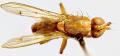
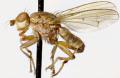
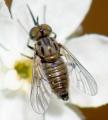
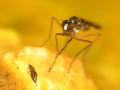
Photos of this fly were taken on 4th of August in the vicinity of Hradec Králové City, East Bohemia, CZ. Thank to all very much for ID. Petr Michael Petr Michael attached the following image: 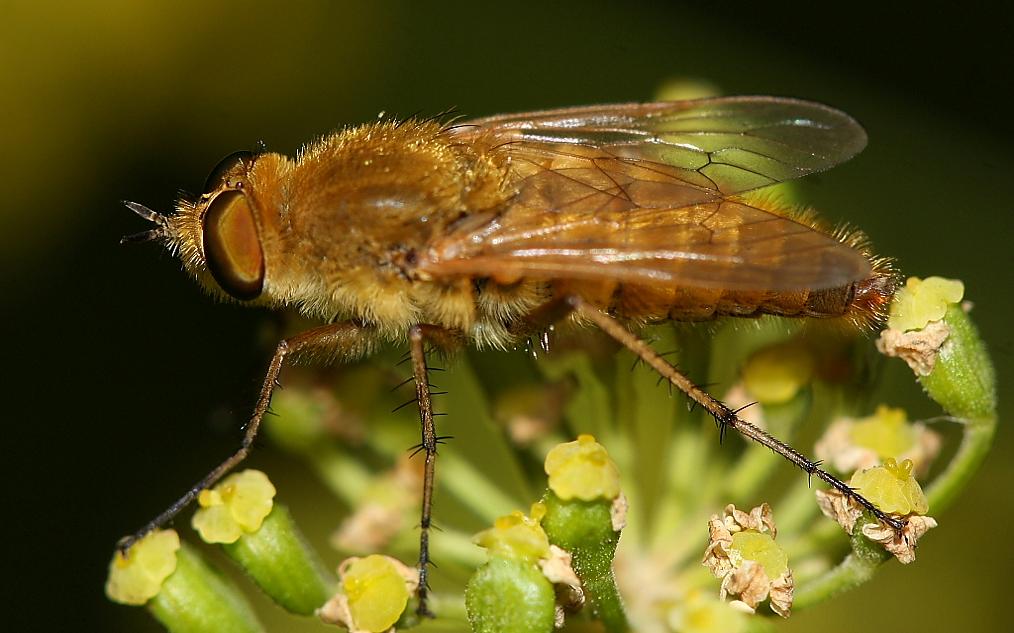 [87.08Kb] |
|
|
|
| Petr Michael |
Posted on 05-12-2010 09:16
|
|
Member Location: Czech rep. Posts: 289 Joined: 03.10.09 |
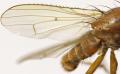
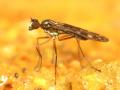
the second photo
Petr Michael attached the following image: 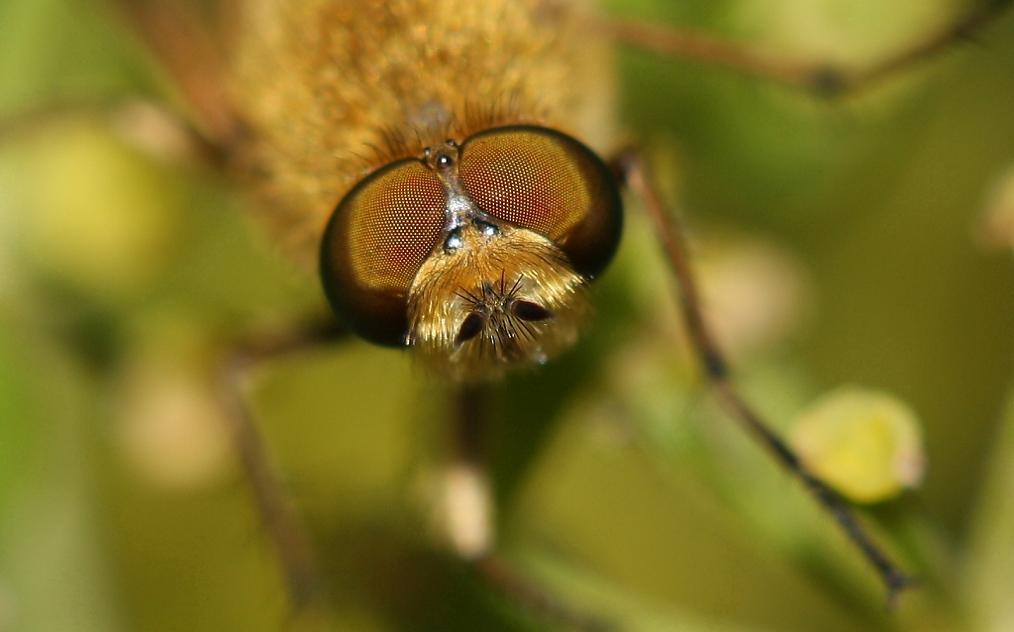 [54.98Kb] |
|
|
|
| Zeegers |
Posted on 05-12-2010 11:23
|
|
Member Location: Soest, NL Posts: 19308 Joined: 21.07.04 |
again a male, but extremely yellow. This suggests Th. fulva Theo |
|
|
|
| Petr Michael |
Posted on 05-12-2010 13:51
|
|
Member Location: Czech rep. Posts: 289 Joined: 03.10.09 |
Hi Theo, I have always thought the THEREVA males eyes are closely touching! I so supposed this is the specimen of the other genus. But I do not know what... Petr |
|
|
|
| Zeegers |
Posted on 05-12-2010 16:10
|
|
Member Location: Soest, NL Posts: 19308 Joined: 21.07.04 |
IN some specimens of Thereva, the eyes are not touching in males. This led Krober to erect a new genus, Neothereva if I remember correctly. HOwever, these are simply aberrations. In this case, we might have an intersex. Now I look more closely, you can seen remnants of the female calli. Intersexs in insects are pretty common, in my experience 1 out of 1000 at least is an intersex to some degree. Theo |
|
|
|
| Petr Michael |
Posted on 05-12-2010 19:00
|
|
Member Location: Czech rep. Posts: 289 Joined: 03.10.09 |
Hi Theo, very very interesting - thank you very much! I know only gynandromorphes: I saw them in the spiders, too. One half male and the second female, but how to explain the intersex, when there are no sex hormones within the insect (as many instances in the vertebrate exist). It is a question, isn´t it? Once more - thanks. Petr |
|
|
|
| Petr Michael |
Posted on 05-12-2010 19:24
|
|
Member Location: Czech rep. Posts: 289 Joined: 03.10.09 |
Sorry, I remember such instances in human - being created genetically, I have on my mind the groupment of sex chromo- somes, for instance XXX, XO, XXY etc. - in place of normal XX and XY, respectively. Is it the correct explanation - I don´t know , maybe so... Petr |
|
|
|
| Zeegers |
Posted on 07-12-2010 10:45
|
|
Member Location: Soest, NL Posts: 19308 Joined: 21.07.04 |
Ok, let me explain a bit more. There is a difference between sex at chromosomatic level and sex at morphological level. The sex at morphological level is determined by the hormons, which is (generally) induced by the genetics. However, things can mess up. Best known human example is Jamie Lee Curtis, who is male at chromosomatic level but female in all movies I have seen. From a morphological point of view, her maleness XY is irrelevant: she looks female, reproduces as female... Only on the matter of generic male diseases the Y might be relevant. Now, the difference between insects and mammals is that the hormonic level is very constant in mammals due to their (our) vascular system, whereas it can be very non-constant in insect. So, the 'sex' is an indiviuduel feature for a mammal (either male, female, or intersex), whereas it is a much more local feature in insects. So a specimen can have male genitalia but a female head. Of course, also in insects intersexes occur as well. Several studies indicate that intersexes are much more common in areas with high pollution with certain toxics, for instance heavy metals. |
|
|
|
| Petr Michael |
Posted on 07-12-2010 13:22
|
|
Member Location: Czech rep. Posts: 289 Joined: 03.10.09 |
O.K. You are right! But I know all of it, too. From molecular point of view for instance chromosomatic XY (human) is irrelevant when is ABSENT so-called androgen RE- CEPTOR. ( Testosteron+androgen receptor complex binds to specific sequences of DNA and follows the transcription influ- ence of certain genes - to produce - among others - morpho-effect of secondary sex characters, too.) On the "mosaic" effect of gynandromorph (not only "half male to half female"  I know, too. These effects have, however , ge- I know, too. These effects have, however , ge-netical base. I only don´t be aware that the eventual "feminal or masculinal" factors in insects can make the same effect like the sex hormones in vertebrates and if it is necessary something similar as XXY, XO, XXX etc. or only the "disbalance" of these factors!... Sorry for my chatting... Petr |
|
|
|
| Jump to Forum: |