


Diptera.info :: Identification queries :: Diptera (adults)
Who is here? 1 guest(s)
 Thereva ?fulva "controversial"
|
|
| philporter |
Posted on 14-11-2010 16:30
|
|
Member Location: Lincoln UK Posts: 554 Joined: 07.02.07 |
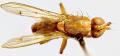
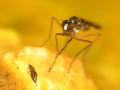
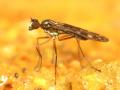
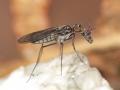
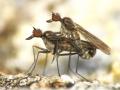
I am having great difficulty with these, so I am presuming this is nobilitata.
philporter attached the following image: 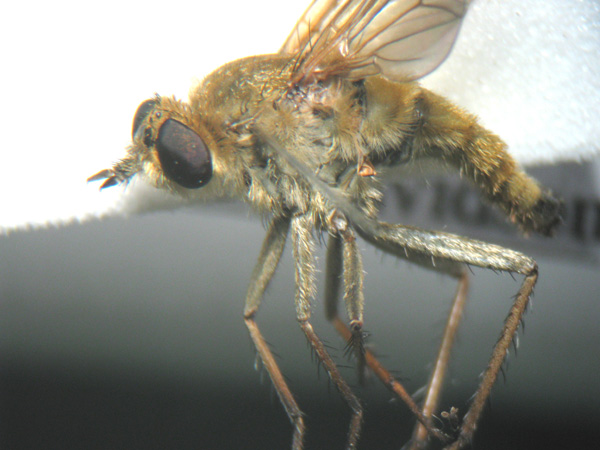 [99.85Kb] Edited by philporter on 17-11-2010 10:51 |
|
|
|
| philporter |
Posted on 14-11-2010 16:32
|
|
Member Location: Lincoln UK Posts: 554 Joined: 07.02.07 |
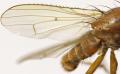
frons
philporter attached the following image: 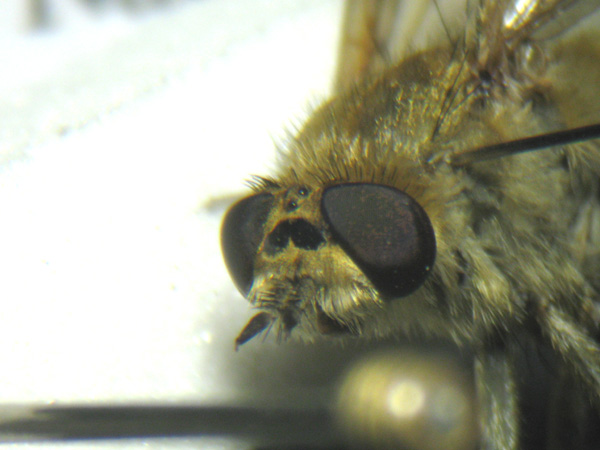 [87.75Kb] |
|
|
|
| philporter |
Posted on 14-11-2010 16:32
|
|
Member Location: Lincoln UK Posts: 554 Joined: 07.02.07 |
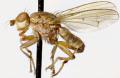
Abdomen
philporter attached the following image: 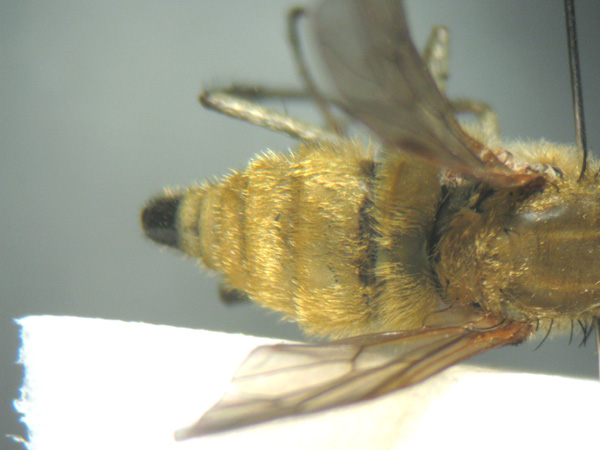 [94.41Kb] |
|
|
|
| Zeegers |
Posted on 14-11-2010 18:28
|
|
Member Location: Soest, NL Posts: 19308 Joined: 21.07.04 |
Actually, if the picture is not misleading, it looks more like Th. fulva. Could we get a pic of the abdomen from above and obliquely from behind ? Thanks Theo |
|
|
|
| philporter |
Posted on 15-11-2010 10:34
|
|
Member Location: Lincoln UK Posts: 554 Joined: 07.02.07 |
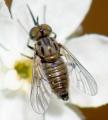
Here they are Theo, but it seems that the femoral bristles may rule out fulva, they don't look to be in one line. From what I can quickly read, fulva would be a remarkable record for Lincolnshire.
philporter attached the following image: 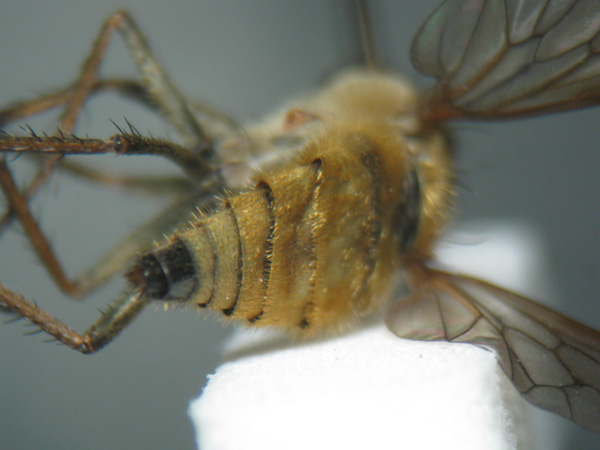 [83.27Kb] |
|
|
|
| philporter |
Posted on 15-11-2010 10:35
|
|
Member Location: Lincoln UK Posts: 554 Joined: 07.02.07 |
femur
philporter attached the following image: 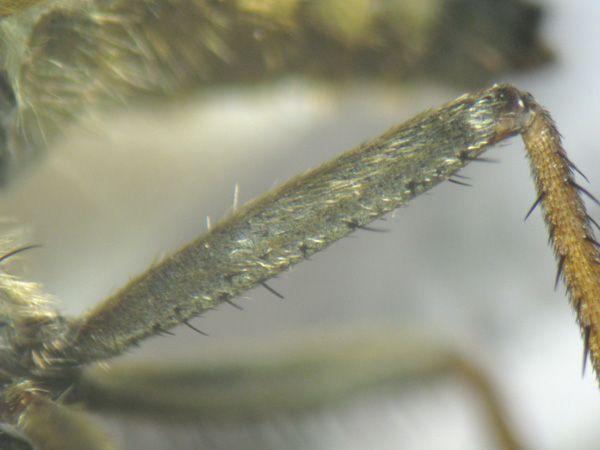 [94.32Kb] |
|
|
|
| philporter |
Posted on 15-11-2010 10:36
|
|
Member Location: Lincoln UK Posts: 554 Joined: 07.02.07 |
from rear
philporter attached the following image: 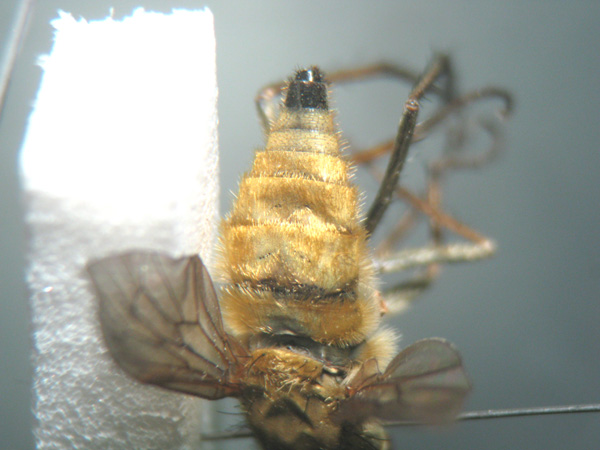 [94.34Kb] |
|
|
|
| Zeegers |
Posted on 15-11-2010 21:55
|
|
Member Location: Soest, NL Posts: 19308 Joined: 21.07.04 |
No way this is nobilitata, I'd say it is fulva or some very related species I'm not familiar with. Theo |
|
|
|
| philporter |
Posted on 16-11-2010 10:27
|
|
Member Location: Lincoln UK Posts: 554 Joined: 07.02.07 |
Thanks Theo, but I looked at Mark van Veen's online key yesterday which says of fulva "Can be easily confused with female specimens of T. nobilitata that have their tergites completely dusted, but the frontal spot reaches the front ocellus in T. fulva, while the frontal spot in T. nobilitata is separated from the from ocellus by a broad line of dust"; The latter feature is clear on my specimen - the black patch is quite distinctly separated from the front ocellus. Furthermore, having re-checked my original identification, using Stubbs and Drake, the first couplet gives 'some black hairs on T7' which my specimen has, as disqualifying fulva, regardless of the rest of the abdomen in a minimum condition although 'black hairs usually more extensive'; which they aren't. I've never been sure that the wording of couplet 1 gives a mutually exclusive choice in fact. What do you think Theo? Regards Phil Porter Edited by philporter on 16-11-2010 10:30 |
|
|
|
| Zeegers |
Posted on 16-11-2010 19:31
|
|
Member Location: Soest, NL Posts: 19308 Joined: 21.07.04 |
HI Phil Keys use only one feature to separate larger groups. I don't think it is wise to use that deaing with possibly rare species. I have seen 10th of thousands of nobiliatata in my life, never any one with so little black hairs and a so total lack of black bands. I would be very surprised to see this to be nobilitata. Theo |
|
|
|
| philporter |
Posted on 16-11-2010 20:53
|
|
Member Location: Lincoln UK Posts: 554 Joined: 07.02.07 |
Thanks Theo, of course I am obviously more than happy to accept this judgement = T. fulva. There doesn't seem to be another British candidate. Phil Porter |
|
|
|
| Zeegers |
Posted on 17-11-2010 10:08
|
|
Member Location: Soest, NL Posts: 19308 Joined: 21.07.04 |
Maybe some day a real expert will find this thread. My opinion is also just an opinion based on my private experience. I just wanted to communicate that though I'm not an expert, my experience with Therevidae is probably comparable with that of Alan Stubbs' or Mark van Veen's. SO the sentence 'I would be surprised to see this to be nobilitata' is the best summary for me. Of course, from a scientific point of view this is a Winnie-the-Poeh type of argument.... Theo |
|
|
|
| philporter |
Posted on 17-11-2010 10:49
|
|
Member Location: Lincoln UK Posts: 554 Joined: 07.02.07 |
Absolutely Theo. I'll change the title just in case and label the specimen "controversial". I'll get the specimen forwarded for scrutiny at some point. |
|
|
|
| Jump to Forum: |