


Diptera.info :: Identification queries :: Diptera (adults)
Who is here? 1 guest(s)
 Tachinidae
|
|
| Jean Leveque |
Posted on 08-11-2010 08:40
|
|
Member Location: Posts: 573 Joined: 05.12.08 |
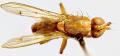
Found in Brussels in september. 10 mm long; sarcophagidae?
Jean Leveque attached the following image: 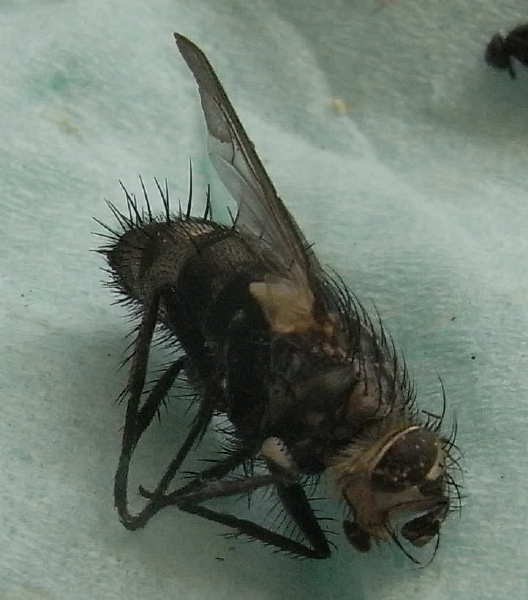 [61.37Kb] Edited by Jean Leveque on 08-11-2010 08:55 |
|
|
|
| Jean Leveque |
Posted on 08-11-2010 08:40
|
|
Member Location: Posts: 573 Joined: 05.12.08 |
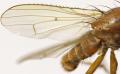
second pic
Jean Leveque attached the following image: 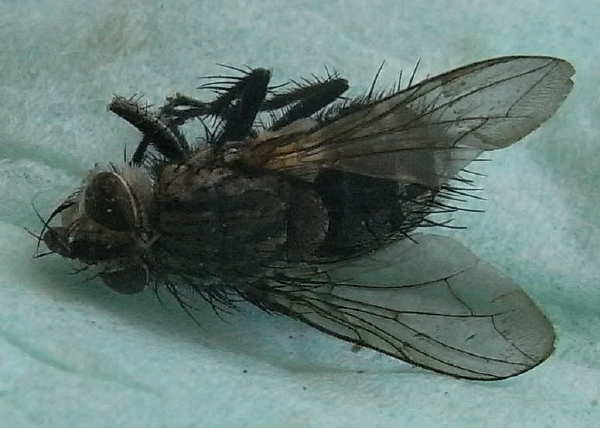 [59.83Kb] |
|
|
|
| Paul Beuk |
Posted on 08-11-2010 08:48
|
 Super Administrator Location: Netherlands Posts: 19403 Joined: 11.05.04 |
Tachinidae
Paul - - - - Paul Beuk on https://diptera.info |
 |
|
| Jean Leveque |
Posted on 08-11-2010 08:51
|
|
Member Location: Posts: 573 Joined: 05.12.08 |
Thanks, Paul, I'll have to revisit my key... Any idea of the specie? |
|
|
|
| Paul Beuk |
Posted on 08-11-2010 10:02
|
|
Super Administrator Location: Netherlands Posts: 19403 Joined: 11.05.04 |
No
Paul - - - - Paul Beuk on https://diptera.info |
|
|
|
| ChrisR |
Posted on 08-11-2010 12:05
|
 Super Administrator Location: Reading, England Posts: 7706 Joined: 12.07.04 |
It's one of the dark-legged Linnaemya sp. but I'd have to have the specimen to be able to identify it to species 
Manager of the UK Species Inventory in the Angela Marmont Centre for UK Biodiversity at the Natural History Museum, London. |
|
|
|
| Jean Leveque |
Posted on 08-11-2010 22:34
|
|
Member Location: Posts: 573 Joined: 05.12.08 |
Thank you, Chris. I have the specimen and can send you other pictures. Is there any specific angle that would be helpful? |
|
|
|
| ChrisR |
Posted on 08-11-2010 23:18
|
|
Super Administrator Location: Reading, England Posts: 7706 Joined: 12.07.04 |
Ahh, well ... dark-legged Linnaemya are tricky. The features we need to see are not hard to locate but they are very small and very difficult to see. The first one is to look at Sternite-1 and see if it has pale hairs on it. Then we need to see the back of the head at the top where there are a load of pale hairs and in between those some rows of little black bristles and between the little black bristle sometimes there are some slightly longer bristles  These features just get you started in the key - there are more later on  Sending it to me (or Theo) might destroy it if the post-men decide to play football with the parcels - but it would be the easiest way to get an identification I think in northern Europe though pale hairs on sternite 1 would indicate L.tessellans ... Theo might confirm that.
Manager of the UK Species Inventory in the Angela Marmont Centre for UK Biodiversity at the Natural History Museum, London. |
|
|
|
| Jump to Forum: |