


Diptera.info :: Identification queries :: Diptera (adults)
Who is here? 1 guest(s)
 Dolichopodidae from USA
|
|
| John Carr |
Posted on 27-10-2010 23:22
|
 Super Administrator Location: Colorado, USA Posts: 10646 Joined: 22.10.10 |
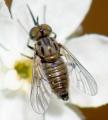
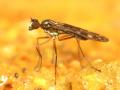
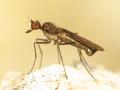
Seen in Connecticut, USA morning of June 19, 2010. My ID is Sciapodinae by wing venation and leaf-perching habit, probably Chrysosoma based on long antennae. More and larger pictures at http://www.flickr...24/detail/. Edit: Looks like I can't upload pictures here for some reason. Link above has them. Edit 2: But I can inline an image 
Edited by John Carr on 31-10-2010 01:00 |
 |
|
| Steve Pelikan |
Posted on 28-10-2010 05:45
|
|
Member Location: Ohio, U.S.A. Posts: 56 Joined: 24.06.06 |
How about Condylostylus? |
|
|
|
| John Carr |
Posted on 30-10-2010 16:10
|
|
Super Administrator Location: Colorado, USA Posts: 10646 Joined: 22.10.10 |
Steve Pelikan wrote: How about Condylostylus? According to the key in Manual of Nearctic Diptera, Condylostylus would have shorter antennae. |
|
|
|
| Steve Pelikan |
Posted on 30-10-2010 16:28
|
|
Member Location: Ohio, U.S.A. Posts: 56 Joined: 24.06.06 |
Sorry... okay so we do agree! I was using Robinson who treats the genus as part of Condylostylus Bigot. |
|
|
|
| John Carr |
Posted on 30-10-2010 18:27
|
|
Super Administrator Location: Colorado, USA Posts: 10646 Joined: 22.10.10 |
Can you rule out Sciapus? I don't understand the difference between Sciapus and Condylostylus. |
|
|
|
| Stefan Naglis |
Posted on 30-10-2010 18:48
|
|
Member Location: Switzerland Posts: 738 Joined: 27.12.08 |
Condylostylus Bigot. Chrysosoma Guerin-Meneville is not present in North America. |
|
|
|
| John Carr |
Posted on 30-10-2010 19:09
|
|
Super Administrator Location: Colorado, USA Posts: 10646 Joined: 22.10.10 |
Robinson and Vockeroth keyed Chrysosoma in Manual of Nearctic Diptera stating that three species were present in eastern North America formerly considered to belong to Condylostylus. Have the generic limits or assignments changed since 1981? What's a more recent reference? |
|
|
|
| Igor Grichanov |
Posted on 31-10-2010 10:13
|
 Member Location: St.Petersburg, Russia Posts: 1813 Joined: 17.08.06 |
7. Frons of both sexes with raised setose mound bearing strong vertical seta; M) beyond M2 usually sharply recurved basad (Fig. 124c); both pairs of scutellar setae long; wing often with dark brown bands, sometimes enclosing clear window; arista dorsal to dorsoapical; pedicel with long dorsal and ventral setae; both sexes with 4-5 strong dc; hypopygium often rather small (New World, Afrotropics, Orient, eastern Polynesia) ....................................................................................... Condylostylus Condylostylus contains approximately 308 described species, with 230 Neotropical (including the Galapagos, and with one species extending into eastern Polynesia), 30 Nearctic, 15 common to both regions, 11 Afrotropical, and 22 Oriental and far-eastern Palearctic species See Bickel, Daniel J., 1994. The Australian Sciapodinae (Diptera: Dolichopodidae), with a review of the Oriental and Australasian faunas, and a world conspectus of the subfamily. Records of the Australian Museum, Supplement 21: 1–394. www.australianmuseum.net.au/publications Igor Grichanov |
|
|
|
| John Carr |
Posted on 31-10-2010 21:01
|
|
Super Administrator Location: Colorado, USA Posts: 10646 Joined: 22.10.10 |
Thanks. I had seen the title of that paper before without noticing that it contained the current and significantly-changed classification of Sciapodinae worldwide. I don't see the vertical setae arising from setose mounds in my fly, but I do see the other characters. |
|
|
|
| John Carr |
Posted on 02-12-2010 03:12
|
|
Super Administrator Location: Colorado, USA Posts: 10646 Joined: 22.10.10 |
After more reading, I identified this as Condylostylus comatus (Loew). Species characters among North American Condylostylus are long, unmodified antennae, row of hairs on fore tarsus, row of short bristles on mid tarsus, and pale tip of genitalia.
Edited by John Carr on 07-01-2011 03:01 |
|
|
|
| Jump to Forum: |