


Diptera.info :: Identification queries :: Diptera (adults)
 Phaonia pallida? = Pegomya species
|
|
| philporter |
Posted on 21-10-2010 13:20
|
|
Member Location: Lincoln UK Posts: 554 Joined: 07.02.07 |
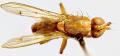
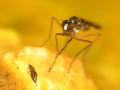
Is this Phaonia pallida please.
philporter attached the following image: 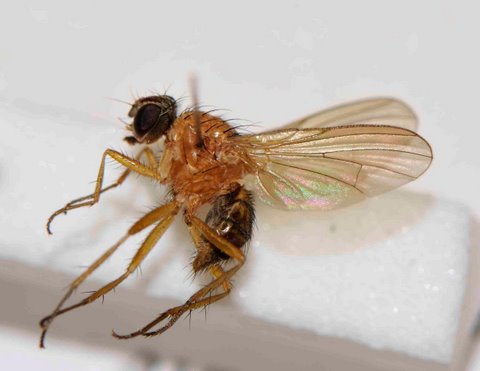 [39.18Kb] Edited by philporter on 28-10-2010 09:58 |
|
|
|
| Stephane Lebrun |
Posted on 21-10-2010 17:05
|
 Member Location: Le Havre, France Posts: 8248 Joined: 03.03.07 |
It looks more like Thricops diaphanus : if the arista is only pubescent, strong proclinate orbital setae are present, strong presut. acr. are lacking or if there are setulae behind inner margin of hind coxa, it will be confirmed. If only 3 post dc and at least 2 strong pd on hind tibia (and then anal vein reaching the wing border), it is Pegomya (I can't see anything of these characters here). Stephane. |
|
|
|
| Stephane Lebrun |
Posted on 21-10-2010 17:20
|
|
Member Location: Le Havre, France Posts: 8248 Joined: 03.03.07 |
Having a second look on this one, I see small calypters and an ad on mid tibia, which speaks for Anthomyiidae (Pegomya I think).
Stephane. |
|
|
|
| philporter |
Posted on 21-10-2010 17:31
|
|
Member Location: Lincoln UK Posts: 554 Joined: 07.02.07 |
I was just about to reply Stephane, that it is anthomyiidae simply because of the anal vein reaching the wing margin. I have no seen such a pale anthomyid before, so I was not expecting it to be so. Many thanks as always. |
|
|
|
| Stephane Lebrun |
Posted on 21-10-2010 17:36
|
|
Member Location: Le Havre, France Posts: 8248 Joined: 03.03.07 |
Pegomya testacea or geniculata could make some good candidates. Wait for Joke now...
Stephane. |
|
|
|
| philporter |
Posted on 21-10-2010 18:34
|
|
Member Location: Lincoln UK Posts: 554 Joined: 07.02.07 |
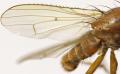
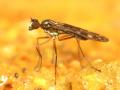
I've dipped not very thoroughly into Mr. Ackland's key and everything fits for Pegomya EXCEPT, unless I have interpreted it wrongly, that there is one of a pair of potentially crossed setae just below the ocellar triangle which are supposed to be missing in Pegomya. Is this dark red area the 'interfrontalia' that he refers to? The seta can be seen (at least at my end) on the left hand side of this area by its white scar mark. I have also included a dorsal view if it helps. I would say the hind tibia has 2 ad, 1 av and 2 which are either dorsal or pd. Middle tibia has 1 ad and 1 pd plus two small bristles side by side in the basal half, but leg bristles freak me.
philporter attached the following image: 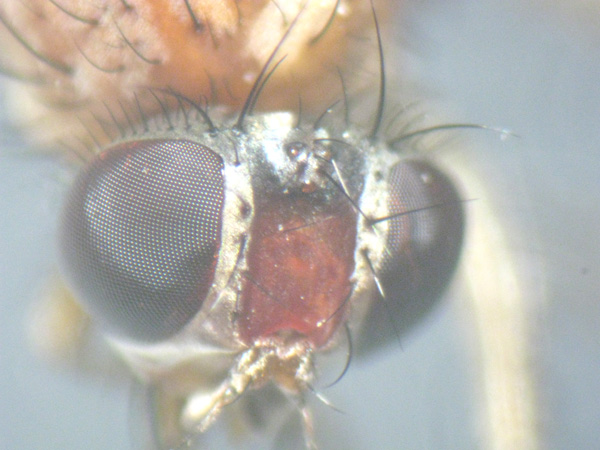 [107.67Kb] |
|
|
|
| philporter |
Posted on 21-10-2010 18:35
|
|
Member Location: Lincoln UK Posts: 554 Joined: 07.02.07 |
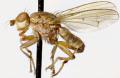
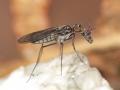
Dorsal
philporter attached the following image: 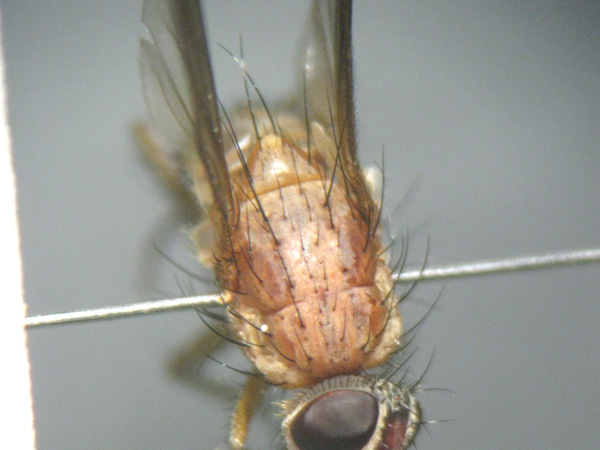 [96.58Kb] |
|
|
|
| Stephen R |
Posted on 21-10-2010 19:55
|
 Member Location: Clitheroe Lancashire UK Posts: 2396 Joined: 12.06.09 |
Do you have a genera key for females? My version of Michael Ackland's key only does males - should I go back for more? |
|
|
|
| Stephane Lebrun |
Posted on 21-10-2010 20:12
|
|
Member Location: Le Havre, France Posts: 8248 Joined: 03.03.07 |
Females do have crossed i.fr., not males if I remember well.
Stephane. |
|
|
|
| philporter |
Posted on 21-10-2010 23:11
|
|
Member Location: Lincoln UK Posts: 554 Joined: 07.02.07 |
Stephen, you have nothing new to go to I'm afraid; I have fallen into the trap of looking casually into the anthomyid key forgetting the lack of female characteristics within it. With Stephane mentioning that the females have bristles on the central frons area the difficulty goes away as far as genus is concerned. |
|
|
|
| Jump to Forum: |