


Diptera.info :: Identification queries :: Diptera (adults)
 Unusual ovipositor - fly from Australia
|
|
| Graeme Cocks |
Posted on 03-08-2010 03:38
|
 Member Location: Townsville, Australia Posts: 3083 Joined: 09.09.08 |
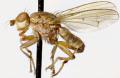
The ovipositor on this fly is unusual in that it is pointing forward and above the abdomen. What could be it's intended victim? Malaise trap, Townsville Australia. Graeme Cocks attached the following image: 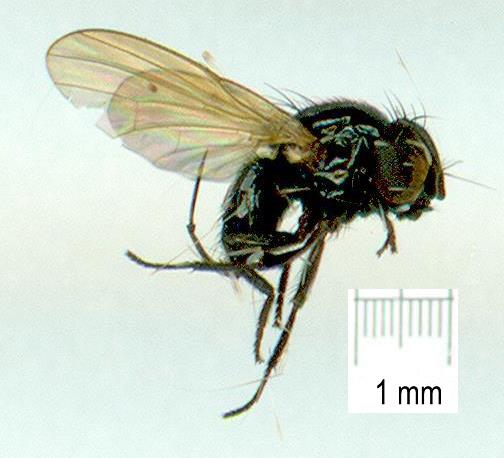 [28.17Kb] |
 |
|
| Paul Beuk |
Posted on 03-08-2010 06:16
|
 Super Administrator Location: Netherlands Posts: 19403 Joined: 11.05.04 |
Female Lonchaeidae. Lonchaeidae have long ovipositors as many species seem to specialise ovipositing under bark of dead or dying trees. You need a long ovipositor to reach as fas as you can to get to the wood.
Paul - - - - Paul Beuk on https://diptera.info |
|
|
|
| Graeme Cocks |
Posted on 03-08-2010 22:32
|
|
Member Location: Townsville, Australia Posts: 3083 Joined: 09.09.08 |
Thanks Paul, but I was more fascinated by the location of the ovipositor, on it's back. How does the fly position itself to lay eggs. It seems impossible to me. |
|
|
|
| Paul Beuk |
Posted on 04-08-2010 06:23
|
|
Super Administrator Location: Netherlands Posts: 19403 Joined: 11.05.04 |
The current position is due to the drying of the specimen.
Paul - - - - Paul Beuk on https://diptera.info |
|
|
|
| Graeme Cocks |
Posted on 04-08-2010 08:07
|
|
Member Location: Townsville, Australia Posts: 3083 Joined: 09.09.08 |
Thank you again. Cheers, Graeme |
|
|
|
| Iain MacGowan |
Posted on 05-08-2010 10:03
|
 Member Location: Perth, Scotland Posts: 470 Joined: 25.11.04 |
Paul is correct, the ovipositor has curled up when the specimen dried. The long antennal flagellomere suggests it is a species within the genus Silba (if the arista has long hairs this would confirm it is a Silba) of which there are about 12 spp. in Australasia. As far as we know they lay eggs in decaying fruits rather than in dead wood .......... Iain
Iain MacGowan |
|
|
|
| Nosferatumyia |
Posted on 05-08-2010 14:06
|
 Member Location: Posts: 3575 Joined: 28.12.07 |
OK. Most of lonchaeids are zoophagous under the bark, some are saprophagous and some are true phytophagous, and even gall-forming. Unlike the true fruit flies (Tephritidae), they have the basal joint of the ovipositor (the oviscape, tergosternite 7) soft and flat, without straightening apodemes, etc., making it deformable by contracting muscles while drying. Val |
|
|
|
| Graeme Cocks |
Posted on 05-08-2010 22:14
|
|
Member Location: Townsville, Australia Posts: 3083 Joined: 09.09.08 |
Thanks everyone. Graeme |
|
|
|
| Jump to Forum: |