


Diptera.info :: Identification queries :: Diptera (adults)
 Dinera ferina, Tachinidae
|
|
| JariF |
Posted on 19-07-2010 13:39
|
 Member Location: Helsinki, Finland Posts: 2072 Joined: 20.01.06 |
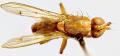
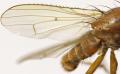
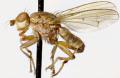
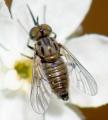
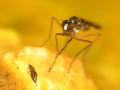
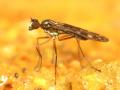
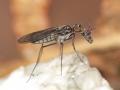
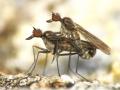
Hi, here four differend looking Tachinidae. This first one is a large, more than 10mm and fat female. July 17. 2010 Loviisa, Finland. Jari JariF attached the following image: 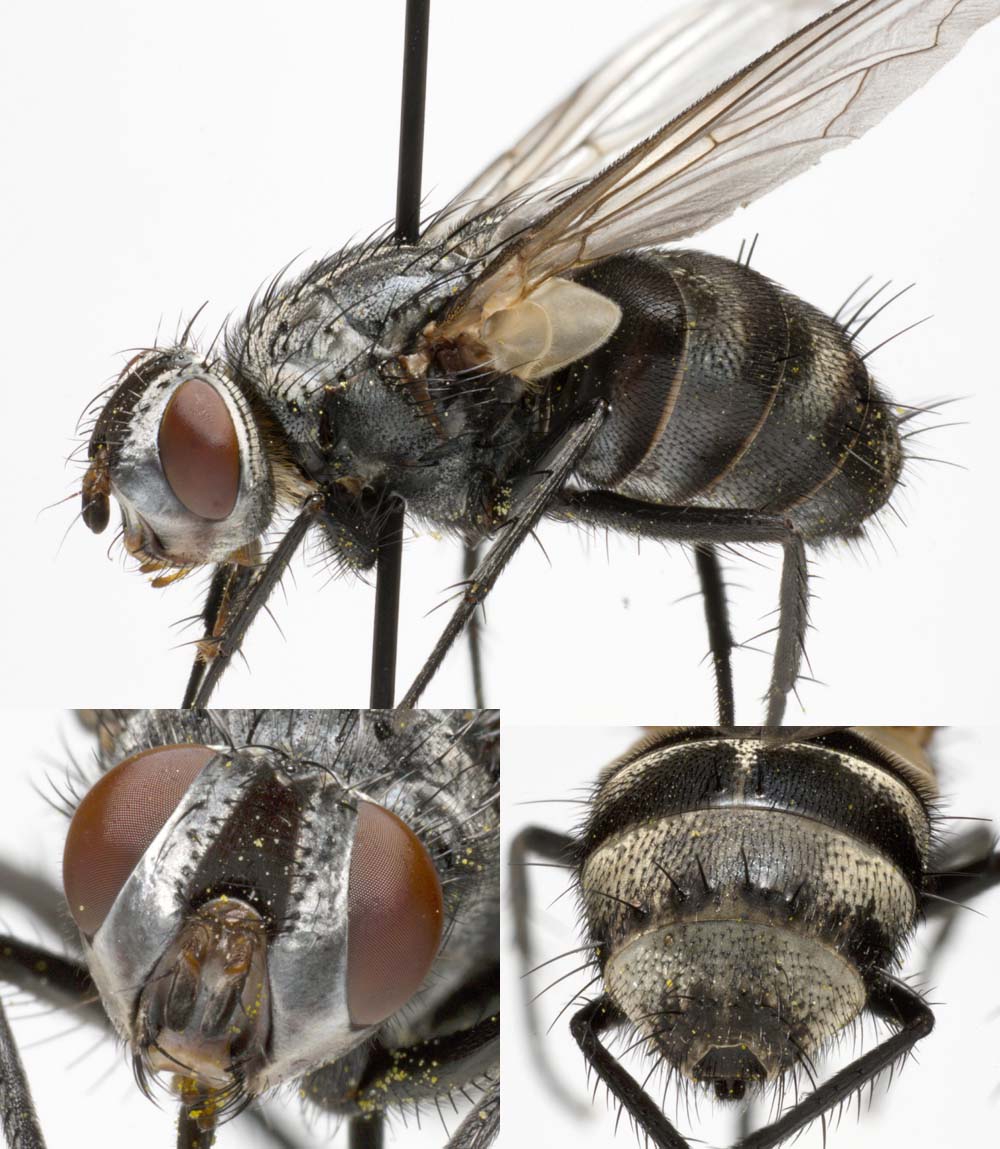 [156.75Kb] Edited by JariF on 21-07-2010 16:05 |
|
|
|
| ChrisR |
Posted on 19-07-2010 14:20
|
 Super Administrator Location: Reading, England Posts: 7706 Joined: 12.07.04 |
Can you check whether this one has a plumose/hairy arista? I can't see it on the photos but it might be just faint.
Manager of the UK Species Inventory in the Angela Marmont Centre for UK Biodiversity at the Natural History Museum, London. |
 |
|
| JariF |
Posted on 19-07-2010 17:04
|
|
Member Location: Helsinki, Finland Posts: 2072 Joined: 20.01.06 |
Arista is short hairy, not plumose. |
|
|
|
| ChrisR |
Posted on 19-07-2010 17:49
|
|
Super Administrator Location: Reading, England Posts: 7706 Joined: 12.07.04 |
I'd go for one of those similar dexiines - Billaea/Dinera if the propleuron is bare or Estheria if it is hairy 
Edited by ChrisR on 19-07-2010 17:49 Manager of the UK Species Inventory in the Angela Marmont Centre for UK Biodiversity at the Natural History Museum, London. |
|
|
|
| JariF |
Posted on 19-07-2010 18:05
|
|
Member Location: Helsinki, Finland Posts: 2072 Joined: 20.01.06 |
Well .... it has some hairs on propleuron yes, so we turn to Estheria petiolata maybe ...  |
|
|
|
| ChrisR |
Posted on 19-07-2010 18:31
|
|
Super Administrator Location: Reading, England Posts: 7706 Joined: 12.07.04 |
Kinda ... once we agree that the parafacial is hairy: 3. The area around m-cu and the post-angular vein are browned. Basicosta brownish-yellow. Humeral callus in its basic colour at least partially yellow (seldom completely darkened). Body length 9 - 12 mm .......... picta Meig.
- The area around the said veins is not browned. Basicosta black-brown. Humeral callus black. Body length 9 - 14 mm .......... petiolata Bonsd. Edited by ChrisR on 19-07-2010 18:32 Manager of the UK Species Inventory in the Angela Marmont Centre for UK Biodiversity at the Natural History Museum, London. |
|
|
|
| JariF |
Posted on 19-07-2010 19:24
|
|
Member Location: Helsinki, Finland Posts: 2072 Joined: 20.01.06 |
We may have a problem, because parafascial is bare .... hairy only in very lower part (visible in picture too) |
|
|
|
| ChrisR |
Posted on 19-07-2010 22:34
|
|
Super Administrator Location: Reading, England Posts: 7706 Joined: 12.07.04 |
ahh, sorry - I thought I could see hairs. Then in that case we get a different choice: 2. 4 Humeral bristles, the 3 strongest stand in a ± straight line (as in fig. 80). 3 dc behind the suture. Petiole of R5 at most as long as r-m, usually much shorter. Scutellum predominantly yellow .......... cristata Meig.
- 5 Humeral bristles, the 3 strongest form a triangle (as in fig. 76). 4 dc behind the suture. Petiole of R5 longer than r-m. Scutellum black .......... bohemani Rond. Edited by ChrisR on 19-07-2010 22:34 Manager of the UK Species Inventory in the Angela Marmont Centre for UK Biodiversity at the Natural History Museum, London. |
|
|
|
| JariF |
Posted on 20-07-2010 06:57
|
|
Member Location: Helsinki, Finland Posts: 2072 Joined: 20.01.06 |
Hmmm.... a long hmmmmm How would You judge these bristles ?
JariF attached the following image: 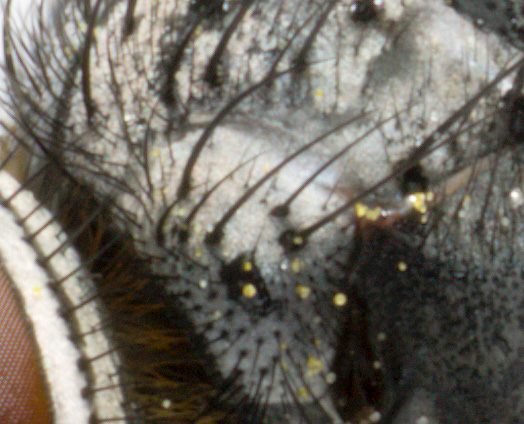 [125.12Kb] |
|
|
|
| Jaakko |
Posted on 20-07-2010 11:08
|
 Member Location: Joensuu, Finland Posts: 479 Joined: 04.08.08 |
Does it really have a R5 petiole? Jaakko |
|
|
|
| JariF |
Posted on 20-07-2010 16:55
|
|
Member Location: Helsinki, Finland Posts: 2072 Joined: 20.01.06 |
Noup, so we are on wrong track  |
|
|
|
| JariF |
Posted on 20-07-2010 17:56
|
|
Member Location: Helsinki, Finland Posts: 2072 Joined: 20.01.06 |
Are we looking at Dinera ferina after all ? Jari |
|
|
|
| ChrisR |
Posted on 20-07-2010 18:05
|
|
Super Administrator Location: Reading, England Posts: 7706 Joined: 12.07.04 |
Well, I can't see a central facial ridge, which should rule out Dinera ... your last photo doesn't show the propleuron - it's a bit below that (but above the spiracle) and sometimes has a few scattered fine hairs. Manager of the UK Species Inventory in the Angela Marmont Centre for UK Biodiversity at the Natural History Museum, London. |
|
|
|
| JariF |
Posted on 20-07-2010 18:19
|
|
Member Location: Helsinki, Finland Posts: 2072 Joined: 20.01.06 |
Now I found what was confusing me as You wrote: I'd go for one of those similar dexiines - Billaea/Dinera if the propleuron is bare or Estheria if it is hairy The key says just the opposite: Simultaneously: propleuron bare AND tergite 2 dorsally hollowed to the posterior edge. Tergites 3 and 4 with discal bristles ............................................ Estheria (page 61) 􀀐 Propleuron hairy (as in fig. 90); when rarely bare or almost bare, then tergite 2 is hollowed at most to the middle. Tergites 3 and 4 without discal bristles (at most with a few stronger hairs in the upright hairs on the posterior edge of males) .................................................. 15 Jari |
|
|
|
| Zeegers |
Posted on 21-07-2010 10:47
|
|
Member Location: Soest, NL Posts: 19299 Joined: 21.07.04 |
It is not Estheria, since there is no petiole (this reasoning is valid in Finland, not in Spain.). What about Billaea ? parafrontals hairy (> 20 small hairs) -> Billaea parafrontals virtually bare (< 20 hairs) -> Dinera If Dinera, it must be ferina, in which case you'd have DC 3+4 and excavation on syntergite 1&2 complete. Theo |
|
|
|
| JariF |
Posted on 21-07-2010 16:05
|
|
Member Location: Helsinki, Finland Posts: 2072 Joined: 20.01.06 |
It has around ten very tiny hairs on parafontals and DC 3+4 so I belive this case is closed and we have a name This was so interesting that it made me to load the key again and study it closer. Thank You for help. Jari |
|
|
|
| ChrisR |
Posted on 21-07-2010 18:32
|
|
Super Administrator Location: Reading, England Posts: 7706 Joined: 12.07.04 |
Glad we got there in the end 
Manager of the UK Species Inventory in the Angela Marmont Centre for UK Biodiversity at the Natural History Museum, London. |
|
|
|
| Jump to Forum: |