


Diptera.info :: Identification queries :: Diptera (adults)
Who is here? 1 guest(s)
 Tachinidae of today (2)
|
|
| Sundew |
Posted on 15-07-2010 17:37
|
 Member Location: Berlin and Baden-Württemberg, Germany Posts: 3939 Joined: 28.07.07 |
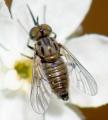
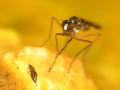
Hi, Here comes another Tachinid of today, feeding on a Cirsium arvense flowerhead. I feel I should know it, but I am not certain... Help, please! Many thanks, Sundew Sundew attached the following image: 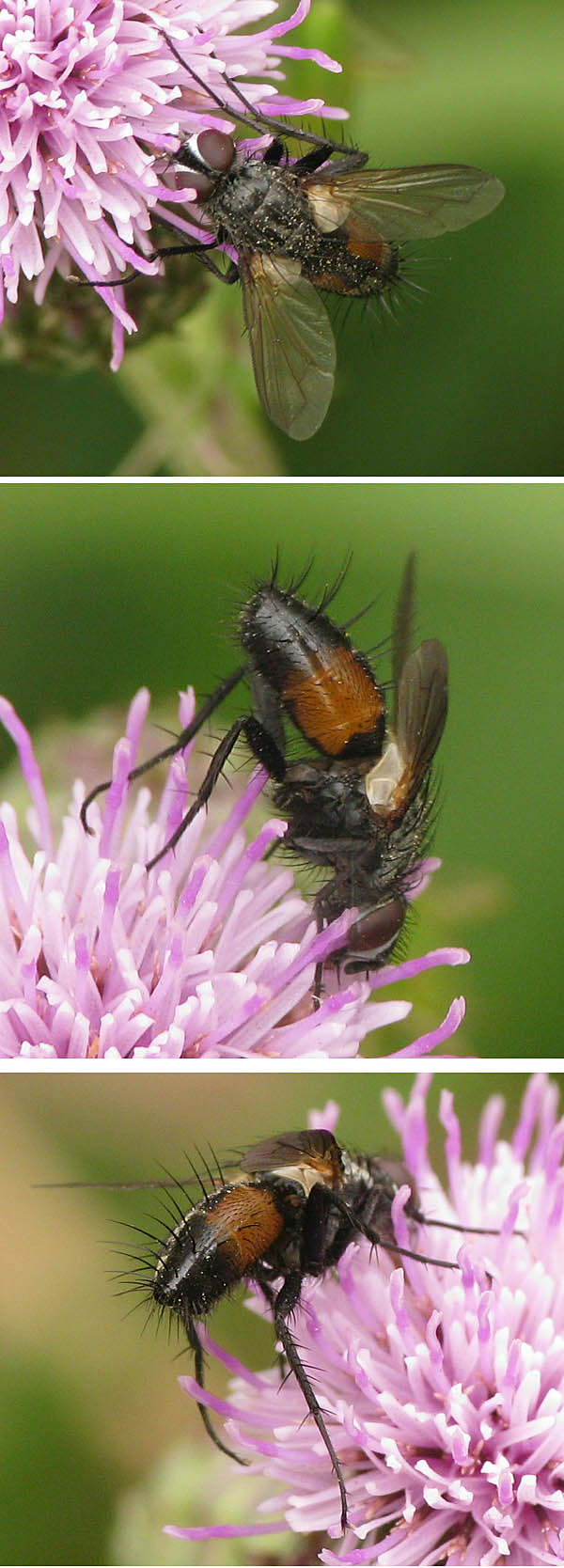 [137.14Kb] |
|
|
|
| Sundew |
Posted on 15-07-2010 17:37
|
|
Member Location: Berlin and Baden-Württemberg, Germany Posts: 3939 Joined: 28.07.07 |
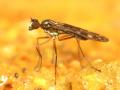
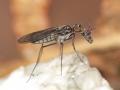
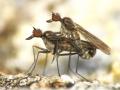
More pics.
Sundew attached the following image: 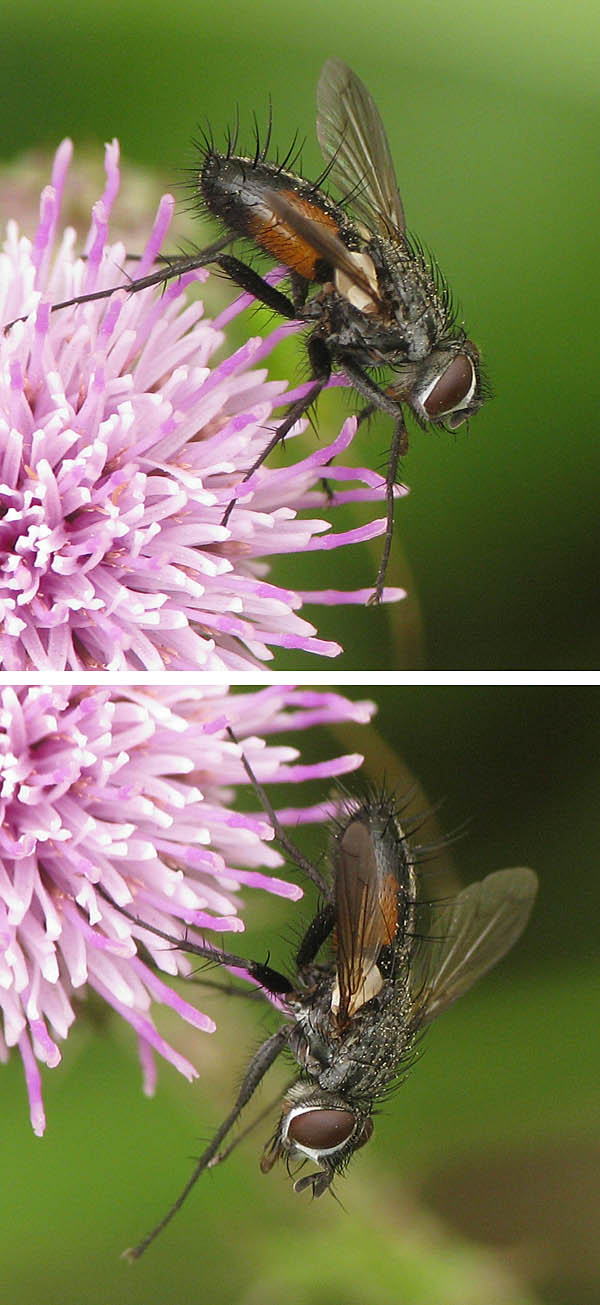 [111.96Kb] |
|
|
|
| ChrisR |
Posted on 15-07-2010 17:49
|
 Super Administrator Location: Reading, England Posts: 7706 Joined: 12.07.04 |
Eriothrix rufomaculata - just about the commonest species at this time of year  Look for: red abdominal side-patches; silvery face with protruding mouth edge; slightly shaded wings with small petiole; large costal spine; and more than 2 dark vittae on the thorax 
Edited by ChrisR on 15-07-2010 17:51 Manager of the UK Species Inventory in the Angela Marmont Centre for UK Biodiversity at the Natural History Museum, London. |
 |
|
| Sundew |
Posted on 15-07-2010 17:57
|
|
Member Location: Berlin and Baden-Württemberg, Germany Posts: 3939 Joined: 28.07.07 |
Aha - many thanks, Chris! I already have some (not too good) photos of this species, but the red side-patches were much redder and shiny and thus much more conspicuous in these pictures, so the fly of today did not really ring a bell in my brain. |
|
|
|
| ChrisR |
Posted on 15-07-2010 18:03
|
|
Super Administrator Location: Reading, England Posts: 7706 Joined: 12.07.04 |
The problem is that those red side patches are very variable ... from covering virtually the whole length of the abdomen to no red at all ... the shading and petiole are a bit variable too. Flies like that with a much longer petiole (as long as r-m) would be Zeuxia sp. and flies like that with 2 broad black vittae on the thorax would be Mintho sp. Those are just generalizations of course but you get the idea.
Manager of the UK Species Inventory in the Angela Marmont Centre for UK Biodiversity at the Natural History Museum, London. |
|
|
|
| Jump to Forum: |