


Diptera.info :: Identification queries :: Diptera (adults)
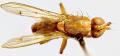
 Phaonia (?) #3: P. pallida?
|
|
| Juergen Peters |
Posted on 24-08-2006 16:18
|
 Member Location: northwest Germany Posts: 14443 Joined: 11.09.04 |
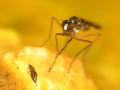
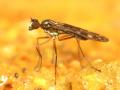
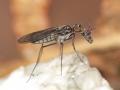
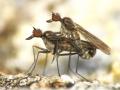
Hello! On Aconitum in our garden on August-19. Ist it Phaonia pallida or some other genus? Thanks! Juergen Peters attached the following image: 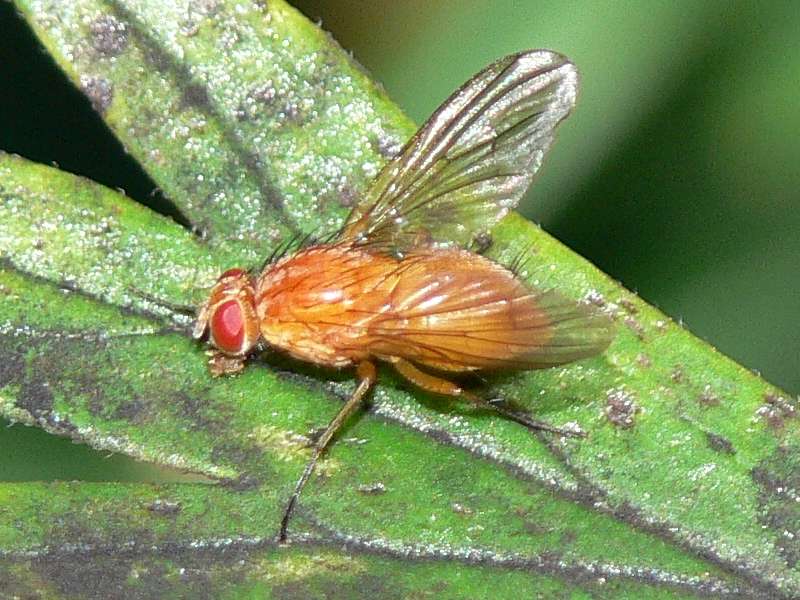 [76.09Kb] Best regards, Jürgen -=-=-=-=-=-=-=-=-=-=-=-=-=-=-=-= Juergen Peters Borgholzhausen, Germany WWW: http://insektenfo... -=-=-=-=-=-=-=-=-=-=-=-=-=-=-=-= |
 |
|
| Juergen Peters |
Posted on 24-08-2006 16:18
|
|
Member Location: northwest Germany Posts: 14443 Joined: 11.09.04 |
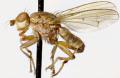
Another picture of the same fly.
Juergen Peters attached the following image: 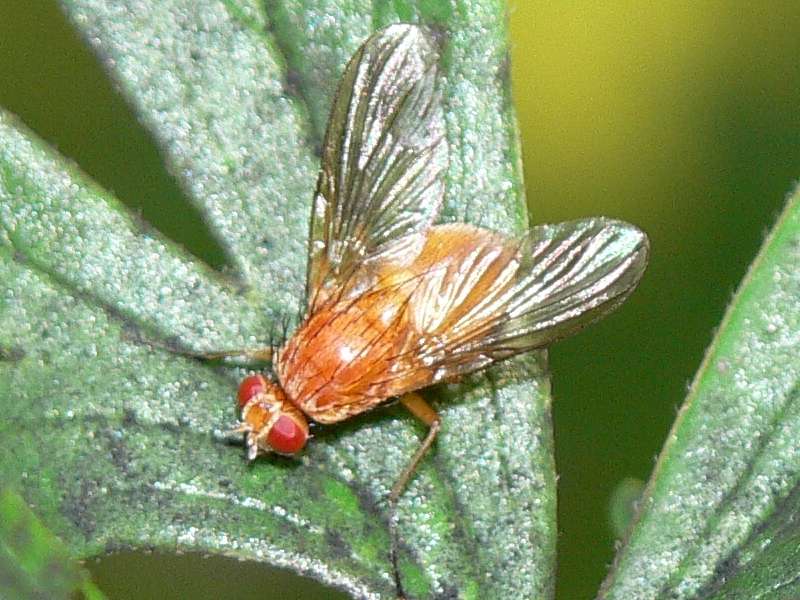 [71.36Kb] Best regards, Jürgen -=-=-=-=-=-=-=-=-=-=-=-=-=-=-=-= Juergen Peters Borgholzhausen, Germany WWW: http://insektenfo... -=-=-=-=-=-=-=-=-=-=-=-=-=-=-=-= |
|
|
|
| Susan R Walter |
Posted on 24-08-2006 18:54
|
 Member Location: Touraine du Sud, central France Posts: 1802 Joined: 14.01.06 |
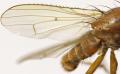
Venation, general appearance and thoracic bristle arrangement look like http://www.dipter...post_12609 , identified by Tony as P pallida.
Susan |
|
|
|
| Juergen Peters |
Posted on 24-08-2006 19:51
|
|
Member Location: northwest Germany Posts: 14443 Joined: 11.09.04 |
Hello, Susan! Susan R Walter wrote: Venation, general appearance and thoracic bristle arrangement look like http://www.dipter...post_12609 , identified by Tony as P pallida. Thanks a lot! Best regards, Jürgen -=-=-=-=-=-=-=-=-=-=-=-=-=-=-=-= Juergen Peters Borgholzhausen, Germany WWW: http://insektenfo... -=-=-=-=-=-=-=-=-=-=-=-=-=-=-=-= |
|
|
|
| Xespok |
Posted on 24-08-2006 20:56
|
 Member Location: Debrecen, Hungary Posts: 5551 Joined: 02.03.05 |
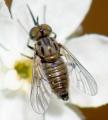
In the Hungarian series on the identification of Diptera, there is a remark, that there are three very similar species to this, one is Phaonia pallida, and there are two other very pale Anthomyiids. I observed some very similar flies. Could this be the male of the same species? |
|
|
|
| Juergen Peters |
Posted on 24-08-2006 23:07
|
|
Member Location: northwest Germany Posts: 14443 Joined: 11.09.04 |
Hello, Xespok! Xespok wrote: and there are two other very pale Anthomyiids. I have read that Pegomyia silacea (Anthomyiidae) is also this pale. Best regards, Jürgen -=-=-=-=-=-=-=-=-=-=-=-=-=-=-=-= Juergen Peters Borgholzhausen, Germany WWW: http://insektenfo... -=-=-=-=-=-=-=-=-=-=-=-=-=-=-=-= |
|
|
|
| Susan R Walter |
Posted on 25-08-2006 12:55
|
|
Member Location: Touraine du Sud, central France Posts: 1802 Joined: 14.01.06 |
I've looked at a number of images and it seems to me that the Phaonia pallida candidates have 4 post-sutural dorsocentrals, and the Pegomyia's have 3. This might be a dangerous over generalisation though. I expect Tony can tell us. If my observation is accurate, then Xespok's is right that his male fly is also P pallida Also, the fly above has that rather overstuffed abdominal look that some Muscids have. There is supposed to be something about the line of the back of the head that helps you distinguish between Muscids and Anthos, and I can never remember how it goes - one is supposed to be flatter, less rounded than the other I think. There are also differences in the leg bristles between Muscids and Anthos, but we can't see enough of these to help I think. Susan |
|
|
|
| Susan R Walter |
Posted on 25-08-2006 22:31
|
|
Member Location: Touraine du Sud, central France Posts: 1802 Joined: 14.01.06 |
Sorry Crex. My understanding of postsutural dorsocentral (which won't be the exact scientific definition, but hopefully helpful) is that calyptrate flies have a suture ie the groove or indentation that runs across top of the thorax from 'shoulder' to 'shoulder'. Bristles run in rows down the length of the thorax and if you count the number in one of the centrally placed rows, between the suture and the scutellum, it can be an important clue to genera, and sometimes species.
Susan |
|
|
|
| crex |
Posted on 26-08-2006 07:26
|
 Member Location: Sweden Posts: 1996 Joined: 22.05.06 |
Thank you Susan for explaining it!  |
|
|
|
| Xespok |
Posted on 26-08-2006 08:18
|
|
Member Location: Debrecen, Hungary Posts: 5551 Joined: 02.03.05 |
Susan, thx for your input. |
|
|
|
| Xespok |
Posted on 26-08-2006 08:21
|
|
Member Location: Debrecen, Hungary Posts: 5551 Joined: 02.03.05 |
In addition it is maybe interesting to mention that this species seems to prefer shady places unlike most of the other Phaonia-like species. This means that I ussually observed this fly in the undergrowth of the forest, and the fly often perched on the underside of leaves, which I never saw for similar flies. |
|
|
|
| Jump to Forum: |