


Diptera.info :: Identification queries :: Diptera (adults)
Who is here? 1 guest(s)
 Empididae Empis sp?
|
|
| nick upton |
Posted on 05-05-2010 09:42
|
|
Member Location: Wiltshire, UK Posts: 828 Joined: 12.03.10 |
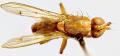
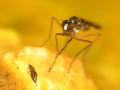
Can anyone help identify this fly,c 12mm Empis sp? Wiltshire southwest UK 4.5.10 nick upton attached the following image: 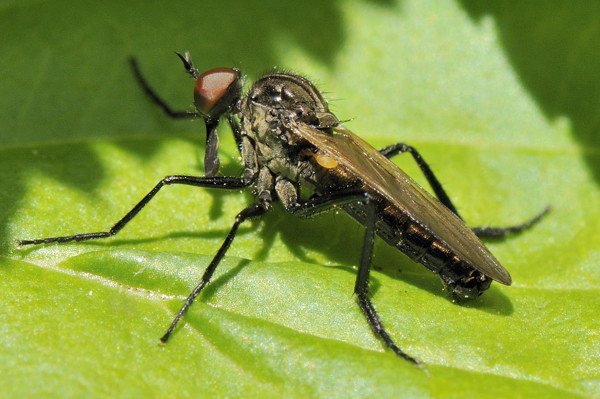 [153.97Kb] Edited by nick upton on 05-05-2010 11:21 Nick Upton - naturalist and photographer |
|
|
|
| nick upton |
Posted on 05-05-2010 09:43
|
|
Member Location: Wiltshire, UK Posts: 828 Joined: 12.03.10 |
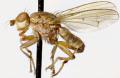
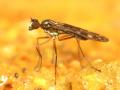
And a top view
nick upton attached the following image: 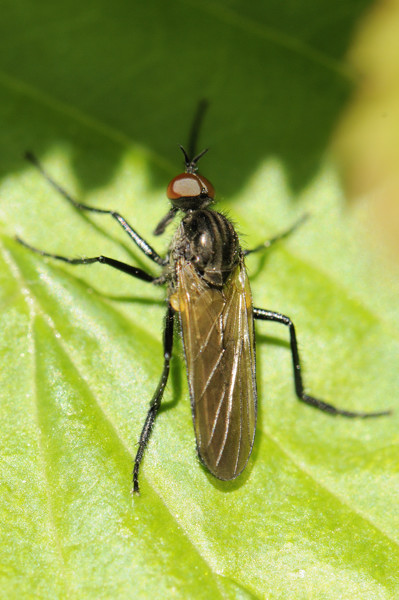 [141.07Kb] Nick Upton - naturalist and photographer |
|
|
|
| Sundew |
Posted on 05-05-2010 11:09
|
 Member Location: Berlin and Baden-Württemberg, Germany Posts: 3939 Joined: 28.07.07 |
The short proboscis makes me think of Rhamphomyia instead. If the fork in the posterior radial vein (R4+5) is absent (and I think so, but lack the keen eyes of an expert), your fly must belong to this genus. Wait for Paul, he'll know much more! Regards, Sundew Edited by Sundew on 05-05-2010 11:09 |
|
|
|
| nick upton |
Posted on 05-05-2010 11:27
|
|
Member Location: Wiltshire, UK Posts: 828 Joined: 12.03.10 |
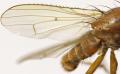
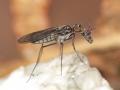
OK, many thanks. Since I posted this I came across some Rhamphomyia pics and thought that might be the genus rather than Empis, but like you say, some really expert eyes may help and I attach one more image that might help with wing vein scrutiny!
nick upton attached the following image: 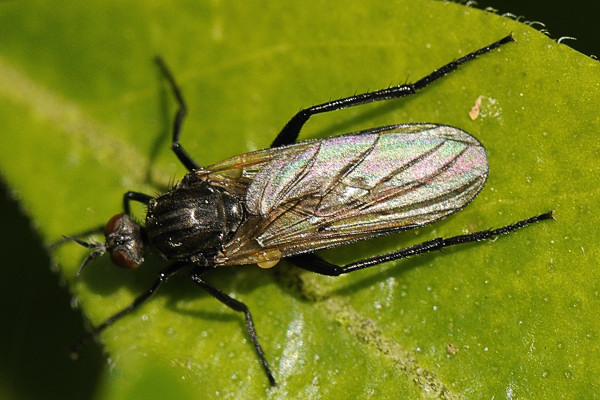 [146.09Kb] Nick Upton - naturalist and photographer |
|
|
|
| Paul Beuk |
Posted on 05-05-2010 19:58
|
 Super Administrator Location: Netherlands Posts: 19403 Joined: 11.05.04 |
Male of Rhamphomyia sulcata group
Paul - - - - Paul Beuk on https://diptera.info |
 |
|
| nick upton |
Posted on 06-05-2010 09:59
|
|
Member Location: Wiltshire, UK Posts: 828 Joined: 12.03.10 |
OK, many thanks. Should I take it by your use of the term "group" that the taxonomy of R. sulcata is in doubt ie that there may be more than one true species among flies attributed to S. sulcata? Or do you mean this could also be R. sulcatella or R.sulcatina and the species cannot be separated by photographable characters?
Edited by nick upton on 06-05-2010 10:00 Nick Upton - naturalist and photographer |
|
|
|
| Paul Beuk |
Posted on 07-02-2012 11:58
|
|
Super Administrator Location: Netherlands Posts: 19403 Joined: 11.05.04 |
The group has four species in the UK that are not easily separated. The males require a caudal view of the genitalia (to recognise R. sulcata), the mesonotum (bi-serial acrostichal setae in R. trilineata [=R. sulcatina], often also visble because of the narrower median stripe) and characters of the legs. Females are slightly easier (!) because cinerascens (in my view synonymous with subcinerascens) has a darkened anal area of the wing, sulcatella has somewhat pennate legs, and trilineata has the bi-serial acrostichal setae (see above).
Edited by Paul Beuk on 07-02-2012 12:03 Paul - - - - Paul Beuk on https://diptera.info |
|
|
|
| Jump to Forum: |