
Gallery Links
Users Online
· Guests Online: 15

· Members Online: 0

· Total Members: 5,091
· Newest Member: AndreeaOp
Forum Threads
Theme Switcher
Switch to:
Last Seen Users
· ESant00:22:42
· smol01:09:33
· Juergen Peters01:13:51
· weia01:24:05
· Carnifex02:14:11
· ViktorNebenf...03:19:57
· tabiatdostu03:27:16
· Andre Burgers03:44:18
· piros05:47:38
· Nosferatumyia07:03:40
Latest Photo Additions
View Thread
Diptera.info :: Identification queries :: Diptera (adults)
 Print Thread
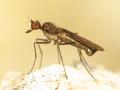
Eliozeta or Clytiomyia?
Rui Andrade
#1 Print Post
Posted on 24-07-2009 20:23
User Avatar

Member

Location: Portugal
Posts: 3123
Joined: 19.06.07

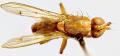
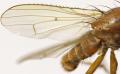
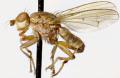
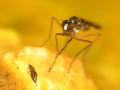
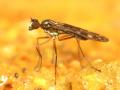
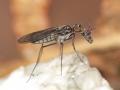
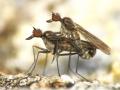
What is possible to say about it?

location: Viana do Castelo, Portugal
date: 10/07/2009

img23.imageshack.us/img23/7959/92817515.jpg

img23.imageshack.us/img23/7180/97892115.jpg
 
www.flickr.com/photos/rui_andrade/
jorgemotalmeida
#2 Print Post
Posted on 24-07-2009 21:09
User Avatar

Member

Location: Viseu - PORTUGAL
Posts: 9296
Joined: 05.06.06

I'd say Eliozeta. Hairs on the abdomen are recumbent, no erect as it happens with Clytiomyia.
Wait for Theo, Chris, Jaako, neprisi.... Grin
 
http://www.flickr.com/photos/superegnum
ChrisR
#3 Print Post
Posted on 24-07-2009 21:23
User Avatar

Super Administrator

Location: Reading, England
Posts: 7706
Joined: 12.07.04

How many sternopleurals/katepisternals does it have?

269. 3 st (but the lower sometimes hardly differentiated from the hairs). Males: hairs of the tergites in their centre - as on the sides - prone; if a few hairs are raised, then these remain considerably shorter than 0.5 of the marginal bristles; tergite 6 bare or with hairs on its dorsal area. Females: parafrontalia outside the frontal bristles with hairs............Eliozeta (page 66)
- 2 st. Males: hairs on the middle of the tergites raised, the longest hairs at least as long as 0.5 the marginal bristles; tergite 6 always with hairs on its dorsal area. Females: parafrontalia outside the frontal bristles bare...............Clytiomya [continua Panz.]


Smile
Edited by ChrisR on 24-07-2009 21:26
Manager of the UK Species Inventory in the Angela Marmont Centre for UK Biodiversity at the Natural History Museum, London.
 
http://tachinidae.org.uk
Rui Andrade
#4 Print Post
Posted on 24-07-2009 21:24
User Avatar

Member

Location: Portugal
Posts: 3123
Joined: 19.06.07

I hope you are right, I've never seen EliozetaSmile.
 
www.flickr.com/photos/rui_andrade/
Rui Andrade
#5 Print Post
Posted on 24-07-2009 21:26
User Avatar

Member

Location: Portugal
Posts: 3123
Joined: 19.06.07

ChrisR wrote:
How many sternopleurals/katepisternals does it have?

269. 3 st (but the lower sometimes hardly differentiated from the hairs). Males: hairs of the tergites in their centre - as on the sides - prone; if a few hairs are raised, then these remain considerably shorter than 0.5 of the marginal bristles; tergite 6 bare or with hairs on its dorsal area. Females: parafrontalia outside the frontal bristles with hairs............Eliozeta (page 66)
- 2 st. Males: hairs on the middle of the tergites raised, the longest hairs at least as long as 0.5 the marginal bristles; tergite 6 always with hairs on its dorsal area. Females: parafrontalia outside the frontal bristles bare...............Clytiomya [continua Panz.]


Smile


Humm, I'll check.
 
www.flickr.com/photos/rui_andrade/
jorgemotalmeida
#6 Print Post
Posted on 24-07-2009 21:29
User Avatar

Member

Location: Viseu - PORTUGAL
Posts: 9296
Joined: 05.06.06

yes. I tried to count the katapisternal setae... but it is not possible here. Sad
 
http://www.flickr.com/photos/superegnum
Rui Andrade
#7 Print Post
Posted on 24-07-2009 21:36
User Avatar

Member

Location: Portugal
Posts: 3123
Joined: 19.06.07

I see only two katepisternals, despite the legs being in a position that makes it difficult to see very well. I think that there isn't a lower bristle.
 
www.flickr.com/photos/rui_andrade/
Zeegers
#8 Print Post
Posted on 26-07-2009 19:44
Member

Location: Soest, NL
Posts: 19298
Joined: 21.07.04

The third antennal segment is elongated and the arista strongly crassate, therefore, it is pellucens, and thus Eliozeta.
This is always the first thing to check, when in doubt !

Theo
 
Rui Andrade
#9 Print Post
Posted on 27-07-2009 01:05
User Avatar

Member

Location: Portugal
Posts: 3123
Joined: 19.06.07

Thank you very much Theo, this is my first EliozetaGrin
 
www.flickr.com/photos/rui_andrade/
jorgemotalmeida
#10 Print Post
Posted on 27-07-2009 07:55
User Avatar

Member

Location: Viseu - PORTUGAL
Posts: 9296
Joined: 05.06.06

Yesterday I saw two in Serra da Estrela. Wink
 
http://www.flickr.com/photos/superegnum
Jump to Forum:
Similar Threads
Thread Forum Replies Last Post
Ectophasia sp.? --> female Eliozeta pellucens Diptera (adults) 6 21-09-2025 18:54
Which Tachinidae is that? --> Eliozeta pellucens or Clytiomya continua Diptera (adults) 4 08-07-2025 12:14
Eliozeta sp./Clytiomya sp. Diptera (adults) 1 03-03-2025 20:15
Tachinidae ID => Eliozeta pellucens Diptera (adults) 4 08-01-2025 18:36
Tachinidae, Eliozeta Diptera (adults) 7 22-07-2024 12:18
Date and time
28 March 2026 01:59
Login
Username

Password


Not a member yet?
Click here to register.

Forgotten your password?
Request a new one here.
Temporary email?
Due to fact this site has functionality making use of your email address, any registration using a temporary email address will be rejected.

Paul
Donate
Please, help to make
Diptera.info
possible and enable
further improvements!
Latest Articles
Syrph the Net
Those who want to have access to the Syrph the Net database need to sign the
License Agreement -
Click to Download


Public files of Syrph the Net can be downloaded HERE

Last updated: 25.08.2011
Shoutbox
You must login to post a message.

20.02.26 13:31
Canada plans to eliminate the Diptera group at the CNC. See post in the News section of the main page.

18.02.26 09:33
Anyone have scans of the Genus Semaranga in: 1)Kanmiya, K. (1983) A systematic study of the Japanese Chloropidae (Diptera). 2) Andersson, H. (1977 Taxonomic and Phylogenetic studies on Chloropid

10.02.26 19:36
Hello Moumoule !

07.01.26 15:52
Pipunculidae from Mongolia! I am looking for specialist who is committed to ID these. There will be a lot of material coming from my expeditions.

06.12.25 21:37
He last posted here in April, identifying some Chloropidae.

04.12.25 20:02
Dr Michael von Tschirnhaus, a leading expert on Chloropidae and Agromyzidae, died on 16 September 2025 at the age of 86. He will be greatly missed by the international community. R.I.P.

03.12.25 12:46
Anyone has the scan of "Harkness, R. D.; Ismay, J. W. 1976: A new species of Trachysiphonella (Dipt., Chloropidae) from Greece, associated with an ant Cataglyphis bicolor (F.) (Hym., Formicidae)

01.12.25 22:29
I will try to fix the messages this month. We have to make some other configuration changes before software goes out of support at end of year.

29.11.25 21:57
I would prefer not to receive any more messages from diptera.info signed by Paul... (Thread reply notification)... Could they be signed by ‘The diptera.info team’?

19.11.25 12:31
It is with deepest sadness in my heart that I announce that on Saturday, November 15, one of the great minds of world dipterology, prof. Rudolf Rozkošny, left us forever. Please remember him with a

Render time: 1.53 seconds | 264,948,961 unique visits