


Diptera.info :: Identification queries :: Diptera (adults)
 Conopidae
|
|
| Isidro |
Posted on 25-08-2008 12:39
|
|
Member Location: Zaragoza, Spain Posts: 2101 Joined: 26.04.07 |
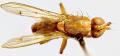
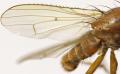
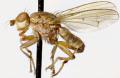
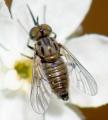
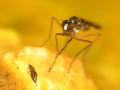
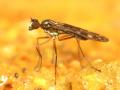
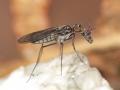
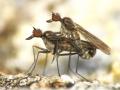
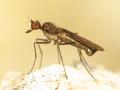
Conops usally are impossible to identify, at least in this forum... The last one is unnamed. Maybe this one have more good luck. Last Saturday. Mezalocha, Monegros region, Aragon, NE Spain. Habitat: dry steppe-lands, fields.    Can be identified? Thanks. Regards |
|
|
|
| jorgemotalmeida |
Posted on 25-08-2008 12:42
|
 Member Location: Viseu - PORTUGAL Posts: 9296 Joined: 05.06.06 |
WOW!  It seems a Conops . I never seen anything like this one. It seems a Conops . I never seen anything like this one. |
 |
|
| Isidro |
Posted on 25-08-2008 12:47
|
|
Member Location: Zaragoza, Spain Posts: 2101 Joined: 26.04.07 |
I tried to catch it for you, but it don't let me  |
|
|
|
| David Clements |
Posted on 25-08-2008 13:55
|
|
Member Location: Cardiff, UK Posts: 80 Joined: 21.04.07 |
I would guess that this is either Leopoldius calceatus or Abrachyglossum capitatum, but it's difficult to be sure because the head is not in focus - I would need to see the ocellar tubercle, and whether or not there were fine hairs on the upper surface of the third antennal segment. The two species are rather similar, and this specimen exhibits other characters which are somewhat intermediate, so I can't be sure - but if I was asked to guess, I would say calceatus. |
|
|
|
| jorgemotalmeida |
Posted on 25-08-2008 14:11
|
|
Member Location: Viseu - PORTUGAL Posts: 9296 Joined: 05.06.06 |
David, the proboscis is very conspicuous! |
|
|
|
| David Clements |
Posted on 25-08-2008 14:43
|
|
Member Location: Cardiff, UK Posts: 80 Joined: 21.04.07 |
Indeed it is. However, calceatus is unusual amongst Leopoldius in having short but strong and sclerotised probiscis up to about the width of the head (but usually somewhat less) - that of Abrachyglossum is somewhat longer again, which is one of the reasons why I am uncertain. However, I am pretty sure it is one of these two species, and the degree of banding on the wing makes me think its more likely calceatus. |
|
|
|
| jorgemotalmeida |
Posted on 25-08-2008 14:51
|
|
Member Location: Viseu - PORTUGAL Posts: 9296 Joined: 05.06.06 |
one exception  I didn't know about this one. thanks. So Abrachyglossum is very similar to Leopoldius genus... I thought that was very different among the other conopids. I didn't know about this one. thanks. So Abrachyglossum is very similar to Leopoldius genus... I thought that was very different among the other conopids. |
|
|
|
| David Clements |
Posted on 25-08-2008 15:03
|
|
Member Location: Cardiff, UK Posts: 80 Joined: 21.04.07 |
On the other hand, another possibility is Conops insignis.... Really, it needs a sharp photo of the head to be sure. |
|
|
|
| Isidro |
Posted on 25-08-2008 15:05
|
|
Member Location: Zaragoza, Spain Posts: 2101 Joined: 26.04.07 |
Then, I let is as Impossibilis conopidus. Thanks a lot David and Jorge. (Any of the three species mentioned is cited from Monegros region). |
|
|
|
| Isidro |
Posted on 09-09-2008 09:16
|
|
Member Location: Zaragoza, Spain Posts: 2101 Joined: 26.04.07 |
In Spain are cited both Abrachyglossum capitatum as Conops insignis. But not cited Leopoldius calceatus. This makes different the guesses? |
|
|
|
| Guenter |
Posted on 12-09-2008 19:37
|
|
Member Location: Dornbirn, Austria Posts: 278 Joined: 09.12.05 |
David, if the thing I've marked in the photo is the proboscis (and I've counted 6 legs apart from that thing, but maybe I'm still wrong) then I have to agree with Jorge that the proboscis is VERY conspicious. According to Chv?la (1961) in Abrachyglossum the proboscis is "strong, shorter or at most about the same lenght as the head", and in Leopoldius "short and fleshy, usually concealed in mouth cavity", and so in my opinion it must be a Conops. Guenter attached the following image: 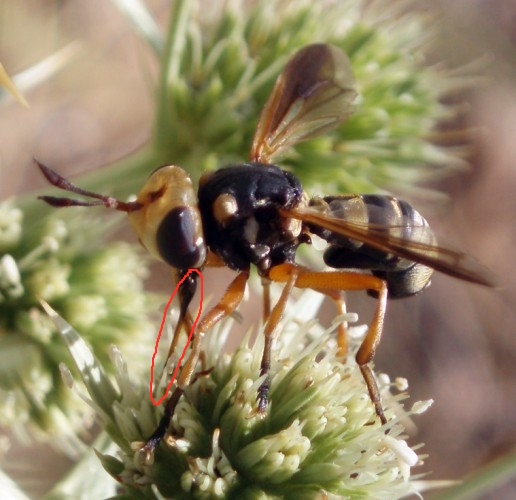 [135.48Kb] Günter Schwendinger |
|
|
|
| Isidro |
Posted on 13-09-2008 19:33
|
|
Member Location: Zaragoza, Spain Posts: 2101 Joined: 26.04.07 |
Thanks a lot G?nter. Then I'll let it as Conops insignis, with many doubts. |
|
|
|
| David Clements |
Posted on 16-09-2008 18:15
|
|
Member Location: Cardiff, UK Posts: 80 Joined: 21.04.07 |
I don't think I saw this photo before, or I would never have suggested Leopoldius, or Abrachyglossum! Perhaps I just wasn't looking! Anyway, certainly looks like Conops insignis to me. |
|
|
|
| Jump to Forum: |