

Diptera.info :: Identification queries :: Diptera (adults)
 Chaetostomella sp.? --> Chaetorellia sp.
|
|
| karl7 |
Posted on 19-10-2025 14:13
|
|
Member Location: Posts: 679 Joined: 09.02.25 |
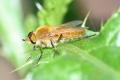
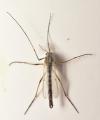
Have a nice Day. One Question please. Is this a Chaetostomella species and can it be identified more precisely? I would be very grateful for an answer. Data: Austria, Lower Austria, Tattendorf, 220m, dry flowering area, 2.5.2025, size approx. 3-4mm Kind regards Karl. karl7 attached the following image: 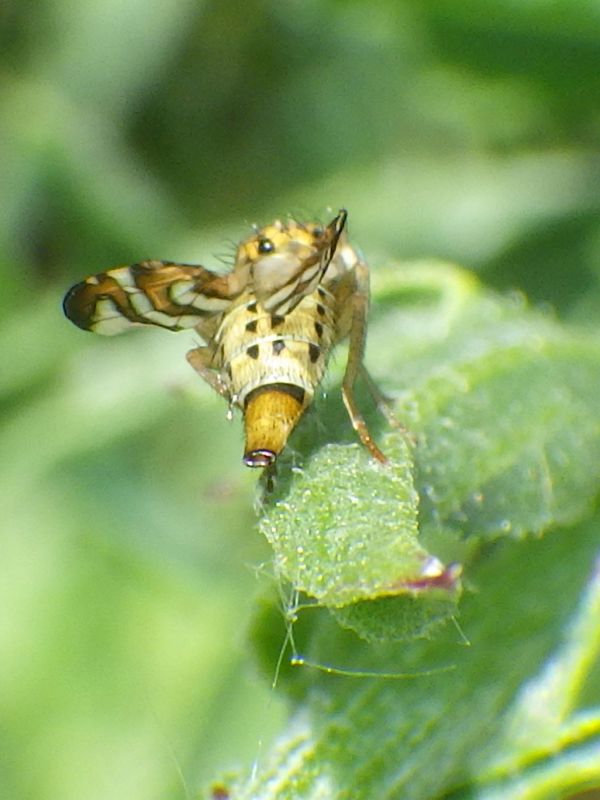 [114.78Kb] Edited by karl7 on 22-10-2025 19:10 |
|
|
|
| karl7 |
Posted on 19-10-2025 14:14
|
|
Member Location: Posts: 679 Joined: 09.02.25 |
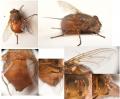
2.View
karl7 attached the following image: 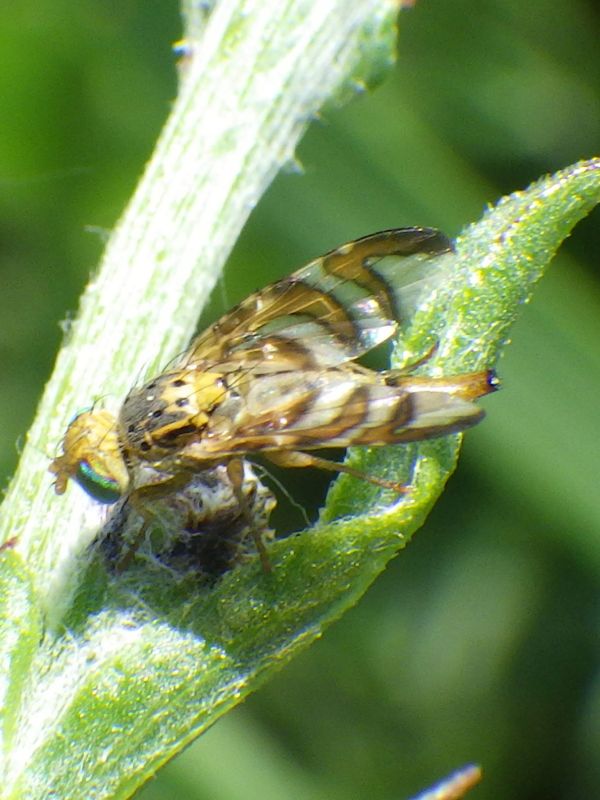 [131.08Kb] |
|
|
|
| karl7 |
Posted on 19-10-2025 14:14
|
|
Member Location: Posts: 679 Joined: 09.02.25 |
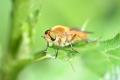
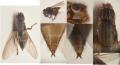
3.View
karl7 attached the following image: 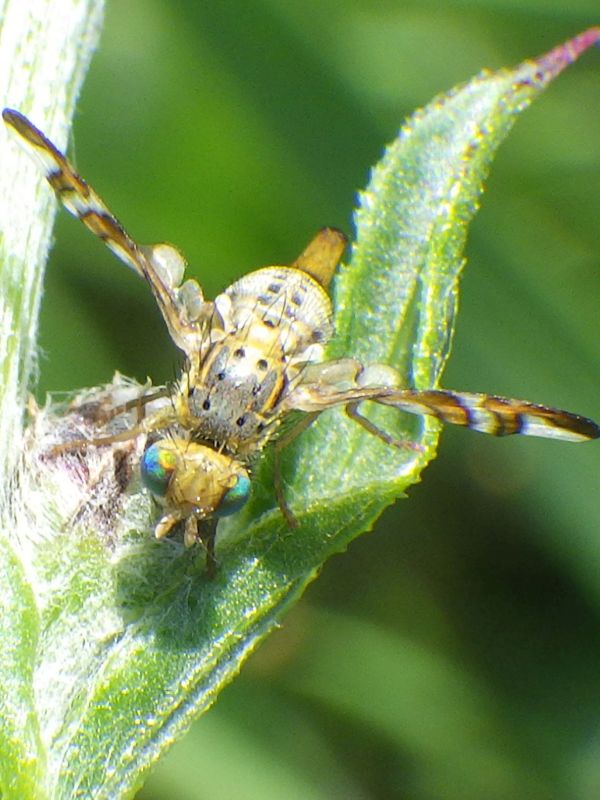 [133.92Kb] |
|
|
|
| eklans |
Posted on 19-10-2025 14:52
|
|
Member Location: Franconia, Germany Posts: 4745 Joined: 11.11.18 |
I think your fly is a Chaetorellia jacea (Chaetostomella cylindrica has only one pair of dc bristles and one pair of black spots). John T. Smit(2021): De Nederlandse Boorvliegen (Tephritidae) Greetings, Eric |
|
|
|
| Nosferatumyia |
Posted on 19-10-2025 18:08
|
 Member Location: Posts: 3596 Joined: 28.12.07 |
Indeed, a Chaetorellia, but not jaceae (which has longer ovipositor, oblique crossbands and partly rusty stripes on its back. It rather could be a dark-back morph of C. acrolophi. If you know the plant, it would facilitate ID. Val |
|
|
|
| karl7 |
Posted on 20-10-2025 11:39
|
|
Member Location: Posts: 679 Joined: 09.02.25 |
Hello Eric and Val thank you for the Answer. Unfortunately, you can't see much of the plant. It looks like a Centaurea species. Perhaps Centaurea stoebe. But I'm not sure. In any case, I will photograph the plant itself in the future. Then we'll stick with Chaetorellia sp. Kind regards Karl. |
|
|
|
| Nosferatumyia |
Posted on 20-10-2025 22:48
|
|
Member Location: Posts: 3596 Joined: 28.12.07 |
Centaurea stoebe (i.e., neither C. jacea nor C. scabiosa) then leads straight to Chaetorellia acrolophi A rare now case could be Centaurea cyanus, with Chaetorellia australis on it. That plant itself however can be very rarely found. Edited by Nosferatumyia on 20-10-2025 22:51 Val |
|
|
|
| karl7 |
Posted on 22-10-2025 19:10
|
|
Member Location: Posts: 679 Joined: 09.02.25 |
Have a nice evening Val. Unfortunately, the other Centaurea species also occur. Centaurea jacea also occurs. Centaurea scabiosa and Centaurea cyanus are rare. But with Centaurea triumfetti I have another Centaurea species that occurs. So we stick with Chaetorellia sp. Kind regards Karl. |
|
|
|
| Nosferatumyia |
Posted on 31-07-2026 20:04
|
|
Member Location: Posts: 3596 Joined: 28.12.07 |
Now I see, it is Chaetorellia loricata Rondani Val |
|
|
|
| Jump to Forum: |