


Diptera.info :: Identification queries :: Diptera (adults)
 Chironominae Scale & Spur
|
|
| Tim Jaeger |
Posted on 17-10-2023 23:23
|
|
Member Location: Posts: 16 Joined: 17.10.23 |
Hi I'm currently using the Key "Chironomidae of the Holarctic region. Keys and diagnoses. Part 3. Adult Males" by Wiederholm to identify Chironominae. And I'm struggling with two of the following steps in the key: " 32. Apex of fore tibia truncate with at most shallow scale lacking spur -> 33 Apex of fore tibia with well-developed scale and/or spur -> 35 " and "35. Apex of fore tibia with black spur similar to those on mid and hind tibia. Pars ventralis present. ->Pseudochironomus Apex of fore tibia without spure but with scale, often bearing spine. Pars ventralis absent -> 36" I'm not sure how a "shallow" scale is locking compared to a "well-developed" scale or how a well-developed spur looks like. So if someone has any pictures or figures that would be really helpful! I have attached a photo of what I believe to be a well developed scale but as I said I am unsure. Tim Jaeger attached the following image: 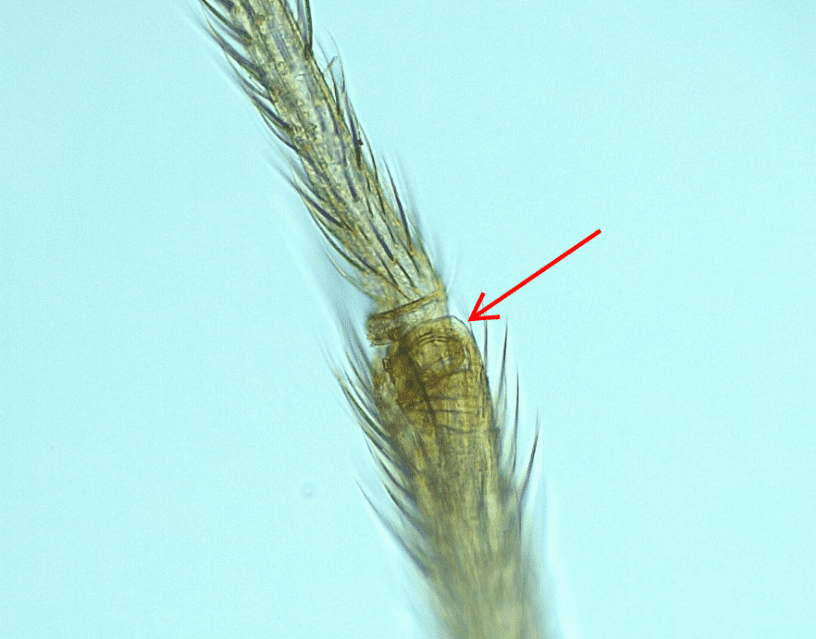 [254.97Kb] Edited by Tim Jaeger on 17-10-2023 23:25 |
|
|
|
| John Carr |
Posted on 18-10-2023 14:06
|
 Super Administrator Location: Colorado, USA Posts: 10643 Joined: 22.10.10 |
No spur. Pseudochironomus also has a low leg ratio and widely spaced eyes.
John Carr attached the following image: 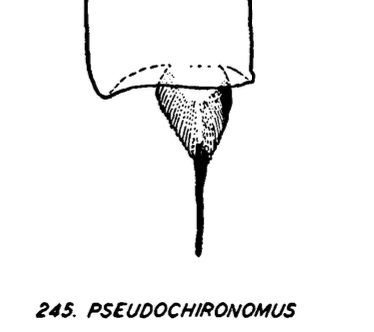 [33.28Kb] |
 |
|
| John Carr |
Posted on 18-10-2023 14:08
|
|
Super Administrator Location: Colorado, USA Posts: 10643 Joined: 22.10.10 |
Paratendipes
John Carr attached the following image: 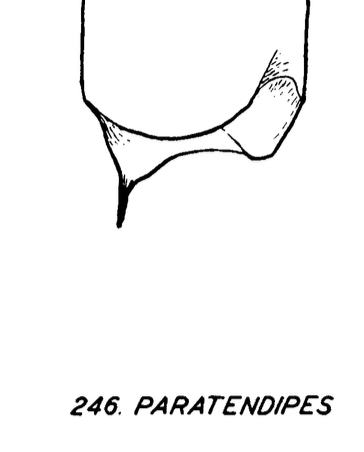 [34.16Kb] |
|
|
|
| John Carr |
Posted on 18-10-2023 14:09
|
|
Super Administrator Location: Colorado, USA Posts: 10643 Joined: 22.10.10 |
Chironomus
John Carr attached the following image: 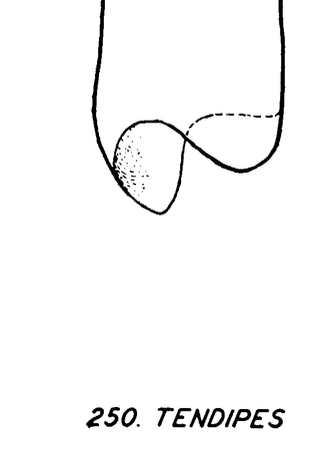 [29.13Kb] |
|
|
|
| Tim Jaeger |
Posted on 18-10-2023 20:08
|
|
Member Location: Posts: 16 Joined: 17.10.23 |
John Carr wrote: Chironomus Thank you for the fast reply! Is this a shallow scale and does Tendipes refer to Microtendipes here? Since Chironomus branches off before step 32 in my key, I don't know if they have a developed or shallow scale. Would you identify my photo as shallow scale? Edited by Tim Jaeger on 18-10-2023 20:09 |
|
|
|
| Tim Jaeger |
Posted on 18-10-2023 20:18
|
|
Member Location: Posts: 16 Joined: 17.10.23 |
John Carr wrote: No spur. Pseudochironomus also has a low leg ratio and widely spaced eyes. From which guide did you get the picture? Because to me it also looks like a scale with a spine but in the book, I use it explicitly lists in step 35 a black spur as a criterion for Pseudochironomus. So that's why I'm a little bit confused. |
|
|
|
| John Carr |
Posted on 18-10-2023 20:24
|
|
Super Administrator Location: Colorado, USA Posts: 10643 Joined: 22.10.10 |
Tim Jaeger wrote: John Carr wrote: Chironomus Thank you for the fast reply! Is this a shallow scale and does Tendipes refer to Microtendipes here? Since Chironomus branches off before step 32 in my key, I don't know if they have a developed or shallow scale. Would you identify my photo as shallow scale? My guess is shallow, but that is subjective and I am unsure. Tendipes is an old name for Chironomus. The dispute over the correct name lasted from 1908 to 1963 and was resolved only by a formal decision of the International Commission on Zoological Nomenclature. Search on "Meigen 1800 names" for the full history. |
|
|
|
| John Carr |
Posted on 18-10-2023 20:32
|
|
Super Administrator Location: Colorado, USA Posts: 10643 Joined: 22.10.10 |
The illustrations come from Townes, H. K. Jr. 1945. The Nearctic species of Tendipedini [Diptera, Tendipedidae (= Chironomidae)]. American Midland Naturalist 34:1–206 They were reprinted in 1952 in Guide to the Insects of Connecticut, Part VI. The Diptera or True Flies of Connecticut, Fifth Fascicle: Midges and Gnats. |
|
|
|
| Tim Jaeger |
Posted on 20-10-2023 20:20
|
|
Member Location: Posts: 16 Joined: 17.10.23 |
John Carr wrote: The illustrations come from Townes, H. K. Jr. 1945. The Nearctic species of Tendipedini [Diptera, Tendipedidae (= Chironomidae)]. American Midland Naturalist 34:1–206 They were reprinted in 1952 in Guide to the Insects of Connecticut, Part VI. The Diptera or True Flies of Connecticut, Fifth Fascicle: Midges and Gnats. John do you know when it comes to Polypedilum if all of the species have a fringed Squama? In the illustrations I have the wing is showing a fringed one. Because then I could use this trait (+others) instead of the scale (which is vaguer to me) to identify the genera that are important to me. Tim Jaeger attached the following image: 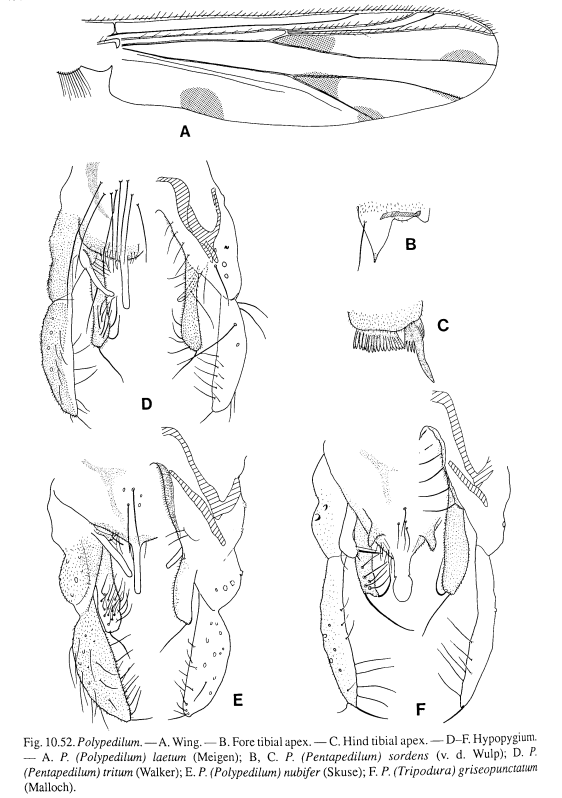 [154.75Kb] |
|
|
|
| John Carr |
Posted on 20-10-2023 22:10
|
|
Super Administrator Location: Colorado, USA Posts: 10643 Joined: 22.10.10 |
I use the shape of tergite 8 to distinguish Polypedilum from other Chironomini. |
|
|
|
| Tim Jaeger |
Posted on 26-10-2023 21:35
|
|
Member Location: Posts: 16 Joined: 17.10.23 |
John Carr wrote: I use the shape of tergite 8 to distinguish Polypedilum from other Chironomini. It would be more anteriorly tapered compared to other Chironomini right? Edited by Tim Jaeger on 26-10-2023 21:37 |
|
|
|
| Tim Jaeger |
Posted on 26-10-2023 21:38
|
|
Member Location: Posts: 16 Joined: 17.10.23 |
Tim Jaeger wrote:
John Carr wrote: I use the shape of tergite 8 to distinguish Polypedilum from other Chironomini. It would be more anteriorly tapered compared to other Chironomini right? Edited by Tim Jaeger on 26-10-2023 21:39 |
|
|
|
| John Carr |
Posted on 26-10-2023 21:58
|
|
Super Administrator Location: Colorado, USA Posts: 10643 Joined: 22.10.10 |
Tim Jaeger wrote: John Carr wrote: I use the shape of tergite 8 to distinguish Polypedilum from other Chironomini. It would be more anteriorly tapered compared to other Chironomini right? Right. |
|
|
|
| Jump to Forum: |