


Diptera.info :: Identification queries :: Diptera (adults)
Who is here? 1 guest(s)
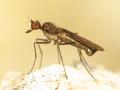
 Fannia canicularis
|
|
| Rui Andrade |
Posted on 30-01-2008 13:13
|
 Member Location: Portugal Posts: 3123 Joined: 19.06.07 |
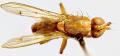
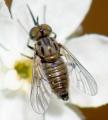
I photographed this fly in Oporto, Portugal. I think it resembles the fannid Fannia, am I right? date: 2008/01/30  
Edited by Rui Andrade on 30-01-2008 20:34 |
 |
|
| jorgemotalmeida |
Posted on 30-01-2008 13:21
|
 Member Location: Viseu - PORTUGAL Posts: 9296 Joined: 05.06.06 |
F. cannicularis?... |
|
|
|
| Nikita Vikhrev |
Posted on 30-01-2008 13:55
|
 Member Location: Moscow, Russia Posts: 9561 Joined: 24.05.05 |
Yes, Jorge, F. cannicularis 
Nikita Vikhrev - Zool Museum of Moscow University |
|
|
|
| Rui Andrade |
Posted on 30-01-2008 20:29
|
|
Member Location: Portugal Posts: 3123 Joined: 19.06.07 |
Thank you Jorge and Nikita |
|
|
|
| Rui Andrade |
Posted on 31-01-2008 20:46
|
|
Member Location: Portugal Posts: 3123 Joined: 19.06.07 |
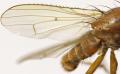
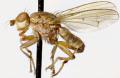
Today, I photographed another Fannia. Is this individual also F. canicularis (it was a tad bigger, could it also be sexual dimorphism?) ? Could you explain me how to differentiate F. canicularis from other similar Fannia?  |
|
|
|
| jorgemotalmeida |
Posted on 31-01-2008 20:57
|
|
Member Location: Viseu - PORTUGAL Posts: 9296 Joined: 05.06.06 |
scutum has a median brown longitudinal stripe. It has TWO strong anterodorsal bristles in tibia 3. usually the first two tergites have a strong orange colour. in your first pciture you took today, it is very clear two posterodorsal and strong bristles on tibia 3, and the other 2 strong anterodorsal, not so clear. |
|
|
|
| Nikita Vikhrev |
Posted on 31-01-2008 21:15
|
|
Member Location: Moscow, Russia Posts: 9561 Joined: 24.05.05 |
Take it easy, Jorge scutum has a median brown longitudinal stripe usually the first two tergites have a strong orange colour It is OK. As for t3 Fannia has 2 strong dorsal at t3 (with few exclusions), Fannia usualy has ad and av, but never pd. F.canicularis has several week ad above strong ad. Rui, there are several species of Fannia looking as your fly on photo. But F.canicularis is so cosmopolitan, widespread, common, that we can name you fly as F.canicularis with very small "?" or even without "?" Nikita Nikita Vikhrev - Zool Museum of Moscow University |
|
|
|
| jorgemotalmeida |
Posted on 31-01-2008 21:32
|
|
Member Location: Viseu - PORTUGAL Posts: 9296 Joined: 05.06.06 |
Fannia is so ephemeral... several "week".  just kidding. just kidding. |
|
|
|
| jorgemotalmeida |
Posted on 31-01-2008 21:36
|
|
Member Location: Viseu - PORTUGAL Posts: 9296 Joined: 05.06.06 |
Nikita Vikhrev wrote: Take it easy, Jorge scutum has a median brown longitudinal stripe usually the first two tergites have a strong orange colour It is OK. As for t3 Fannia has 2 strong dorsal at t3 (with few exclusions), Fannia usualy has ad and av, but never pd. F.canicularis has several week ad above strong ad. Rui, there are several species of Fannia looking as your fly on photo. But F.canicularis is so cosmopolitan, widespread, common, that we can name you fly as F.canicularis with very small "?" or even without "?" Nikita Nikita, it is very clear that the first photo - taken today - shows 2 strong POSTERODORSAL on hind tibia! EDIT: Due the angle of the leg, the dorsal surface of hind tibia is away from the plane of the monitor, hence we see 2 strong and TRUE dorsal bristles. Not posterodorsal as I thought at the first. Edited by jorgemotalmeida on 02-02-2008 15:56 |
|
|
|
| Rui Andrade |
Posted on 31-01-2008 22:17
|
|
Member Location: Portugal Posts: 3123 Joined: 19.06.07 |
Thank you again Jorge and Nikita for the explanation jorgemotalmeida wrote: Nikita, it is very clear that the first photo - taken today - shows 2 strong POSTERODORSAL on hind tibia! I think I'm also seeing this detail. |
|
|
|
| Nikita Vikhrev |
Posted on 02-02-2008 14:57
|
|
Member Location: Moscow, Russia Posts: 9561 Joined: 24.05.05 |
I'm sure , it is true dorsal
Nikita Vikhrev - Zool Museum of Moscow University |
|
|
|
| jorgemotalmeida |
Posted on 02-02-2008 15:51
|
|
Member Location: Viseu - PORTUGAL Posts: 9296 Joined: 05.06.06 |
hmm... the angle of hind tibia can be tricky. the dorsal surface is away from the plane of monitor, so you have reason. the mid tibia shows us the dorsal surface of the leg. |
|
|
|
| Rui Andrade |
Posted on 02-02-2008 16:29
|
|
Member Location: Portugal Posts: 3123 Joined: 19.06.07 |
Well, it's really tricky Thanks for clearing it up Nikita. |
|
|
|
| Jump to Forum: |