


Diptera.info :: Identification queries :: Diptera (adults)
Who is here? 1 guest(s)
 muscid: Hebecnema vespertina? => H. nigra
|
|
| Steve Scholnick |
Posted on 12-03-2022 19:16
|
|
Member Location: Maryland, USA Posts: 129 Joined: 25.12.17 |
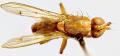
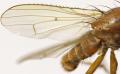
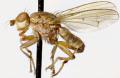
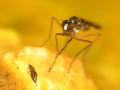
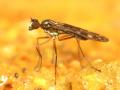
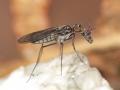
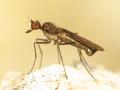
male, body 5mm wing 4.3mm I think this is Hebecnema vespertina but I'm not sure of the bristle pattern on the hind tibia and would greatly appreciate some expert help. Found near the shore of a lake in a wooded park in suburban Maryland, USA Thanks in advance Steve    dorsal view, right wing  ![bugguide.net/images/raw/VZI/LBZ/VZILBZ0L5ZMLWZ7LRRXLWZILUZGLLRIL9Z8LAZUHCH5HCH9HBZIL8ZLL1HMHGZRLEZ0LEZQLDHRLCHRL.jpg]<br />
<br />
[img]https://bugguide.net/images/raw/SR3/ZQR/SR3ZQRLH6RFZ7RJZXRTZKRYZQRFZ6ROLZZ9LMRELRZPLFLBL0ZALQZBL6RHH4RQH8RZH0ZBL2RALXZCL.jpg](https://bugguide.net/images/raw/VZI/LBZ/VZILBZ0L5ZMLWZ7LRRXLWZILUZGLLRIL9Z8LAZUHCH5HCH9HBZIL8ZLL1HMHGZRLEZ0LEZQLDHRLCHRL.jpg][/img]<br />
<br />
https://bugguide.net/images/raw/SR3/ZQR/SR3ZQRLH6RFZ7RJZXRTZKRYZQRFZ6ROLZZ9LMRELRZPLFLBL0ZALQZBL6RHH4RQH8RZH0ZBL2RALXZCL.jpg)  
Edited by Steve Scholnick on 13-03-2022 22:26 |
|
|
|
| tristram |
Posted on 13-03-2022 08:23
|
|
Member Location: Reading, UK Posts: 1334 Joined: 27.06.10 |
The tips of the halteres are yellow in vespertina. |
 |
|
| Steve Scholnick |
Posted on 13-03-2022 17:55
|
|
Member Location: Maryland, USA Posts: 129 Joined: 25.12.17 |
Hi Tristram Thanks for the input but I'm confused. Huckett's 1965 and 1975 keys describe H. vespertina's halteres as "browned, dark purple or blackish" with H. umbratica and H. affinis having "mainly yellow or partly reddish tinged" halteres. That's also true for Malloch's 1921 key. Gregor et al. (2002) don't describe the haltere color in this genus but they equate H. vespertina with Malloch's H. affinis. What's the current state of the taxonomy of this genus? Thanks again Steve Edited by Steve Scholnick on 13-03-2022 17:57 |
|
|
|
| tristram |
Posted on 13-03-2022 19:40
|
|
Member Location: Reading, UK Posts: 1334 Joined: 27.06.10 |
The authority for the affinis->vespertina; verspertina->nigra reassignment seems to be Pont, A.C. 1984. A revision of the Fanniidae and Muscidae (Diptera) described by Fallén. Entomologica Scandinavica 15, 277-297. But I haven't seen this paper. Gregor et al, 2016 , Manual of Central European Muscidae (Diptera) gives the following (slightly abbeviated): 1. Mid and hind femora yellow to brownish yellow ... H. nigricolor - Mid and hind femora mainly black ... 2 2. Halteres with brown to black knob; eyes bare; parafacialia silvery in dorsal view ... H. nigra - Halteres with yellow knob; eyes densely haired OR parafacialia dull brown ... 3 3. Males ... 4 -- Females ... 6 4. Eyes densely haired (>0.03mm); parafacialia silvery OR mid and hind tibiae reddish brown and tips of femora contrastingly pale ...5 - Eyes virtually bare (<0.02mm); parafacialia dull brown; mid and hind tibiae mostly black; femora without contrastingly pale apices ... H.vespertina 5. Tips of femora and mid and hind tibiae reddish brown; parafacialia dull brown; abdomen without dark medial stripe ... H. fumosa Legs uniformly black; mid and hind tibiae rarely reddish brown; parafacialia silvery; abdomen with a distinct undusted median strip in dorsal view .. H.umbratica 6. Scutum with 4 narrow dark stripes (best viewed from behind); parafacialia silvery in dorsal view OR at least paler than fronto-orbital plates; abdomen heaviliy dusted, matt; legs black ... H. umbratica - Different combination of characters ... 7 7. Tips of femora and mid and hind tibiae contrastingly pale; eyes with short but distinct hairs; abdomen heavily dusted; mesoscutum light grey and distinctly striped in dorsal view ... H. fumosa - Tips of femora and mid and hind tibiae black; eyes bare, abdomen shining; mesoscutun dark and unstriped in dorsal view ... H. vespertina |
|
|
|
| Steve Scholnick |
Posted on 13-03-2022 22:25
|
|
Member Location: Maryland, USA Posts: 129 Joined: 25.12.17 |
Thanks Tristram. I have the 2002 version of Gregor et al.'s "The Muscidae (Diptera) of Central Europe" where the key also points to H.vespertina having halteres with a yellow knob. However, the text (where I previously missed the description of H. vespertina's halteres) says "knob of halteres dark brown to black" (page155). I assume that was changed by the time the 2016 version of the manual was published. Thanks again! Steve |
|
|
|
| bradbarnd |
Posted on 15-03-2022 20:51
|
|
Member Location: USA Posts: 164 Joined: 28.07.11 |
From Pont 1984: "There has been some confusion over the identity and nomenclature of this species, which is now placed in the genus Hebecnema. Zetterstedt (1845: 1406) pointed out that Fallen's original series included several species, and restricted the use of the name vespertina to a species with bare eyes. Stein (1916: 50) was aware that this was a variable species, having either yellow or black halteres. Malloch (1921: 214) described the species with yellow halteres and 2 anteroventral setae on hind tibia as affinis, and restricted the name vespertina to the species with black halteres and 1 anteroventral seta on hind tibia. Ringdahl (1941: 23), following Zetterstedt's description but apparently without seeing Fallen's syntypes, used vespertina for the species with yellow halteres (with affinis as a synonym) and proposed the name halterata for the species with black halteres. Other authors, however (e.g. Hennig 1956: 143; Assis Fonseca 1968: 54), have followed Malloch's interpretation of vespertina." and "The 6 syntypes thus consist of 1 ♂ 2 ♀ umbratica and 1 ♂ 2 ♀ affinis. I have labelled the last ♂ (with the tag "66." ) as lectotype, and the other 5 syntypes as paralectotypes. This means that Ringdahl's interpretation will have to be followed: the species with yellow halteres is vespertina Fallen 1823 (syn: affinis Malloch, 1921), and the species with black halteres is nigra Desvoidy, 1830 (syn: halterata Ringdahl, 1941, preocc.)." Edited by bradbarnd on 15-03-2022 21:12 |
|
|
|
| Steve Scholnick |
Posted on 15-03-2022 22:41
|
|
Member Location: Maryland, USA Posts: 129 Joined: 25.12.17 |
Thanks Brad. This is like one of those detective shows where they change the names to protect the innocent :-) |
|
|
|
| Jump to Forum: |