

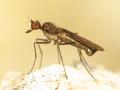

Diptera.info :: Identification queries :: Diptera (adults)
Who is here? 1 guest(s)
 my guess: Chloropidae?
|
|
| Sundew |
Posted on 11-12-2007 18:11
|
 Member Location: Berlin and Baden-Württemberg, Germany Posts: 3939 Joined: 28.07.07 |
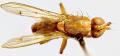
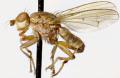
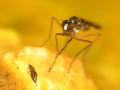
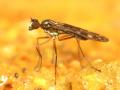
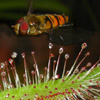
Hello, There are still some unidentified dead flies in stock, so here is the next one. My recent genus guesses were all not absolutely wrong but also not perfectly right, so now I am cautious in naming, but the animal's habit somehow recalls Chloropidae. The gallery pictures, however, gave no good match. Can anyone help? (Sure you can  ) )Sundew Sundew attached the following image:  [190.67Kb] |
|
|
|
| Sundew |
Posted on 11-12-2007 18:12
|
|
Member Location: Berlin and Baden-Württemberg, Germany Posts: 3939 Joined: 28.07.07 |
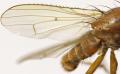
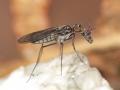
Some leg details.
Sundew attached the following image: 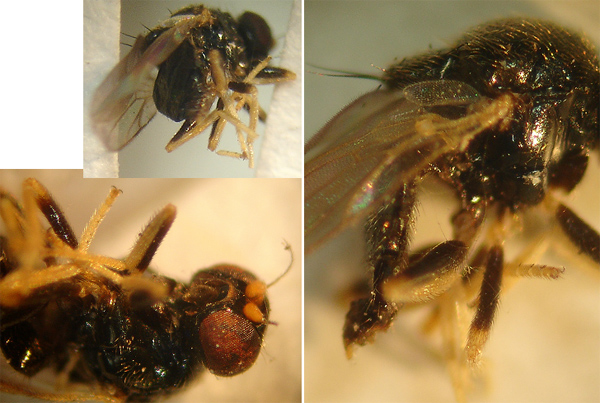 [164.46Kb] |
|
|
|
| Paul Beuk |
Posted on 11-12-2007 20:18
|
 Super Administrator Location: Netherlands Posts: 19403 Joined: 11.05.04 |
Indeed Chloropidae.
Paul - - - - Paul Beuk on https://diptera.info |
 |
|
| Sundew |
Posted on 11-12-2007 21:58
|
|
Member Location: Berlin and Baden-Württemberg, Germany Posts: 3939 Joined: 28.07.07 |
What about subfamily Oscinellinae as to extension of costa? Sundew (looking forward to a possible genus name) |
|
|
|
| Kahis |
Posted on 11-12-2007 22:11
|
 Member Location: Helsinki, Finland Posts: 1999 Joined: 02.09.04 |
Do the scutellar setae sit on small tubercles? If so, I would say Rhodesiella plumiger.
Kahis |
|
|
|
| Sundew |
Posted on 12-12-2007 18:49
|
|
Member Location: Berlin and Baden-Württemberg, Germany Posts: 3939 Joined: 28.07.07 |
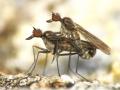
Do you call the thickened bristle bases "tubercles"? This is the maximum magnification I can get. Sundew Sundew attached the following image: 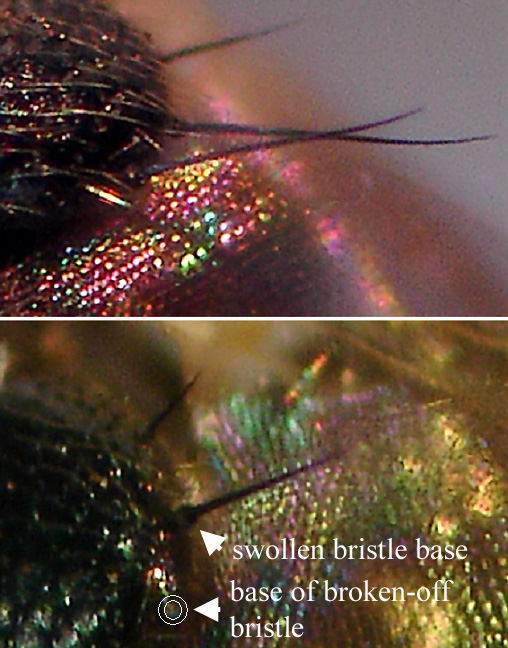 [152.49Kb] Edited by Sundew on 12-12-2007 18:49 |
|
|
|
| crex |
Posted on 12-12-2007 18:57
|
 Member Location: Sweden Posts: 1996 Joined: 22.05.06 |
Sundew wrote: ... This is the maximum magnification I can get. How much is that? 40x? |
|
|
|
| Sundew |
Posted on 12-12-2007 23:03
|
|
Member Location: Berlin and Baden-Württemberg, Germany Posts: 3939 Joined: 28.07.07 |
That's difficult to say... My ZEISS stereo microscope Stemi 2000 allows for a 50 x magnification. With this set, I hold the digicam to the ocular and take a photo (or better several, as the autofocus choses each time anew on what to focus, and all pictures are slightly different; altogether, the depth of field is very shallow.) My Sony Cybershot DSC-P200 has 7.2 megapixels, which allows for a considerable detail magnification. This is also necessary, as the photo subject covers only the centre of the picture and is surrounded by a lot of free space or nature (if I photograph a 2 mm fly on a leaf, I can approach up to 6 cm; this gives only a tiny image.) The picture above is a combination of 50 x stereo microscope magnification and much more computer magnification. You see the mm scale bar in the uppermost left pic, showing that a scutellar seta is about 0.3 mm long. In the lowermost pic it measures about 20.5 cm on the screen, which would correspond to an about 700 x magnification. The quality is not satisfying anymore, it is simply oversized, but I hope the base of the seta, which is really small, is somewhat recognizable at least. I hope this was helpful! Best wishes, Sundew |
|
|
|
| crex |
Posted on 12-12-2007 23:16
|
|
Member Location: Sweden Posts: 1996 Joined: 22.05.06 |
Thanks for the explanation. It helps to know a little more when looking for a microscope to buy. |
|
|
|
| Kahis |
Posted on 14-12-2007 09:52
|
|
Member Location: Helsinki, Finland Posts: 1999 Joined: 02.09.04 |
That's exactly what we needed to see. Rhodesiella it is. Kahis |
|
|
|
| von Tschirnhaus |
Posted on 04-09-2022 19:55
|
|
Member Location: Bielefeld, Germany Posts: 454 Joined: 04.11.07 |
Chloropidae, Rhodesiellinae, Rhodesiella plumiger (Meigen, 1830): I agree with "Kahis". Two new and optimal photographs from Sweden are commented by me now: https://diptera.info/forum/viewthread.php?forum_id=5&thread_id=107536 and another image from European Russia: https://diptera.info/forum/viewthread.php?forum_id=5&thread_id=106915&pid=444480#post_444480 |
|
|
|
| Jump to Forum: |