


Diptera.info :: Identification queries :: Diptera (adults)
Who is here? 1 guest(s)
Page 2 of 2: 12
|
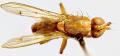
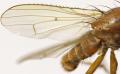
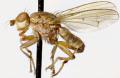
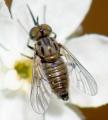
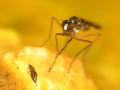
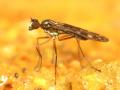
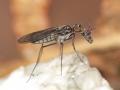
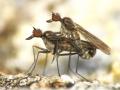
 Omphalophora sp. (Rhagionidae)
|
|
| Rui Andrade |
Posted on 18-06-2010 22:49
|
 Member Location: Portugal Posts: 3123 Joined: 19.06.07 |
Yes, I'll try, thanks! |
 |
|
| Rui Andrade |
Posted on 25-02-2011 21:00
|
|
Member Location: Portugal Posts: 3123 Joined: 19.06.07 |
On the last 23rd I went to the place where I found this species and I managed to collect 7 specimens.
Rui Andrade attached the following image: 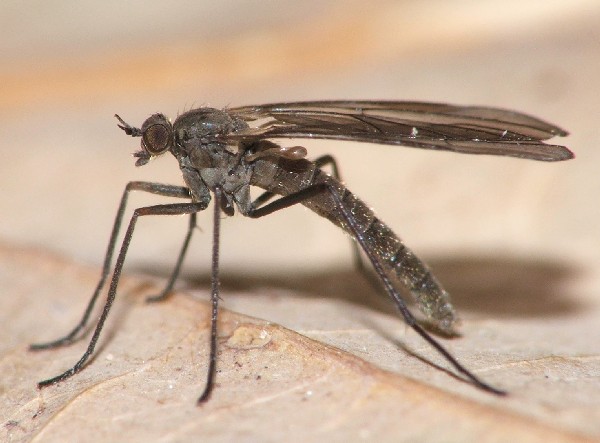 [54.71Kb] |
|
|
|
| Rui Andrade |
Posted on 25-02-2011 21:01
|
|
Member Location: Portugal Posts: 3123 Joined: 19.06.07 |
Below you can see the 7 genitalia of all specimens. Are there any males among them?
Rui Andrade attached the following image: 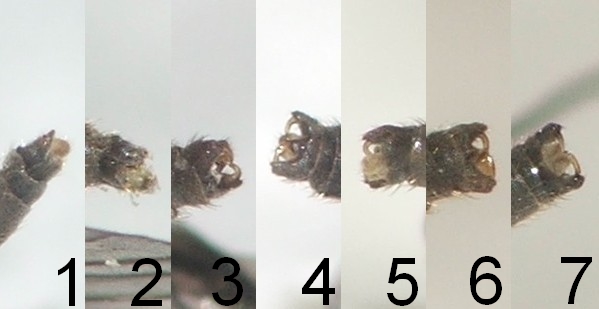 [70.54Kb] |
|
|
|
| Paul Beuk |
Posted on 25-02-2011 22:55
|
 Super Administrator Location: Netherlands Posts: 19403 Joined: 11.05.04 |
At least no. 3-7. Not certain about no. 2 in this view.
Paul - - - - Paul Beuk on https://diptera.info |
|
|
|
| Rui Andrade |
Posted on 25-02-2011 23:14
|
|
Member Location: Portugal Posts: 3123 Joined: 19.06.07 |
Great! Next week I'll send them to you, if it's ok. |
|
|
|
| Paul Beuk |
Posted on 25-02-2011 23:45
|
|
Super Administrator Location: Netherlands Posts: 19403 Joined: 11.05.04 |
It is. 
Paul - - - - Paul Beuk on https://diptera.info |
|
|
|
| Paul Beuk |
Posted on 03-03-2011 20:04
|
|
Super Administrator Location: Netherlands Posts: 19403 Joined: 11.05.04 |
They arrived and it appears we have a problem... I looked at the specimens and immediately was not happy with Ptiolina (sensu stricto or sensu lato) anymore. It just did not feel right. So I ran it through Majer's key to the genera in the Contributions to a Manual of Palaearctic Diptera. The shape of the antennae, with enlarged flagellum, rules out some genera. The next split in the key is whether the laterotergite is bare or setose. Setose laterotergites ar found in Symphoromyia, Rhagio and Chrysopilus, not in Ptiolina. These specimens have a setose laterotergite! Checking other genera I see that it might have something to do with Spatulina. However, in Europe there is only one, rather enigmatic species. I have not been able to find a recent description that includes the laterotergite, but apparently the mid tibiae have two long spurs, the other tibiae should not have those. A second species of Spatulina was described from China and this species has a setose laterotergite. The laterotergite should be bare in Spatulina according to Majer's key. The Chinese species (one specimen only!) lacks the hind legs but the one remaining mid leg has two long spurs on the tibia. The Portuguese specimens have two long spurs on tibiae of both the mid legs and the hind legs. Perhaps Peter Kerr and Majer can shed some light on this. Paul - - - - Paul Beuk on https://diptera.info |
|
|
|
| PeterKerr |
Posted on 03-03-2011 22:55
|
|
Member Location: Posts: 12 Joined: 12.03.07 |
Wow, quite interesting. Nice job Rui! Yes, Spatulina engeli Szilady is enigmatic. From what is known, it is a Ptiolina (and I synonymized these genera), but additional evidence may be used to support this idea or otherwise, certainly. Having fresh specimens helps!! There is little evidence that the damaged Chinese specimen is Spatulina. See my comments in Kerr (2010). Again, more specimens would help. The fact that it has a setose laterotergite and tibial spur formula of 0:2:2 is remarkable, given the antennal morphology. Stylospania is a monotypic chrysopiline genus found in the Philipines (a single specimen) that has a setose laterotergite, 0:2:2 tibial spurs, and stylate antennae. This is the only genus that is known to have this suite of character states, afaik. A good synapomorphy for the Chrysopilinae is the presence of femoral scales (Kerr 2010: figs. 65, 66). These are often difficult to see because they are often the same color as the leg and lie flat. It is worth checking for, anyway. I'm beginning to believe that this is what you have. Very unusual, in any case. Paul, perhaps we can work on it together! I'd like to see more of this, I'm sure it'd make a worthwhile paper! |
|
|
|
| Paul Beuk |
Posted on 04-03-2011 09:35
|
|
Super Administrator Location: Netherlands Posts: 19403 Joined: 11.05.04 |
Well, you can start with sending me an eprint of that 2010 paper, because I did not see that one yet. I must admit I had already forgotten it was published, though I retweeted the Zootaxa announcement #dipera_info. When I return to the office the week after next (the South of the country comes to a stand-still here because of the carnaval so I might just as well take the whole week off) I can check against the comments and the figures. One of the most conspicuous things about the antannae in these specimens are that there is virtually no segmentation visble after the pedicel, though there is a small dorsal seta in the area where you would expect transition between the first and second flagellar segment. Peter, did you see the Spatulina and it does not have setose laterotergites? Paul - - - - Paul Beuk on https://diptera.info |
|
|
|
| Rui Andrade |
Posted on 04-03-2011 17:38
|
|
Member Location: Portugal Posts: 3123 Joined: 19.06.07 |
Those are great news!!! Thank you! I’ll try to collect more specimens. Peter, I would also be interested in a digital copy of your work on the phylogeny and classification of Rhagionidae. Below you can see a photo of the habitat. Rui Andrade attached the following image: 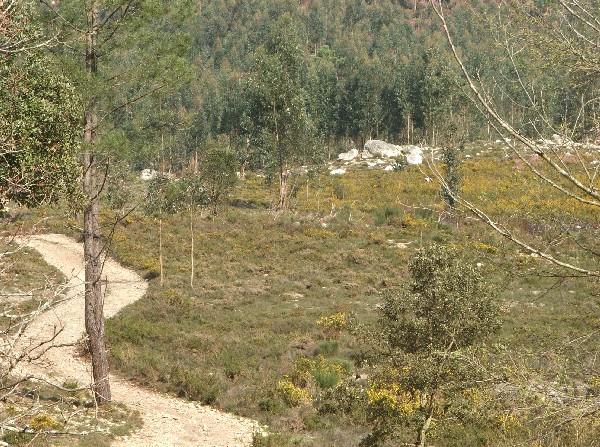 [148.85Kb] |
|
|
|
| Paul Beuk |
Posted on 04-03-2011 19:29
|
|
Super Administrator Location: Netherlands Posts: 19403 Joined: 11.05.04 |
Well, the effort was splendid already. Now let's see if we can even expand. Is it all dry area or are there humid patches as well? One of the Dutch localities had Ptiolina on humid moss patches on trees, presumable near the larval habitat.
Paul - - - - Paul Beuk on https://diptera.info |
|
|
|
| Rui Andrade |
Posted on 04-03-2011 20:29
|
|
Member Location: Portugal Posts: 3123 Joined: 19.06.07 |
This species was found in a slope in which plants like Ulex sp. and heather grow. The most abundant trees in this place are eucalyptus, which cover a big area. In the valley there’s a small river in which margins one can find some agricultural fields, oaks, willows, etc. There are also small streams that run down the slope. Besides the river there are no wet zones that I’m aware of and it seems to me that this species is clearly associated to the driest place you can see in the images.
Rui Andrade attached the following image: 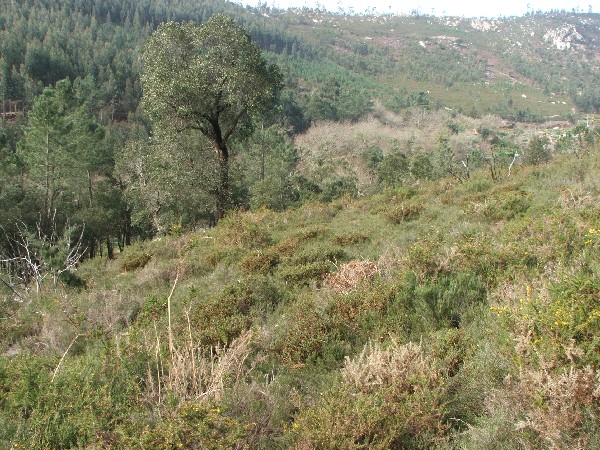 [140.83Kb] |
|
|
|
| Rui Andrade |
Posted on 04-03-2011 20:31
|
|
Member Location: Portugal Posts: 3123 Joined: 19.06.07 |
.
Rui Andrade attached the following image: 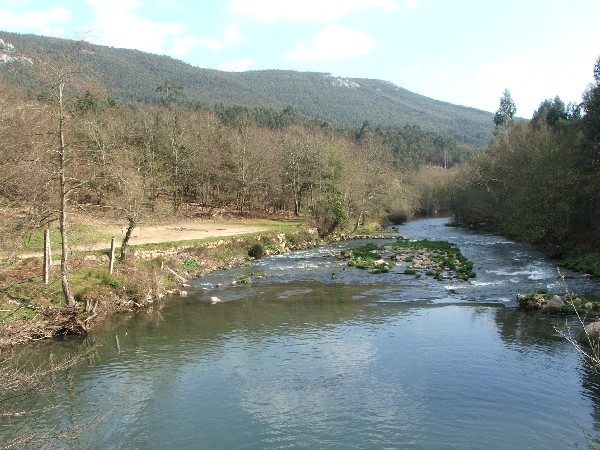 [100.17Kb] |
|
|
|
| Rui Andrade |
Posted on 04-03-2011 20:32
|
|
Member Location: Portugal Posts: 3123 Joined: 19.06.07 |
Satellite image of the place. The red spot marks the area where the flies were collected.
Rui Andrade attached the following image: 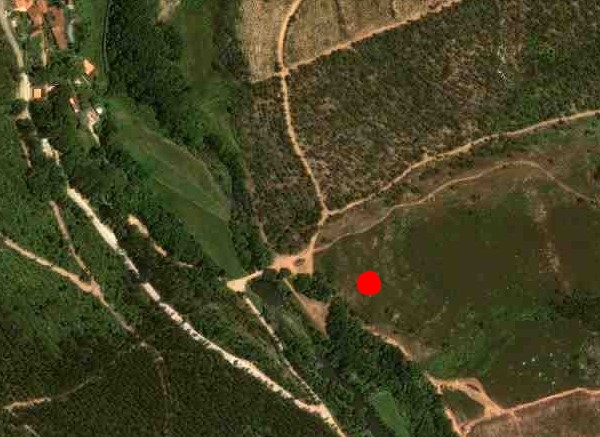 [168.06Kb] |
|
|
|
| Rui Andrade |
Posted on 04-03-2011 20:33
|
|
Member Location: Portugal Posts: 3123 Joined: 19.06.07 |
I’ve captured this scene of a Pisaura mirabilis spider feeding on a specimen.
Rui Andrade attached the following image: 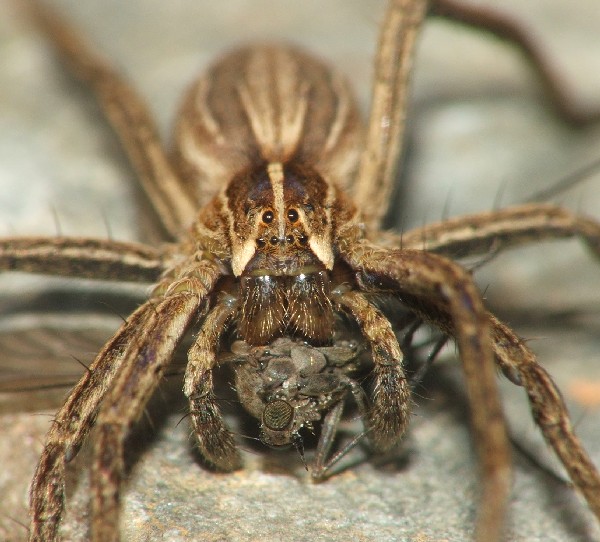 [86.01Kb] |
|
|
|
| Paul Beuk |
Posted on 04-03-2011 21:49
|
|
Super Administrator Location: Netherlands Posts: 19403 Joined: 11.05.04 |
The spider probably also knows that it is something special. There is eucalyptus tree there. Next you tell me the flies wre probably imported with eucalyptus saplings... Paul - - - - Paul Beuk on https://diptera.info |
|
|
|
| PeterKerr |
Posted on 05-03-2011 02:35
|
|
Member Location: Posts: 12 Joined: 12.03.07 |
Brilliant! |
|
|
|
Page 2 of 2: 12
| Jump to Forum: |