


Diptera.info :: Identification queries :: Diptera (adults)
Who is here? 1 guest(s)
Page 1 of 2: 12
|
 Tachinidae > Cylindromyia intermedia?
|
|
| nick upton |
Posted on 26-11-2010 23:36
|
|
Member Location: Wiltshire, UK Posts: 828 Joined: 12.03.10 |
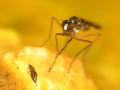
Can anyone say which Cylindromyia species this is. C. pusilla? C.intermedia? 31.8.10 c12mm Lesbos, Greece nick upton attached the following image: 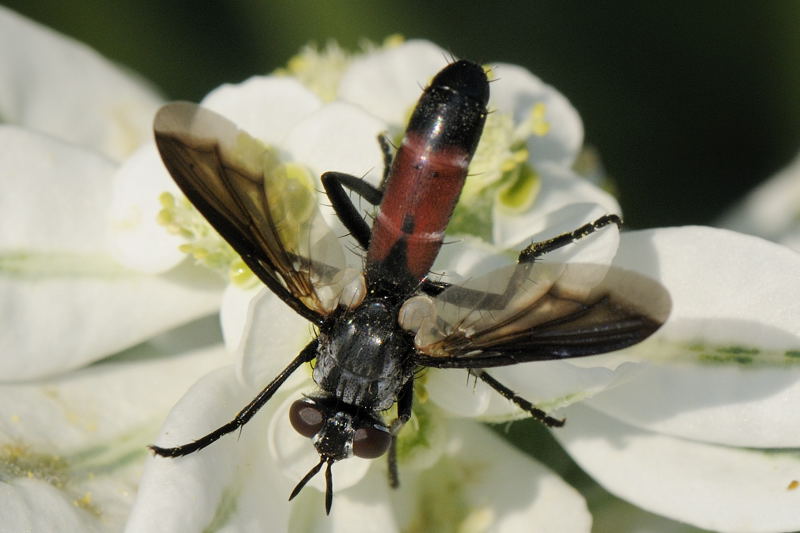 [100.69Kb] Edited by nick upton on 26-09-2011 23:03 Nick Upton - naturalist and photographer |
|
|
|
| nick upton |
Posted on 26-11-2010 23:37
|
|
Member Location: Wiltshire, UK Posts: 828 Joined: 12.03.10 |
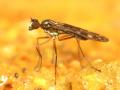
Profile view of a different individual with less white on the abdomen, but the same species?
nick upton attached the following image: 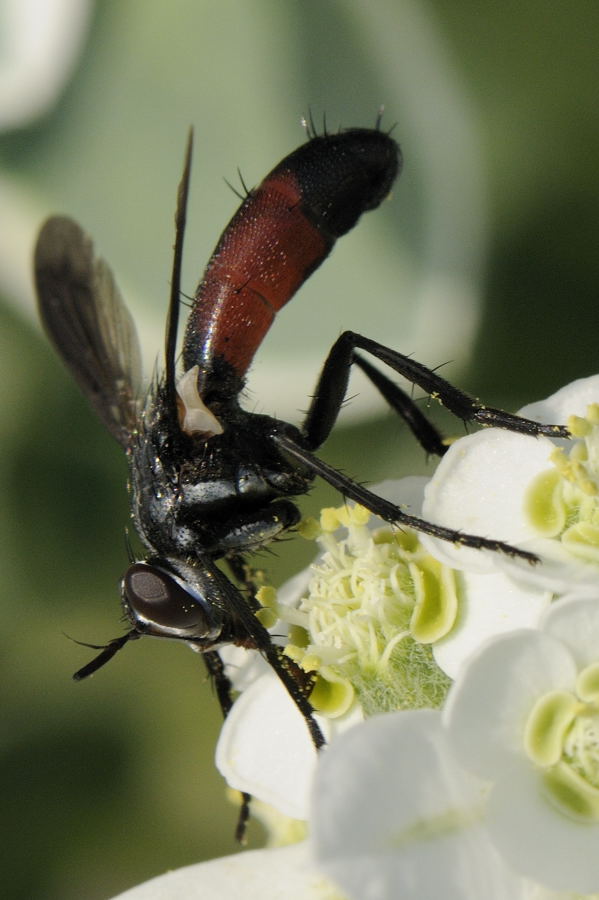 [109.25Kb] Nick Upton - naturalist and photographer |
|
|
|
| ChrisR |
Posted on 26-11-2010 23:53
|
 Super Administrator Location: Reading, England Posts: 7706 Joined: 12.07.04 |
Hmm, I'm not sure that I can see enough really ... I don't think it is C.pusilla because the inner edge of the calyptrae don't look dark enough.
Manager of the UK Species Inventory in the Angela Marmont Centre for UK Biodiversity at the Natural History Museum, London. |
 |
|
| nick upton |
Posted on 27-11-2010 00:00
|
|
Member Location: Wiltshire, UK Posts: 828 Joined: 12.03.10 |
Do you need any specific angle of view/ close ups to get more clues? I got several shots of these. If not C. pusilla, could it be C. intermedia?
Nick Upton - naturalist and photographer |
|
|
|
| ChrisR |
Posted on 27-11-2010 00:42
|
|
Super Administrator Location: Reading, England Posts: 7706 Joined: 12.07.04 |
Well, we need to first check if the back tibiae have postero-ventral bristles ... then whether they have apical scutellar bristles ... then whether it has 1 or 2 sternopleural (katepisternal) bristles  Assuming that the pv bristles are there and the apical scutellars aren't (and remember it's not enough to say you can't see any - we need to know they are absent) then I'd favour C.intermedia ... except Theo will probably remind us that there are a few other species down there that aren't in the Central european keys 
Edited by ChrisR on 27-11-2010 00:43 Manager of the UK Species Inventory in the Angela Marmont Centre for UK Biodiversity at the Natural History Museum, London. |
|
|
|
| Zeegers |
Posted on 27-11-2010 10:37
|
|
Member Location: Soest, NL Posts: 19310 Joined: 21.07.04 |
I agree it looks like a female pusilla in habitus and colouration, however,the third antennal segment seems to be too long ?? Theo |
|
|
|
| nick upton |
Posted on 27-11-2010 13:55
|
|
Member Location: Wiltshire, UK Posts: 828 Joined: 12.03.10 |
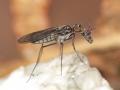
Many thanks Chris and Theo. As the ID seems uncertain still, here a number of close up views of the body parts mentioned.... Hope they help, though I'm running out of pixels on this! I think I can see some hairs on the scutellum and if I'm looking in the right place (big IF), maybe there are 2 sternopleural bristles, and over to you two to check the 3rd antennal segment length. nick upton attached the following image: 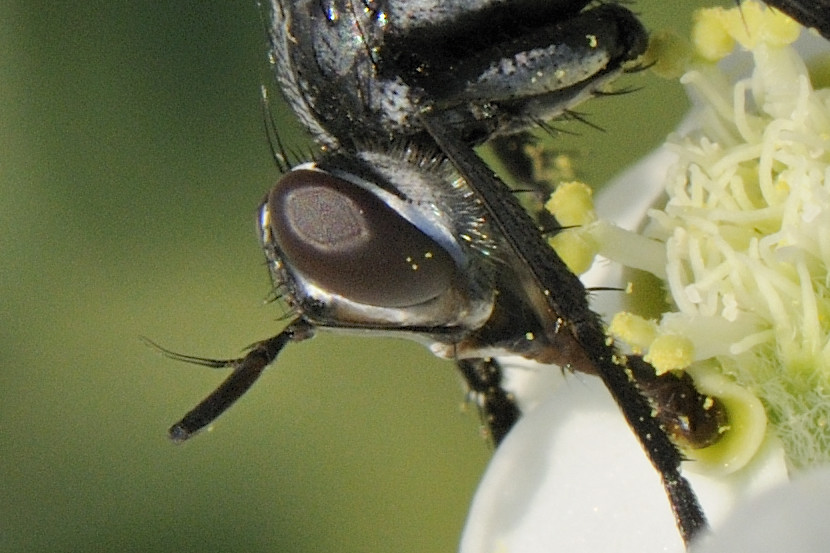 [187.82Kb] Nick Upton - naturalist and photographer |
|
|
|
| nick upton |
Posted on 27-11-2010 13:56
|
|
Member Location: Wiltshire, UK Posts: 828 Joined: 12.03.10 |
Back legs
nick upton attached the following image: 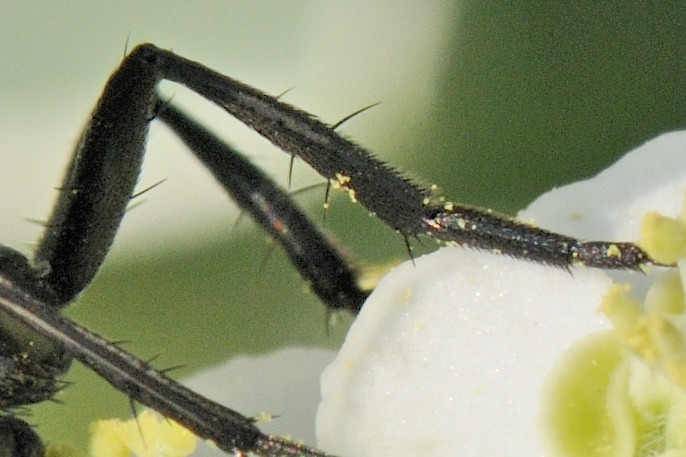 [137.92Kb] Nick Upton - naturalist and photographer |
|
|
|
| nick upton |
Posted on 27-11-2010 13:58
|
|
Member Location: Wiltshire, UK Posts: 828 Joined: 12.03.10 |
Thorax profile
nick upton attached the following image: 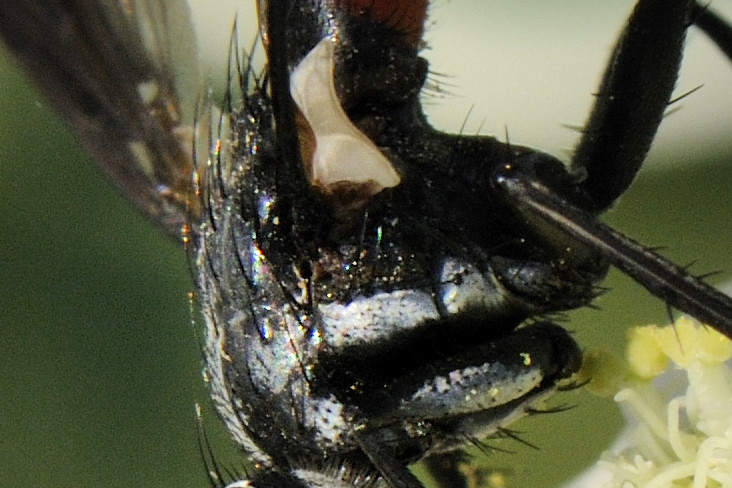 [179.26Kb] Nick Upton - naturalist and photographer |
|
|
|
| nick upton |
Posted on 27-11-2010 13:59
|
|
Member Location: Wiltshire, UK Posts: 828 Joined: 12.03.10 |
Thorax dorsal view
nick upton attached the following image: 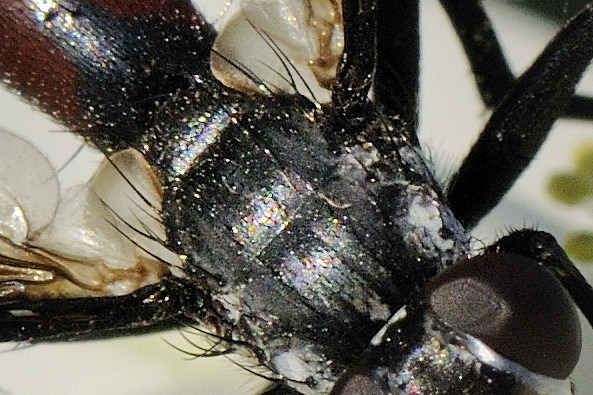 [147Kb] Nick Upton - naturalist and photographer |
|
|
|
| ChrisR |
Posted on 27-11-2010 18:55
|
|
Super Administrator Location: Reading, England Posts: 7706 Joined: 12.07.04 |
Hmm, can I see crossed apical scutellars in the last photo? Perhaps C.intermedia?
Manager of the UK Species Inventory in the Angela Marmont Centre for UK Biodiversity at the Natural History Museum, London. |
|
|
|
| nick upton |
Posted on 28-11-2010 20:35
|
|
Member Location: Wiltshire, UK Posts: 828 Joined: 12.03.10 |
I'm not quite sure what to look for....as I'm no expert in tachinid bristle analysis but if I'm looking in the right place, there aren't many hairs on the scutellum per se that I can see, mainly just 2 long hairs that originate near the front of the scutellum and they seem parallel and don't cross with any others as far as i can see. Looking from the side, some hairs do seem to cross, but most of those originate on the thorax. Hope this helps, and doesn't confuse the ID further!
Edited by nick upton on 28-11-2010 20:36 Nick Upton - naturalist and photographer |
|
|
|
| Zeegers |
Posted on 28-11-2010 20:42
|
|
Member Location: Soest, NL Posts: 19310 Joined: 21.07.04 |
The pictures are simply insufficient to reach a conclusion. The apical scutallar must be there, since it is not interrupta given the dust pattern on the thorax... see, how misleading it can be ? Theo |
|
|
|
| nick upton |
Posted on 29-11-2010 21:37
|
|
Member Location: Wiltshire, UK Posts: 828 Joined: 12.03.10 |
OK thanks both for trying. Tricky group... Cylindromyia sp. will have to do.
Nick Upton - naturalist and photographer |
|
|
|
| nick upton |
Posted on 26-09-2011 23:03
|
|
Member Location: Wiltshire, UK Posts: 828 Joined: 12.03.10 |
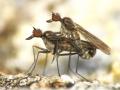
I've been back to Lesbos since I posted the Cylindromyia images and have new photos of the same species (I think). In these ones the presence of crossed apical scutellar hairs is more obvious in the high res original (something I can just make out on the other ones also on re-Checking them. So I think that makes the ID for both sets of pics C. intermedia. No doubt Chris and/or Theo will correct me if I'm wrong! 2.6.11 c12mm Lesbos nick upton attached the following image: 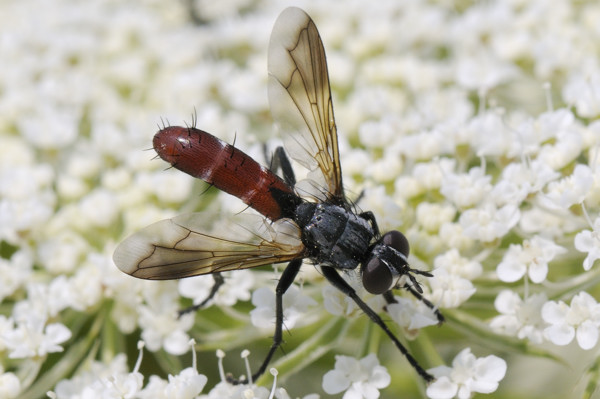 [126.55Kb] Nick Upton - naturalist and photographer |
|
|
|
| ChrisR |
Posted on 26-09-2011 23:05
|
|
Super Administrator Location: Reading, England Posts: 7706 Joined: 12.07.04 |
The last is C.bicolor 
Edited by ChrisR on 26-09-2011 23:08 Manager of the UK Species Inventory in the Angela Marmont Centre for UK Biodiversity at the Natural History Museum, London. |
|
|
|
| nick upton |
Posted on 27-09-2011 11:26
|
|
Member Location: Wiltshire, UK Posts: 828 Joined: 12.03.10 |
OK, thanks Chris. I knew i could trust you to correct me. I didn't realise C. bicolor could have such obvious white banding on the abdomen.... but yes, C. intermedia has a darker tip to the abdomen, and darker wings (if those characters are stable....). I still think my earlier pics from Lesbos last autumn are C. intermedia if the crossed hairs at the rear tip of the scutellum is important as I really can see those in the originals now have re-checked. The new photo was from this spring (as were some C. bicolor I photographed on Corsica last year). Maybe the 2 species are active in different seasons..? or my encounters were just by chance..
Nick Upton - naturalist and photographer |
|
|
|
| ChrisR |
Posted on 27-09-2011 17:55
|
|
Super Administrator Location: Reading, England Posts: 7706 Joined: 12.07.04 |
Yeah, C.bicolor is the only species with a red tip to the abdomen, so it is very easy to identify The rest are another thing entirely
Manager of the UK Species Inventory in the Angela Marmont Centre for UK Biodiversity at the Natural History Museum, London. |
|
|
|
| nick upton |
Posted on 27-09-2011 18:32
|
|
Member Location: Wiltshire, UK Posts: 828 Joined: 12.03.10 |
Oh dear... There's not much hope for me if I can't even ID the easy ones every time. Better stick to the easier families...
Nick Upton - naturalist and photographer |
|
|
|
| ChrisR |
Posted on 27-09-2011 18:52
|
|
Super Administrator Location: Reading, England Posts: 7706 Joined: 12.07.04 |
Well, don't worry - I know there are some indicators of species by the overall appearance but (with the exception of bicolor) I would always need to check the keying features, which can be very obscure - a bristle on the hind tibia, apical scutellars and other smaller features
Edited by ChrisR on 27-09-2011 18:53 Manager of the UK Species Inventory in the Angela Marmont Centre for UK Biodiversity at the Natural History Museum, London. |
|
|
|
Page 1 of 2: 12
| Jump to Forum: |