


Diptera.info :: Identification queries :: Diptera (adults)
 Rhamphomyia iD -> cf. subcinerascens = cinerascens
|
|
| smol |
Posted on 06-04-2026 09:22
|
|
Member Location: Posts: 414 Joined: 06.07.22 |
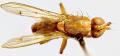
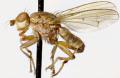
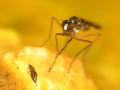
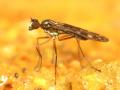
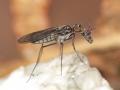
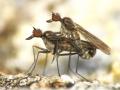
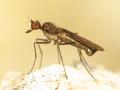
Netherlands, 5 Aprill 2026 Observation: https://waarneming.nl/observation/390857343/       I have been trying to key this one using Mike's key (2010/2017), but am unsure. Particularly unsure about the pennate bristles, or how much they differ from normal setae/setulae. I was not able to find any bristles on the femur/tibia that really stood out. Any reference material for these bristles? If, however, this one does not have pennate bristles, could this be somewhere around Rhamphomyia simplex? Edited by smol on 08-04-2026 15:55 |
|
|
|
| Auratus |
Posted on 06-04-2026 16:16
|
|
Member Location: Edam - Netherlands Posts: 422 Joined: 24.05.10 |
Hello Sander, Have a look at the very distinct anal vein. When using Mike's key, i think you went rong at couplet 21.
Greetings, Jan |
|
|
|
| smol |
Posted on 08-04-2026 09:46
|
|
Member Location: Posts: 414 Joined: 06.07.22 |
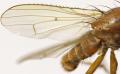
Auratus wrote: Hello Sander, Have a look at the very distinct anal vein. When using Mike's key, i think you went rong at couplet 21. Hello Jan, always happy to see messages from you. Appreciate for allowing me to practice and you directly pointing to the mistake. I must admit that have been rushing the ID a bit once I did not understand the term "pennate ciliation" (and tackling this genus for the first time). On the Facebook of Diptera UK, I did find a reference of these bristles, and they are much more obvious as I expected. Looking at the out-of-focus abdomen, I am guessing this to be a female. Having another try at this one: Mike(2017): 3rd antennal segment not elongated; discall cell short; thorax black/grey; acrostichals bristles present + legs black; labellae not as long and slender as in Subgenus Aclonempis; discal cell not abnormal + anal vein clear + thorax stripes on rows of bristles; not R. marginata; anal vein distinctly reaching wing margin; palps weak; halteres pale; hind femora is twisted so the ventral side is slightly angled away from the picture. Though, we can see enough to see short and sparse ventral bristles throughout its length; sternum is not visible. Though the 3rd picture does show long hairs, out of focus, at around the base of the coxa. Only the sides of the prothoracic sternum: Female hind tibiae without pennate ciliation and wings dark → none matches Whole of prothoracic sternum haired: Axillary lobe looks to be clouded at the wing margin, though this is difficult to determine. The cloud spots at, for example, the anal vein, does seem to match with illustrations of R. subcinerascens. The other route keys to R. sulcatina, but the wing clouds look different. R. subcinerascens does seem to match better. Reference: Wing of R. subcinerascens I might be making too many logical jumps here. I feel like the level of detail is not enough on the wings. There are also a couple of species not in the key of Mike that have been reported in NL. So I might have a look at those at a later stage. Edited by smol on 08-04-2026 09:52 |
|
|
|
| Auratus |
Posted on 08-04-2026 10:21
|
|
Member Location: Edam - Netherlands Posts: 422 Joined: 24.05.10 |
I agree; as far as I can tell from the photos, this is a female of R. (su cinerascens. The cloudy wing, which should give it away, is unfortunately not clearly visible. The irregularly haired tarsi are also an indication, as is the time of year. cinerascens. The cloudy wing, which should give it away, is unfortunately not clearly visible. The irregularly haired tarsi are also an indication, as is the time of year.But Rhamphomyia's are usually just very difficult to identify from photographs. Greetings, Jan |
|
|
|
| smol |
Posted on 08-04-2026 15:54
|
|
Member Location: Posts: 414 Joined: 06.07.22 |
Auratus wrote: I agree; as far as I can tell from the photos, this is a female of R. (su cinerascens. The cloudy wing, which should give it away, is unfortunately not clearly visible. The irregularly haired tarsi are also an indication, as is the time of year.But Rhamphomyia's are usually just very difficult to identify from photographs. Happy to hear I was on the right track. --- Somewhat unrelated; taking a look at and trying to backtrack the broader taxon (what is Rhamphomyia and Empis) and finding missing species description seems to be quite difficult. Wondering if any has the following resources as a start: - Revision of the European Empis (s. str.) simulium-group of species (Diptera: Empididae), with descriptions of four new species from the European mountains. Studia Dipterologica 22(1): 89-110. [2016.12.15] - Revision of the European Empis (s.str.) alpicola-group of species (Diptera: Empididae), with a new synonymy of Rhamphomyia subgenus Aclonempis Collin with the subgenus Empis Linnaeus s str. Studia Dipterologica 21(1): 37-40. [2015.06.18] |
|
|
|
| Auratus |
Posted on 09-04-2026 04:48
|
|
Member Location: Edam - Netherlands Posts: 422 Joined: 24.05.10 |
I am afraid I do not quite understand your question. Are you asking whether the publications you mention are suitable to serve as a basis for building knowledge about the Empididae? I would not dare say that, because the articles are unfortunately (at least for me) not available. If you are looking for a starting point, I would go for the books on Empididae in the Fauna Entomologica Scandinavica series, a number of which can be found on the internet with a little searching. Greetings, Jan |
|
|
|
| Jump to Forum: |