



Diptera.info :: Family forums :: Asilidae Forum
 French Dysmachus from Central massif
|
|
| clovis |
Posted on 02-04-2015 22:18
|
|
Member Location: North France, lille Posts: 937 Joined: 08.06.10 |
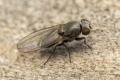
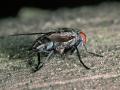
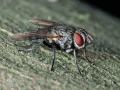
Hi everyone, Here is a Asilinae that i believe to belong to Dysmachus genus after lot of researches because genitalia are the closest looking. And looking at the French fauna list provided by Faune europaea, i only stay with 4 possible species: Dysmachus stylifer (Loew 1854) Dysmachus bifurcus (Loew 1848) Dysmachus hamulatus (Loew 1854) Dysmachus harpax Villeneuve 1904 The 2 first ones because it can't find any figure or description of the genitalia, the 2 last have genitalia looking quite close in Seguy. So i'm looking for subjection (and genitalia figures if you have) Caught at 1600m hight, on monts Mezenc (Ardèche) in the meadow part, but close to the forest.  clovis : France : Borée : 07310 : 06/08/2014 Altitude : 1636 m - Taille : 12 mm environ Réf. : 156219  clovis : France : Borée : 07310 : 06/08/2014 Altitude : 1636 m - Taille : 12 mm environ Réf. : 156220  clovis : France : Borée : 07310 : 06/08/2014 Altitude : 1636 m - Taille : 12 mm environ Réf. : 156221 PS: What do you think of the criterion of the number of notopleural setae? Because there is only two, which would lead to Eutolmus following Seguy's key (Dysmachus: first legs black, then 2 notopleural setae), same for another specimen that is not an Eutolmus (Female D fuscipennis) Edited by clovis on 26-01-2016 21:40 |
|
|
|
| Quaedfliegh |
Posted on 03-04-2015 10:14
|
 Member Location: Tilburg Netherlands Posts: 2220 Joined: 18.05.10 |
I don't know about the notopleural bristles but the fact that there are so many bristles on the mesonotum (covering it from front to back) dismisses Eutolmus. This is Dysmachus. I am not able to id the creature now (not at home) but will get back later. : )
Greetings, Reinoud Field guide to the robber flies of the Netherlands and Belgium: https://www.jeugdbondsuitgeverij.nl/product/field-guide-to-the-robberflies-of-the-netherlands-and-belgium/ https://www.nev.nl/diptera/ |
 |
|
| Quaedfliegh |
Posted on 03-04-2015 23:26
|
|
Member Location: Tilburg Netherlands Posts: 2220 Joined: 18.05.10 |
Although your pictures are great i can not see some details i need for the keys i use (Engel, 1930). But.... despite all that i am convinced this is D. harpax. BTW do you know where i can find something on the ditribution of the French asilidae? It is strange, there seems hardly to be any literature available on French asilidae besides Seguy. Edited by Quaedfliegh on 03-04-2015 23:29 Greetings, Reinoud Field guide to the robber flies of the Netherlands and Belgium: https://www.jeugdbondsuitgeverij.nl/product/field-guide-to-the-robberflies-of-the-netherlands-and-belgium/ https://www.nev.nl/diptera/ |
|
|
|
| clovis |
Posted on 04-04-2015 12:51
|
|
Member Location: North France, lille Posts: 937 Joined: 08.06.10 |
Nice!!!  What are the details you need? I shall i have a look at the literature i have, i think i have something on distribution. If not, you should ask this question to Chritoophe, he knows this group better than i do. |
|
|
|
| Quaedfliegh |
Posted on 04-04-2015 15:42
|
|
Member Location: Tilburg Netherlands Posts: 2220 Joined: 18.05.10 |
Thanks Clovis (Louis?), The detail I was looking for are the anteroventral bristles on femur 2. They should be black. Another thing is the hair on the scutellum. Greetings, Reinoud Field guide to the robber flies of the Netherlands and Belgium: https://www.jeugdbondsuitgeverij.nl/product/field-guide-to-the-robberflies-of-the-netherlands-and-belgium/ https://www.nev.nl/diptera/ |
|
|
|
| clovis |
Posted on 06-04-2015 01:12
|
|
Member Location: North France, lille Posts: 937 Joined: 08.06.10 |
3 antero bristle (white) on femur 2. On scutellum: white hairs + 2 white bristles oriented to the top. Louis is the evolution of my surname |
|
|
|
| Jump to Forum: |