

Diptera.info :: Identification queries :: Diptera (adults)
Who is here? 1 guest(s)
 Chironomidae - Hong Kong
|
|
| Clive Lau |
Posted on 30-01-2013 03:18
|
|
Member Location: Hong Kong Posts: 669 Joined: 27.03.07 |
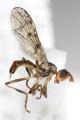
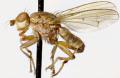
Found in Hong Kong on 12.i.2013. Grateful for its identification.
Clive Lau attached the following image:  [79.04Kb] |
|
|
|
| Clive Lau |
Posted on 30-01-2013 03:19
|
|
Member Location: Hong Kong Posts: 669 Joined: 27.03.07 |
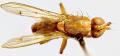
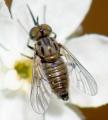
Abdomen
Clive Lau attached the following image:  [98.81Kb] |
|
|
|
| Clive Lau |
Posted on 30-01-2013 03:20
|
|
Member Location: Hong Kong Posts: 669 Joined: 27.03.07 |
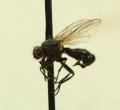
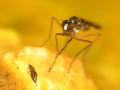
Lateral View
Clive Lau attached the following image:  [73.13Kb] |
|
|
|
| Clive Lau |
Posted on 30-01-2013 03:20
|
|
Member Location: Hong Kong Posts: 669 Joined: 27.03.07 |
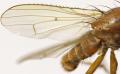
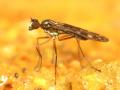
Wing
Clive Lau attached the following image:  [85.76Kb] |
|
|
|
| John Carr |
Posted on 30-01-2013 04:39
|
 Super Administrator Location: Colorado, USA Posts: 10696 Joined: 22.10.10 |
Do you have a dorsal closeup of the genitalia (at the tip of the abdomen)? What is the ratio of length of length of fore tarsomere 1 to fore tibia? Are eyes hairy? |
 |
|
| Clive Lau |
Posted on 31-01-2013 05:00
|
|
Member Location: Hong Kong Posts: 669 Joined: 27.03.07 |
Dorsal closeup of the genitalia
Clive Lau attached the following image:  [97.07Kb] |
|
|
|
| Clive Lau |
Posted on 31-01-2013 05:01
|
|
Member Location: Hong Kong Posts: 669 Joined: 27.03.07 |
Genitalia of another specimen
Clive Lau attached the following image:  [102.47Kb] |
|
|
|
| Clive Lau |
Posted on 31-01-2013 05:03
|
|
Member Location: Hong Kong Posts: 669 Joined: 27.03.07 |
Ration of tarsomere 1 to fore tibia 0.925 mm : 0.382 mm = 2.42 : 1 Clive Lau attached the following image:  [69.43Kb] |
|
|
|
| Clive Lau |
Posted on 31-01-2013 05:05
|
|
Member Location: Hong Kong Posts: 669 Joined: 27.03.07 |
I'm not familiar with Chironomidae taxonomy. As such, the whole foreleg is included here for your checking of measurements.
Clive Lau attached the following image:  [67.66Kb] |
|
|
|
| Clive Lau |
Posted on 31-01-2013 05:06
|
|
Member Location: Hong Kong Posts: 669 Joined: 27.03.07 |
The eyes do not appear hairy to me.
Clive Lau attached the following image:  [118.81Kb] |
|
|
|
| Clive Lau |
Posted on 31-01-2013 05:07
|
|
Member Location: Hong Kong Posts: 669 Joined: 27.03.07 |
Alternative view of the eyes from different angle.
Clive Lau attached the following image:  [90.56Kb] |
|
|
|
| John Carr |
Posted on 31-01-2013 13:05
|
|
Super Administrator Location: Colorado, USA Posts: 10696 Joined: 22.10.10 |
The ratio 925:382 (basitarsus:tibia) is the "leg ratio". The front leg ratio is usually over 1 in Chironominae and 1 or less, usually around .6, in other subfamilies. So you have a Chironominae. This is confirmed by genitalia: the gonostylus is not freely articulated in this subfamily but more or less fused to the gonocoxite. Is the base of tergite 8 constricted naturally or crushed? It is constricted naturally in Polypedilum but the genitalia do not look like that genus. Most Chironomini have additional pairs of appendages between the outer claspers. It is also constricted in many Tanytarsini but other factors argue against that ID. |
|
|
|
| Clive Lau |
Posted on 31-01-2013 14:37
|
|
Member Location: Hong Kong Posts: 669 Joined: 27.03.07 |
Tergite 8 is constricted naturally. The genera belonging Chironominae known from this part of the world (Guangdong Province) include: Chironomus Cladopelma Dicrotendipes Einfeldia Glyptotendipes Harnischia Kiefferulus Microchironomus Nilodorum Polypedilum Rheotanytarsus Robackia Shangomyia Stenochironomus Tanytarsus Xiaomyia Will this help to further narrow now the possible ID of this fly? Edited by Clive Lau on 31-01-2013 23:50 |
|
|
|
| John Carr |
Posted on 01-02-2013 02:39
|
|
Super Administrator Location: Colorado, USA Posts: 10696 Joined: 22.10.10 |
Possibly Polypedilum (Pentapedilum), Tanytarsus, or Rheotanytarsus. I have difficulty interpreting the genitalia. There may be damage. I know nothing of Xiaomyia. The rest can be ruled out for various reasons: tergite 8 is not triangular or the eye does not have a strong extension over the base of the antenna. Your antennae have more than 11 flagellomeres. Chironominae primitively have 13 flagellomeres. This number is reduced to 11 in a large group of Chironomini including Chironomus, to 12 in many Tanytarsini, and to 11 or fewer in several smaller groups. Pentapedilum was revised recently. http://insects.um...lum%20.pdf |
|
|
|
| Jump to Forum: |