

Diptera.info :: Identification queries :: Diptera (adults)
 Chloropidae ?
|
|
| evdb |
Posted on 16-01-2013 17:09
|
 Member Location: France (Loiret) Posts: 1363 Joined: 05.12.11 |
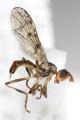
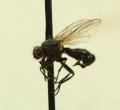
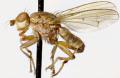
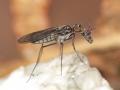
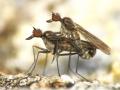
Hi ! August 14th 2012 Center of France, size 2-3 mm I expect Thaumatomyia notata female. Is that correct ? evdb attached the following image:  [58.71Kb] Eugene |
 |
|
| Sara21392 |
Posted on 17-01-2013 11:40
|
 Member Location: Posts: 1445 Joined: 07.11.10 |
True!
Sincerely yours Sara |
|
|
|
| evdb |
Posted on 17-01-2013 11:42
|
|
Member Location: France (Loiret) Posts: 1363 Joined: 05.12.11 |
Thanks a lot Sara !
Eugene |
|
|
|
| von Tschirnhaus |
Posted on 16-05-2013 18:16
|
|
Member Location: Bielefeld, Germany Posts: 454 Joined: 04.11.07 |
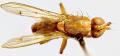
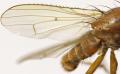
Thaumatomyia notata (Meigen, 1830), Chloropidae. sex? The Latin name means translated: A remarkable fly, it should be noted (observed). The reason is that masses enter houses in autumn in order to overwinter. If tremendous numbers of this fly (millions) aggregate in a flat the inhabitants become desperated as the flies daggle the walls with their excrements, or become squeezed there, or cannot be easily be removed. Poisoning of rooms should be prevented! Males possess abdominal glands and mark their wintering shelters. Thus, each year more flies are attracted. 240 scientific publications deal with the phenomenon. Larvae of Thaumatomyia species are living in the soil and feed on root aphids (Pemphigidae), in as far the species are helpful organisms in horticulture. The colour of T. notata is very variable, in Northern Africa and the Near East the flies are partly completely yellow. The 3rd antennal article mostly is black and it is not longer than high, the gena (= jowl) is narrower than the height (= depth) of the 3rd article, outer and inner vertical bristles are present, the apical bristles of the scutellum (in all Thaumatomyia) insert close together. All T. spp. often are misidentified as Chlorops spp. |
|
|
|
| von Tschirnhaus |
Posted on 16-05-2013 18:21
|
|
Member Location: Bielefeld, Germany Posts: 454 Joined: 04.11.07 |
Thaumatomyia notata (Meigen, 1830), Chloropidae. sex? The Latin name means translated: A remarkable fly, it should be noted (observed). The reason is that masses enter houses in autumn in order to overwinter. If tremendous numbers of this fly (millions) aggregate in a flat the inhabitants become desperated as the flies daggle the walls with their excrements, or become squeezed there, or cannot be easily be removed. Poisoning of rooms should be prevented! Males possess abdominal glands and mark their wintering shelters. Thus, each year more flies are attracted. 240 scientific publications deal with the phenomenon. Larvae of Thaumatomyia species are living in the soil and feed on root aphids (Pemphigidae), in as far the species are helpful organisms in horticulture. The colour of T. notata is very variable, in Northern Africa and the Near East the flies are partly completely yellow. The 3rd antennal article mostly is black and it is not longer than high, the gena (= jowl) is narrower than the height (= depth) of the 3rd article, outer and inner vertical bristles are present, the apical bristles of the scutellum (in all Thaumatomyia) insert close together. All T. spp. often are misidentified as Chlorops spp. |
|
|
|
| Jump to Forum: |