

Diptera.info :: Identification queries :: Diptera (adults)
Who is here? 1 guest(s)
 Ceratopogonidae ID
|
|
| Jozef Obona |
Posted on 18-11-2012 08:59
|
 Member Location: Slovakia Posts: 336 Joined: 07.12.10 |
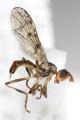
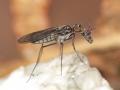
Slovakia VIII.2012 Culicoides fagineus ? Thanks for help. Jozef Jozef Obona attached the following image:  [172.3Kb] |
|
|
|
| John Carr |
Posted on 18-11-2012 14:52
|
 Super Administrator Location: Colorado, USA Posts: 10696 Joined: 22.10.10 |
My first thought was Ceratopogonini, which has some genera with striped wings. Could be Culicoides, especially if it is larger than 2 mm. Are the wings hairy? |
 |
|
| Sergiy Filatov |
Posted on 18-11-2012 23:17
|
|
Member Location: Kharkiv, Ukraine Posts: 259 Joined: 22.10.10 |
Culicoides fagineus seems to be ok, at least Fagineus complex (in Western Europe that includes also C. subfagineus and as minimum a couple of undescribed cryptic species). Usually for appropriate id slide mounting is required and in the case of cryptic species only PCR will help.Species of Fagineus complex are known to be dendrolimnic (breeding in tree holes), so presence of old deciduos trees with tree-holes in the locality where specimen was taken may act as indicator of C.fagineus too. |
|
|
|
| Jozef Obona |
Posted on 19-11-2012 08:16
|
|
Member Location: Slovakia Posts: 336 Joined: 07.12.10 |
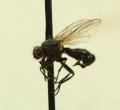
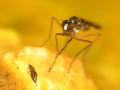
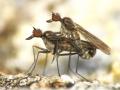
Dear Sergiy and John Thanks four your comments. This one ist from rearing unit with sediment from tree holes (elm tree). I try reared all tree holes inhabitant and I have interesting results. This is other Ceratopogonidae, but I dont know ident. it. Jozef Jozef Obona attached the following image:  [143.32Kb] Edited by Jozef Obona on 19-11-2012 08:16 |
|
|
|
| Jozef Obona |
Posted on 19-11-2012 08:17
|
|
Member Location: Slovakia Posts: 336 Joined: 07.12.10 |
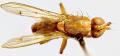
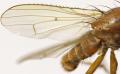
...
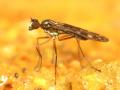
Jozef Obona attached the following image:  [139.03Kb] |
|
|
|
| Jozef Obona |
Posted on 19-11-2012 14:24
|
|
Member Location: Slovakia Posts: 336 Joined: 07.12.10 |
... If anyone has the time and interest I can send this material to identify Many thanks Jozef |
|
|
|
| John Carr |
Posted on 19-11-2012 15:08
|
|
Super Administrator Location: Colorado, USA Posts: 10696 Joined: 22.10.10 |
Consider Dasyhelea and Forcipomyia for the new ones. |
|
|
|
| Sergiy Filatov |
Posted on 20-11-2012 11:42
|
|
Member Location: Kharkiv, Ukraine Posts: 259 Joined: 22.10.10 |
Dear Jozef, thanks for your kind offer, but I have a lot of my own Culicoides material identified only to the species complex level. And no experts on biting midges in my country to consult with, and no PCR to identify Culicoides  To say more poetically about central european (as well as others) Culicoides - hic sunt dracones. Although if we take it easier... I think you'll find people who can help you with your ceratopogonids here http://campus.belmont.edu/cienews/director.html For example it may be dr Ivan Orszagh from Bratislava, although dont know whether he's active at the present time. By the way, which methods/devices do you exploit to collect and rear tree holes inhabitants? It would be interesting for me to start with preimaginal stages, but I'm still hesitating about that. Edited by Sergiy Filatov on 20-11-2012 12:21 |
|
|
|
| Jozef Obona |
Posted on 20-11-2012 16:18
|
|
Member Location: Slovakia Posts: 336 Joined: 07.12.10 |
Dear John, Thanks for comment. Dear Sergiy, Thanks for web page. I write to Patrycja Dominiak :-) If I reared tree holes inhabitants, I used the same procedure. I transfer to the laboratory tree holes sediment with larvae, next I remove potential predators (larvae Dolichopodidae, Muscidae ....) I close this sediment in a glass container, and next I regularly monitor this container... it's everything in short. Best regards, Jozef |
|
|
|
| Sergiy Filatov |
Posted on 20-11-2012 19:52
|
|
Member Location: Kharkiv, Ukraine Posts: 259 Joined: 22.10.10 |
Thank you Jozef. I think, I should try to do it next season. If you have more reared Culicoides (only ones with patterned wings) you may post photos on the forum. I'll try to help you, at least with approximate identification. |
|
|
|
| Jump to Forum: |