

Diptera.info :: Identification queries :: Diptera (adults)
 Strange Empid Parasite?
|
|
| Gnats2meetu |
Posted on 24-09-2009 17:52
|
 Member Location: York, U.K. Posts: 303 Joined: 06.07.09 |
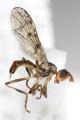
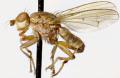
Dear Dipterists please tell me what this strange organism is that is erupting laterally out of the abdomen of this poor individual. I have found this occurence in mainly this species of Empididae but also in some Lauxanids. Any help would be grateful!
Gnats2meetu attached the following image: 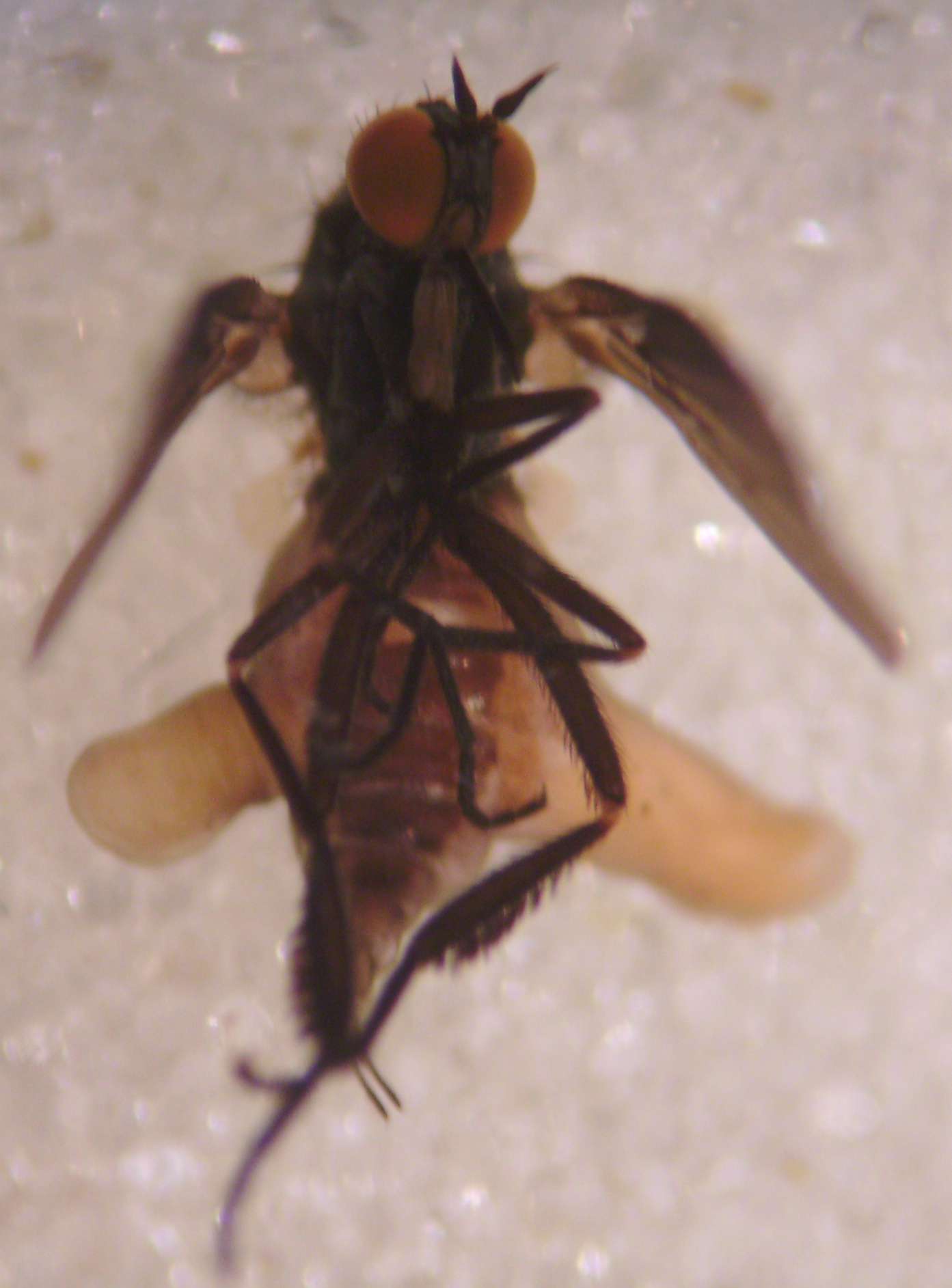 [92.91Kb] Edited by Gnats2meetu on 24-09-2009 18:02 Bobby D Jorvík |
|
|
|
| Gnats2meetu |
Posted on 24-09-2009 18:06
|
|
Member Location: York, U.K. Posts: 303 Joined: 06.07.09 |
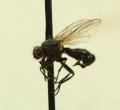
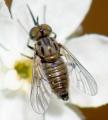
Photo 2
Gnats2meetu attached the following image:  [110.47Kb] Bobby D Jorvík |
|
|
|
| phil withers |
Posted on 24-09-2009 18:18
|
|
Member Location: Lyon, France Posts: 521 Joined: 04.03.08 |
Eversible sense organs (not sure the function is really know): most noticeable in speciemns taken in Malaise traps (absorption of fluid progressively blows them out) |
|
|
|
| Maddin |
Posted on 24-09-2009 18:22
|
 Member Location: Sacramento CA USA Posts: 194 Joined: 30.06.05 |
I am not completely sure, but I think it is not a parasite, it is "natural". I have seen this several times in Empids...
Martin Hauser |
 |
|
| igor |
Posted on 24-09-2009 18:43
|
|
Member Location: Posts: 341 Joined: 23.11.06 |
Hi, The specimen should be Rhamphomyia [female]. The "strange organism" is abdominal pleural sacs. They can be found in females of many Rhamphomyia and Empis species and probably are signalling device that increases the size of female's silhouette to prospective males when swarming. Although, pheromone emitting function is also quite possible. Best regards, Igor Shamshev |
|
|
|
| Gnats2meetu |
Posted on 24-09-2009 18:54
|
|
Member Location: York, U.K. Posts: 303 Joined: 06.07.09 |
Wow you guys are amazing, thanks for all of the insight and suggestions, I love this site 
Bobby D Jorvík |
|
|
|
| Paul Beuk |
Posted on 24-09-2009 21:15
|
 Super Administrator Location: Netherlands Posts: 19403 Joined: 11.05.04 |
Rhamphomyia tibiella, b.t.w.
Paul - - - - Paul Beuk on https://diptera.info |
|
|
|
| Gnats2meetu |
Posted on 25-09-2009 10:15
|
|
Member Location: York, U.K. Posts: 303 Joined: 06.07.09 |
Thanks a lot Paul
Bobby D Jorvík |
|
|
|
| Wanda Zwart |
Posted on 10-06-2013 11:44
|
|
Member Location: Netherlands Posts: 1 Joined: 10.06.13 |
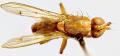
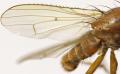
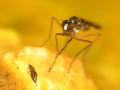
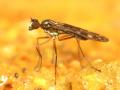
Good to have found this! i was looking for an answer on the exact same occurance. I have looked at hundreds of empididae (just for separation and counting of families) but only found 1 specimen with these abdominal pleural sacs, what makes me wonder if all females have it than ? or can they retract it ? i have another Empidiae with what looks like eggs or some fungus maybe. Anyone know what that is ? (sorry for the poor quality pics, by phone through a binoculair) Thanks in advance    |
|
|
|
| Paul Beuk |
Posted on 10-06-2013 12:10
|
|
Super Administrator Location: Netherlands Posts: 19403 Joined: 11.05.04 |
The top two are also females of R. tibiella, the bottom might also be that species. The sacks are eversible, so usually you do not see them. The probably are eversed during swarming only. I have no idea what you have on the male. If they were eggs then I would have expected them to be more equal in size.
Paul - - - - Paul Beuk on https://diptera.info |
|
|
|
| Jump to Forum: |