

Diptera.info :: Identification queries :: Diptera (adults)
 Muscidae: Helina pertusa
|
|
| Stephen R |
Posted on 26-05-2011 23:45
|
 Member Location: Clitheroe Lancashire UK Posts: 2396 Joined: 12.06.09 |
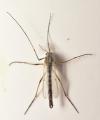
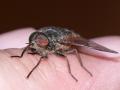
c. 8mm, Clitheroe UK, 22 May 2011. From this and other images I arrived at Helina pertusa. Does this look right? Should I bring more pictures? (No specimen.) Stephen R attached the following image: 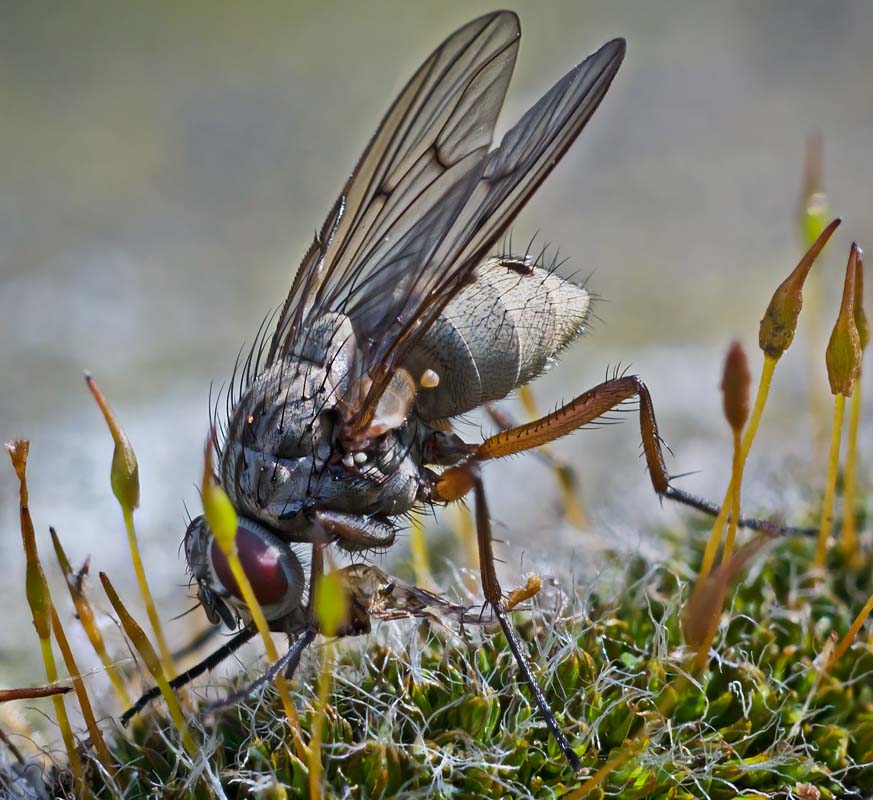 [134.77Kb] Edited by Stephen R on 29-05-2011 21:40 |
|
|
|
| Stephane Lebrun |
Posted on 27-05-2011 17:15
|
 Member Location: Le Havre, France Posts: 8248 Joined: 03.03.07 |
It could be. How many katepisternal, how long is the pre-alar ? I only catch Helina lasiophthalma at the moment which could also be.
Stephane. |
|
|
|
| Stephen R |
Posted on 27-05-2011 18:42
|
|
Member Location: Clitheroe Lancashire UK Posts: 2396 Joined: 12.06.09 |
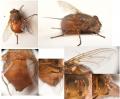
This gives the best view of these features. I think katepisternals are 2+2, and the pre-alar looks weak.
Stephen R attached the following image: 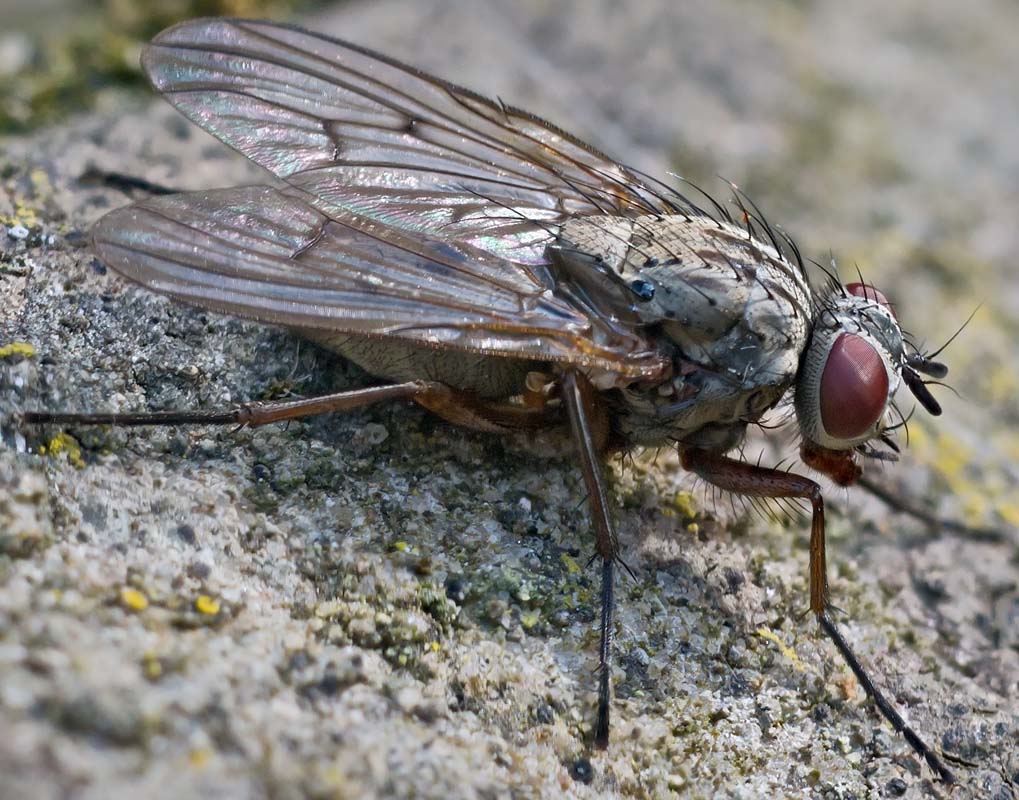 [164.18Kb] |
|
|
|
| Stephane Lebrun |
Posted on 27-05-2011 19:14
|
|
Member Location: Le Havre, France Posts: 8248 Joined: 03.03.07 |
Seems consistent with H. pertusa, but the best way to get a certitude is to catch a specimen.
Stephane. |
|
|
|
| Stephen R |
Posted on 27-05-2011 21:10
|
|
Member Location: Clitheroe Lancashire UK Posts: 2396 Joined: 12.06.09 |
I'll see what I can do.  Other things which seemed to confirm H. pertusa were the the single ad on t3 and the strongly infuscated crossveins. I can't find any sign of eye hairs. and the arista is very short-haired: Other things which seemed to confirm H. pertusa were the the single ad on t3 and the strongly infuscated crossveins. I can't find any sign of eye hairs. and the arista is very short-haired:
Stephen R attached the following image: 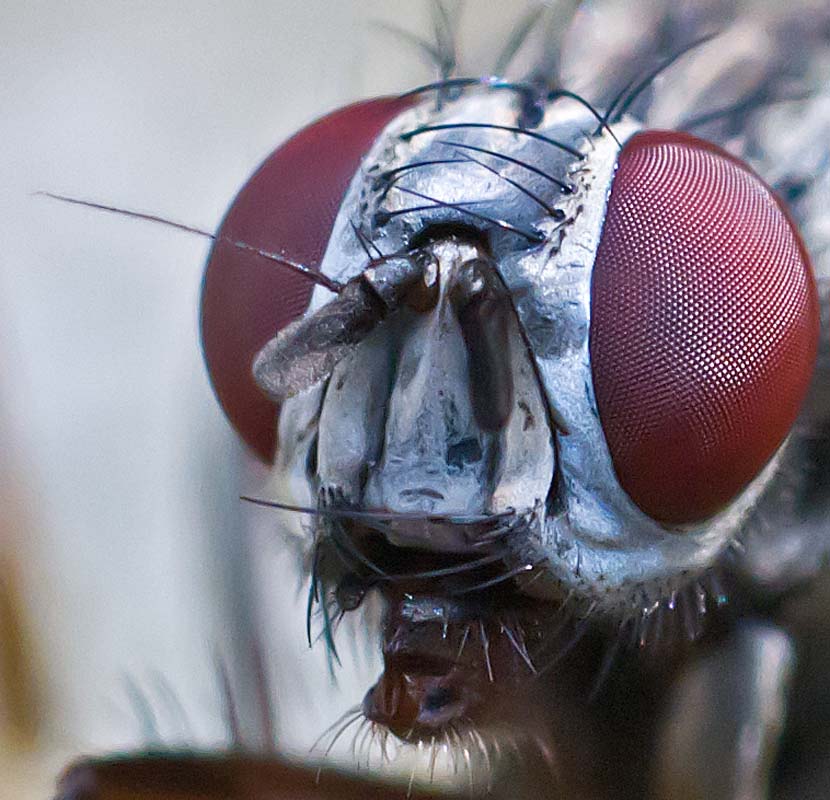 [115.08Kb] Edited by Stephen R on 27-05-2011 21:12 |
|
|
|
| Stephen R |
Posted on 27-05-2011 22:01
|
|
Member Location: Clitheroe Lancashire UK Posts: 2396 Joined: 12.06.09 |
Incidentally, when the keys speak of 'katepisternals 1 + 2', does the first number always refer to the anterior position, or the opposite, or is there no convention? |
|
|
|
| Stephane Lebrun |
Posted on 27-05-2011 22:06
|
|
Member Location: Le Havre, France Posts: 8248 Joined: 03.03.07 |
Stephen R wrote: Incidentally, when the keys speak of 'katepisternals 1 + 2', does the first number always refer to the anterior position? Yes, one anterior and two posterior. Stephane. |
|
|
|
| Stephen R |
Posted on 27-05-2011 22:37
|
|
Member Location: Clitheroe Lancashire UK Posts: 2396 Joined: 12.06.09 |
Thanks. This is the view from the other side - again 2 anterior setae, the lower one weaker.
Stephen R attached the following image: 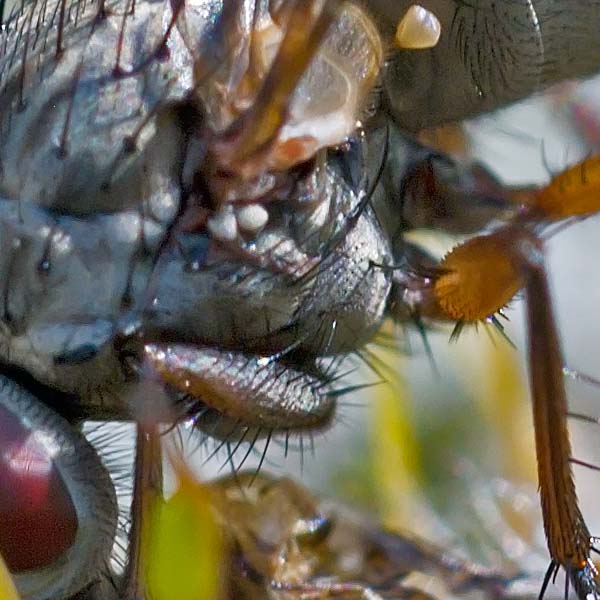 [89.79Kb] |
|
|
|
| Stephen R |
Posted on 27-05-2011 22:54
|
|
Member Location: Clitheroe Lancashire UK Posts: 2396 Joined: 12.06.09 |
and this is the 'money shot' for the pre-alar!
Stephen R attached the following image: 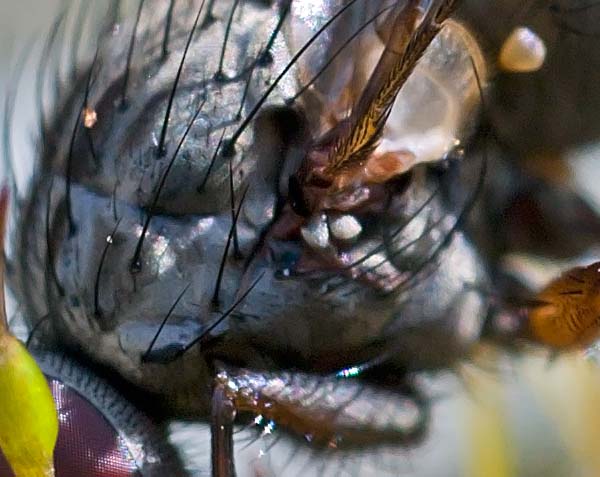 [69.72Kb] |
|
|
|
| Stephane Lebrun |
Posted on 28-05-2011 10:18
|
|
Member Location: Le Havre, France Posts: 8248 Joined: 03.03.07 |
The pra is not so weak, and the arista seems almost bare. That trouble me. Catch one if you have the opportunity.
Stephane. |
|
|
|
| Stephen R |
Posted on 28-05-2011 10:23
|
|
Member Location: Clitheroe Lancashire UK Posts: 2396 Joined: 12.06.09 |
I'll go out and look now! |
|
|
|
| Stephen R |
Posted on 28-05-2011 12:25
|
|
Member Location: Clitheroe Lancashire UK Posts: 2396 Joined: 12.06.09 |
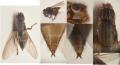
Well, I got one, and it's a male with bare eyes - I only had to search 20 damp mossy tree trunks  . Photos to follow. . Photos to follow.(I also got a Phaonia pallida male and a Sciapus platypterus - not a bad habitat to look at on a dull day.) Here's the male specimen. It does key out as H. pertusa. Stephen R attached the following image: 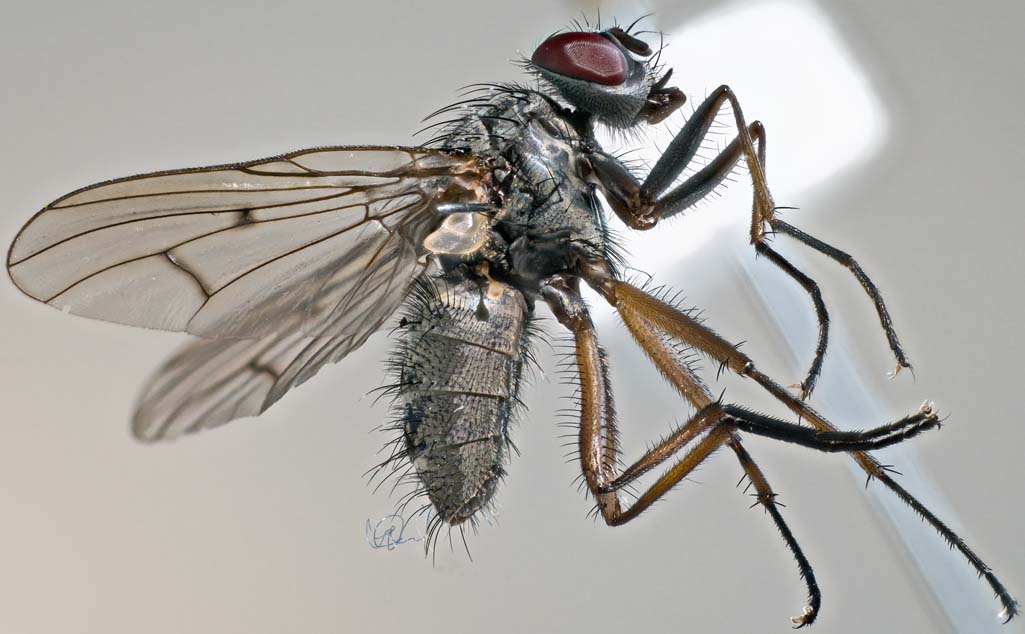 [100.49Kb] Edited by Stephen R on 28-05-2011 18:17 |
|
|
|
| Stephen R |
Posted on 28-05-2011 18:11
|
|
Member Location: Clitheroe Lancashire UK Posts: 2396 Joined: 12.06.09 |
Four rows of pre ac.
Stephen R attached the following image: 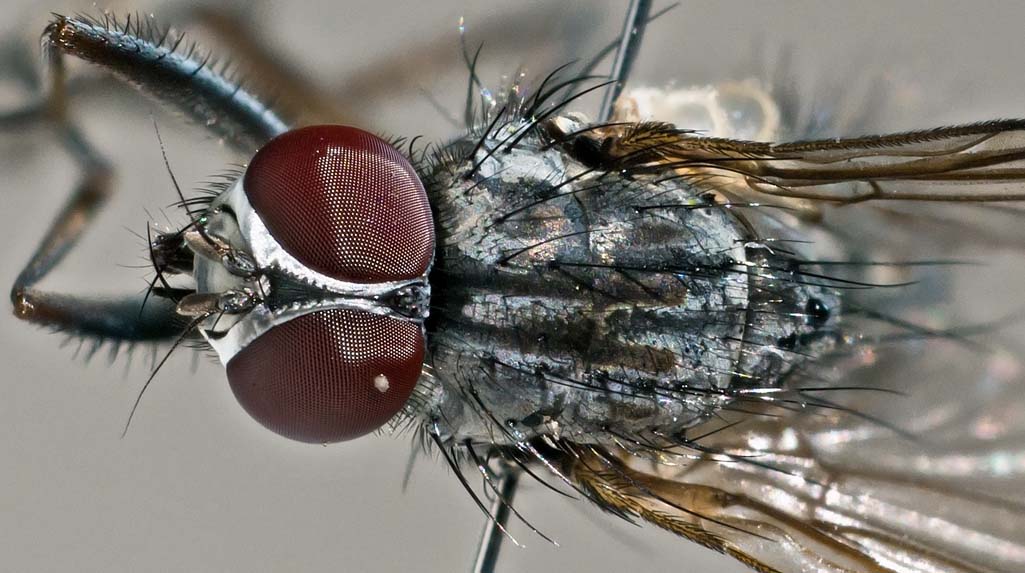 [117.55Kb] Edited by Stephen R on 28-05-2011 18:16 |
|
|
|
| Stephen R |
Posted on 28-05-2011 18:12
|
|
Member Location: Clitheroe Lancashire UK Posts: 2396 Joined: 12.06.09 |
3
Stephen R attached the following image: 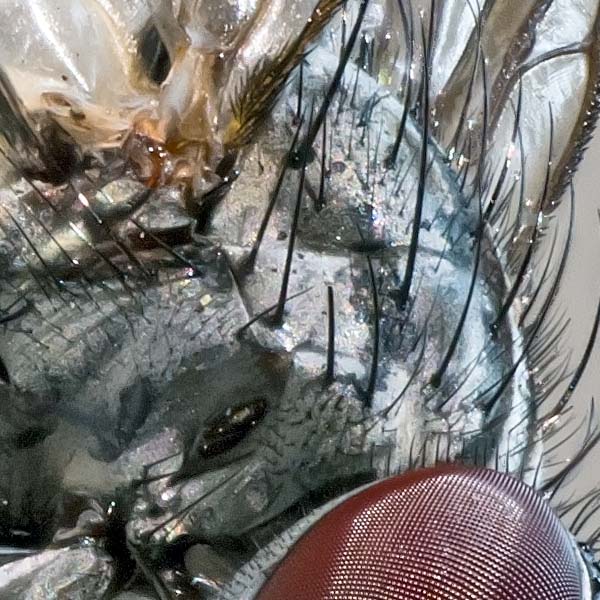 [114.48Kb] |
|
|
|
| Stephen R |
Posted on 28-05-2011 18:14
|
|
Member Location: Clitheroe Lancashire UK Posts: 2396 Joined: 12.06.09 |
4
Stephen R attached the following image: 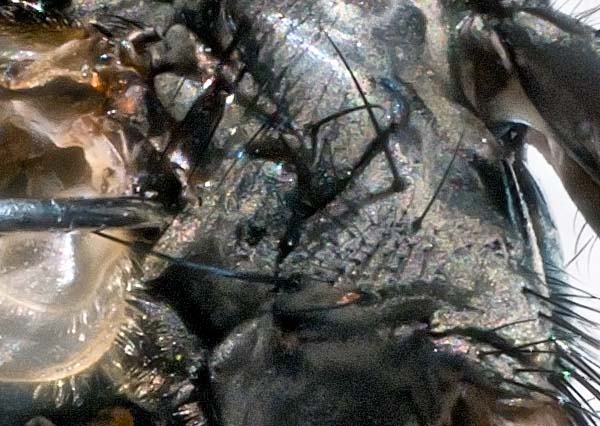 [84.03Kb] |
|
|
|
| Stephane Lebrun |
Posted on 29-05-2011 20:11
|
|
Member Location: Le Havre, France Posts: 8248 Joined: 03.03.07 |
Great. The dense hairiness beneath the hind femur seems here too...
Stephane. |
|
|
|
| Stephen R |
Posted on 29-05-2011 21:39
|
|
Member Location: Clitheroe Lancashire UK Posts: 2396 Joined: 12.06.09 |
Yes, it's very clear on the specimen. Many thanks for your patience and rigour! Would you like the specimen? |
|
|
|
| Jump to Forum: |