Gallery Links
Users Online
· Guests Online: 19

· Members Online: 0

· Total Members: 5,077
· Newest Member: Cotinis
Forum Threads
Theme Switcher
Switch to:
Last Seen Users
· weia00:38:20
· ESant00:51:39
· ViktorNebenf...00:53:28
· Carnifex00:55:12
· Ben200:57:00
· Joerg Schneider01:02:53
· John Carr01:13:14
· Diego Rosa02:34:48
· RasmusKeis02:48:24
· Juergen Peters03:18:07
Latest Photo Additions
View Thread
Diptera.info :: Identification queries :: Diptera (adults)
 Print Thread
Our town park: one more Sciomyzidae
Dmitry Gavryushin
#1 Print Post
Posted on 28-07-2006 09:10
User Avatar

Member

Location: Moscow region, Russia
Posts: 3345
Joined: 17.10.05

July 27, 2006.
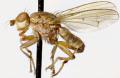
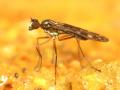
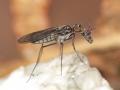
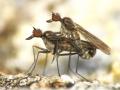
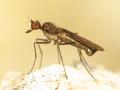
This time I examined thick vegetation at the park's border near the Nara river, with a heron circling above me for a while. These flies were quite numerous, especially near water where Phragmites/Typha/Butomus grew. Size 6mm.
Dmitry Gavryushin attached the following image:


[104.58Kb]
 
Paul Beuk
#2 Print Post
Posted on 28-07-2006 11:02
User Avatar

Super Administrator

Location: Netherlands
Posts: 19403
Joined: 11.05.04

Platycephala planifrons of the Chloropidae.
Paul

- - - -

Paul Beuk on https://diptera.info
 
diptera.info
Nikita Vikhrev
#3 Print Post
Posted on 28-07-2006 11:26
User Avatar

Member

Location: Moscow, Russia
Posts: 9512
Joined: 24.05.05

I spend an hour in attampt to ID this "Sciomyzidae"Grin
Now I see why I havn't got any succes!
Thank you Paul.
Nikita Vikhrev - Zool Museum of Moscow University
 
Dmitry Gavryushin
#4 Print Post
Posted on 28-07-2006 11:52
User Avatar

Member

Location: Moscow region, Russia
Posts: 3345
Joined: 17.10.05

Wow, Chloropidae again Smile!
Platycephala planifrons ... attacks Phragmites shoots early in the year leading to severe stunting of attacked stems by killing the growing point. Platycephala planifrons was one of the most damaging species found during surveys in Europe. Attack can cause biomass reductions of >50%. Females fly in the summer and are long lived. Eggs are laid in late summer. Larvae hatch in late summer, feed for a limited period, and overwinter.

http://www.invasi...nReed.html

P.S. I found out Xespok initially took these for Sciomyzidae, too (http://www.dipter...#post_2176).
Edited by Dmitry Gavryushin on 28-07-2006 11:58
 
von Tschirnhaus
#5 Print Post
Posted on 18-05-2013 18:17
Member

Location: Bielefeld, Germany
Posts: 454
Joined: 04.11.07

Identification confirmed! Dmitry, very good short summary of the biology! Addition: Larvae are feeding on bacteria which develop at the growing point of the Phragmites stem/leaves. Compare notes for further pictures of this species. Many publications exist on this species.
 
http://www.uni-bielefeld.de/biologie/sammlung/inde
Jump to Forum:
Similar Threads
Thread Forum Replies Last Post
Sciomyzidae > Pherbellia id? Diptera (adults) 2 04-12-2025 19:59
Heleomyzidae sp.? --> Sciomyzini sp. (Sciomyzidae) Diptera (adults) 3 09-11-2025 16:10
Sciomyzidae ID => Tetanocera Diptera (adults) 3 20-08-2025 16:31
Sciomyzidae ID => Pherbellia griseola Diptera (adults) 3 07-07-2025 20:14
Sciomyzidae? Anticheta? Diptera (adults) 5 26-06-2025 07:36
Date and time
26 December 2025 00:29
Login
Username

Password


Not a member yet?
Click here to register.

Forgotten your password?
Request a new one here.
Temporary email?
Due to fact this site has functionality making use of your email address, any registration using a temporary email address will be rejected.

Paul
Donate
Please, help to make
Diptera.info
possible and enable
further improvements!
Latest Articles
Syrph the Net
Those who want to have access to the Syrph the Net database need to sign the
License Agreement -
Click to Download


Public files of Syrph the Net can be downloaded HERE

Last updated: 25.08.2011
Shoutbox
You must login to post a message.

06.12.25 21:37
He last posted here in April, identifying some Chloropidae.

04.12.25 20:02
Dr Michael von Tschirnhaus, a leading expert on Chloropidae and Agromyzidae, died on 16 September 2025 at the age of 86. He will be greatly missed by the international community. R.I.P.

03.12.25 12:46
Anyone has the scan of "Harkness, R. D.; Ismay, J. W. 1976: A new species of Trachysiphonella (Dipt., Chloropidae) from Greece, associated with an ant Cataglyphis bicolor (F.) (Hym., Formicidae)

01.12.25 22:29
I will try to fix the messages this month. We have to make some other configuration changes before software goes out of support at end of year.

29.11.25 21:57
I would prefer not to receive any more messages from diptera.info signed by Paul... (Thread reply notification)... Could they be signed by ‘The diptera.info team’?

19.11.25 12:31
It is with deepest sadness in my heart that I announce that on Saturday, November 15, one of the great minds of world dipterology, prof. Rudolf Rozkošny, left us forever. Please remember him with a

15.08.25 10:15
For those specialists not active on Facebook, I just ask to consider to join our group on FB. Please, be aware that it is not necessary at all to be active on FB outside the diptera group. Actually, n

15.08.25 10:13
We received requests to get permission to ask for ID in our Facebook group, https://www.facebo
ok.com/groups/1798
95332035235/ Until now we pointed to diptera.info, but since Paul's passing we not

23.06.25 18:10
If you have some spare money, there is a copy (together with keys to pupae and larvae) for sale by Hermann L. Strack, Loguivy Plougras, France

23.06.25 11:18
Appreciate it, Tony Irwin! I got the hint to use the key next to Langton and Pinder key for females of Chironomidae. So no specific queries, except the keys... I will keep this on my list and hope th

Render time: 0.63 seconds | 254,228,195 unique visits